
Catalogue Search | MBRL


Are you sure you want to remove the book from the shelf?

{{itemTitle}}
3
result(s) for
"Post, Mark, author"
Sort by:

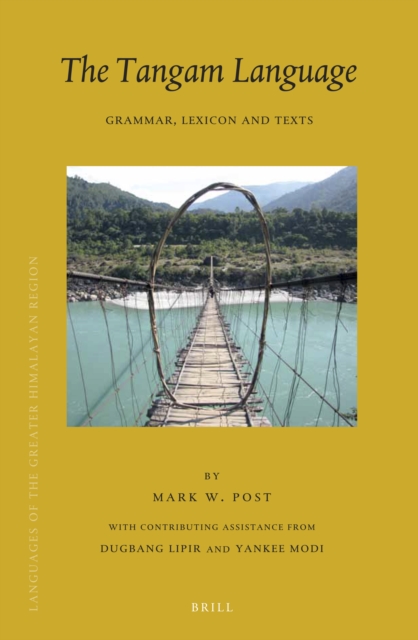
The Tangam language : grammar, lexicon and texts
Tangam is a critically endangered Trans-Himalayan language spoken by 150 hilltribespeople in the Far Eastern Himalaya. This work presents a cultural, historical and grammatical introduction to the Tangam language, a trilingual lexicon in Tangam, English and Minyong, and analysed texts.
eBook
Stormy weather has us in its grip, Watching natural disasters from afar lets us experience the power of nature on our own terms
Without weather maps, of course, without all the software and computer models and radar that help us predict storms, we wouldn't be able to position our cameras close enough to evoke that awe. Why do we crave images of houses being lifted off the ground by tornadoes, seaside resorts being smashed to pieces by the winds and waves of a hurricane? In an era when the wilderness, the untamed natural world, seems largely to have become circumscribed, violent storms give the lie to the old Enlightenment fantasy of control over nature; in this record-breaking season, they have revealed the boundlessness of nature, its sheer unpredictability, its daunting scale. And they feed our catastrophilia. In May 2004 I drove 6,000 miles through Kansas, Nebraska, Oklahoma and Texas trying to get close to big weather. The people I met, some of whom had paid thousands of dollars to go on tornado tours, weren't in search of other people's misery. They wanted to get close to something powerful. But catastrophilia is the sublime's bastard cousin, arising from the discovery of a marketable product - disaster - in the violence of natural phenomena. And it is the marketing and sale of that product for public consumption that rides beneath the surface of good intention that we see in coverage of big weather. Catastrophilia's signature formal element is the presence of a frame - a television set, a windshield or window, a video lens, some form of transparent barrier that creates the illusion of involvement yet provides the safety of distance.
Newspaper Article