
Catalogue Search | MBRL


Are you sure you want to remove the book from the shelf?

{{itemTitle}}
21,650
result(s) for
"Post, Peter"
Sort by:


Profitable partnerships: The Chinese business elite and Dutch lawyers in the making of Semarang
This article examines the collaboration between the law firm of C.W. Baron van Heeckeren from Semarang and the Oei Tiong Ham Concern (OTHC). From the 1880s this Dutch law firm became the centre of a close-knit group of Dutch lawyer-entrepreneurs who through interlocking business directorships developed important sectors of the Javanese economy and the city of Semarang. In doing so Van Heeckeren and his associates teamed up with the Chinese business elite of the port-city. In particular they worked with the foremost Overseas Chinese capitalist, Major Oei Tiong Ham, developing profitable partnerships. The Dutch lawyers acted not only as his legal advisors, but developed his sugar empire as directors-shareholders, held major stakes in his shipping business and coolie trade, and profited from his opium trade. They moreover helped Oei Tiong Ham to acquire real estate and enterprises formerly belonging to powerful Chinese opium farmers and collaborated with him in developing infrastructural and housing projects. This article provides new and revealing details about how the business world of colonial Java worked during the early phase of Dutch economic imperialism and how the Chinese business elite seized the opportunities provided by the Dutch colonial state to advance their business interests.
Journal Article


Founding an Ethnic Chinese Business Empire in Colonial Asia
The Oei Tiong Ham Concern is probably the best-known Overseas Chinese business conglomerate in colonial Southeast Asia. It was surely the largest and most powerful. Unlike most of his contemporaries, Major Oei Tiong Ham (1866–1924) managed to build a multi-national ethnic Chinese business empire that was able to compete successfully with large Dutch, British and Japanese firms. This article discusses the flexible strategies of Oei Tiong Ham to leverage a relatively marginal position vis-à-vis the old peranakan elite families and the colonial establishment. In doing so, it provides new insights into the transcultural business alliances he created during the age of imperialism which enabled him to succeed where others failed and become the wealthiest and most influential Overseas Chinese business tycoon of his time.
Journal Article


Communication and Conflict in Multiple Settings
This international collection interrogates conflict as an essential and potent outworking of communication. It suggests that an understanding of communication in conflict situations may positively reduce misunderstanding and increase reciprocity.
eBook
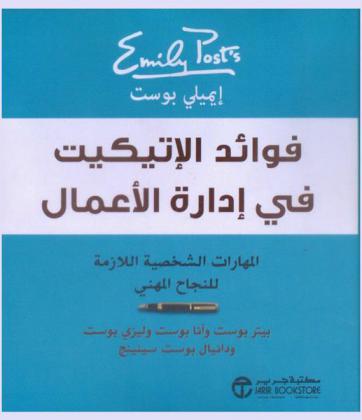
إيميلي بوست : فوائد الإتيكيت في إدارة الأعمال : المهارات الشخصية اللازمة للنجاح المهني
يهدف هذا الكتاب إلى مساعدتك على تقوية ثقتك بنفسك حيث لا تكتسب بمجرد معرفتك ما يجب عليك فعله فحسب بل أيضا بإدراكك لماذا يعد هذا السلوك مناسبا كما يقدم نصائح بشأن المبادئ الأساسية للإتيكيت الخاصة بالمراعاة الاحترام والأمانة وكيف تؤدي بك هذه المبادئ إلى السلوكيات الحميدة وبإلمامك بها ستكون قادرا بنفسك على تحديد \"السلوك السليم\" في أي موقف تواجهه.
Book
The Kwik Hoo Tong Trading Society of Semarang, Java: A Chinese Business Network in Late Colonial Asia
The main argument of this article is that the middlemen paradigm which since the Second World War has come to dominate academic writings and popular perceptions of Chinese business in late colonial Indonesia is generally flawed, and has hindered the development of a more nuanced picture of the nature of Chinese economic activity in pre-war Southeast Asia.
Journal Article