
Catalogue Search | MBRL


Are you sure you want to remove the book from the shelf?

{{itemTitle}}
82,240
result(s) for
"Potter, A."
Sort by:

Finding Franklin : the untold story of a 165-year search
\"In 2014 media around the world buzzed with news that an archaeological team from Parks Canada had located and identified the wreck of the HMS Erebus, the flagship of Sir John Franklin's lost expedition to find the Northwest Passage. Finding Franklin outlines the larger story and the cast of detectives from every walk of life that led to the discovery, solving of one of the Arctic's greatest mysteries. In compelling and accessible prose, Russell Potter details his decades of work alongside key figures in the era of modern searches for the expedition and elucidates how shared research and ideas have led to a fuller understanding of the Franklin crew's final months. Illustrated with numerous images and maps from the last two centuries, Finding Franklin recounts the more than fifty modern searches for traces of his ships and crew, and the dedicated, often obsessive, men and women who embarked on them. Potter discusses the crucial role that Inuit oral accounts, often cited but rarely understood, played in all of these searches, and continues to play to this day, and offers historical and cultural context to the contemporary debates over the significance of Franklin's achievement. While examination of the HMS Erebus will undoubtedly reveal further details of this mystery, Finding Franklin assembles the stories behind the myth and illuminates what is ultimately a remarkable decades-long discovery.\"-- Provided by publisher.
Book

Quantifying bee assemblages and attractiveness of flowering woody landscape plants for urban pollinator conservation
Urban and suburban landscapes can be refuges for biodiversity of bees and other pollinators. Public awareness of declining pollinator populations has increased interest in growing plants that provide floral resources for bees. Various publications and websites list \"bee-friendly\" plants, but such lists are rarely based on empirical data, nor do they emphasize flowering trees and shrubs, which are a major component of urban landscapes. We quantified bee visitation to 72 species of flowering woody landscape plants across 373 urban and suburban sites in Kentucky and southern Ohio, USA, sampling and identifying the bee assemblages associated with 45 of the most bee-attractive species. We found strong plant species effects and variation in seasonal activity of particular bee taxa, but no overall differences in extent of bee visitation or bee genus diversity between native and non-native species, trees and shrubs, or early-, mid-, and late-season blooming plants. Horticulturally-modified varieties of Hydrangea, Prunus, and Rosa with double petals or clusters of showy sterile sepals attracted few bees compared to related plants with more accessible floral rewards. Some of the non-native woody plant species bloomed when floral resources from native plants were scarce and were highly bee-attractive, so their use in landscapes could help extend the flowering season for bees. These data will help city foresters, landscape managers, and the public make informed decisions to create bee-friendly urban and suburban landscapes.
Journal Article
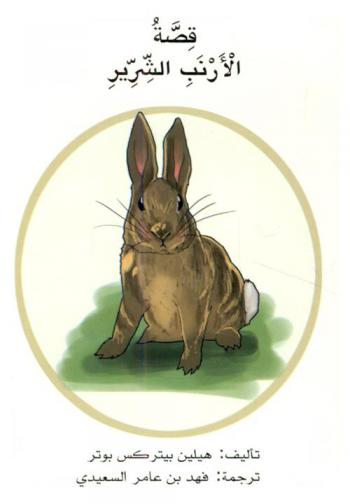
قصة الأرنب الشرير
تتناول القصة (قصة الأرنب الشرير) والذي قامه بتأليفها (هيلين بيتركس بوتر) في حوالي (14) صفحة من القطع المتوسط موضوع (الأرنب المشاغب) مستعرضا قصة الأرنب بيتر هي قصة للأطفال من تأليف الكاتبة البريطانية بياتريكس بوتر، وهي تتبع قصة الأرنب المشاغب بيتر والذي كان متعطشا لمطاردة السيد ماكريجوري عبر حديقته، وفي كل مرة يهرب ثم يعود للمنزل فتضعه والدته في فراشه وتقدم له شاي الكاموميل.
Book

Observation of a discrete time crystal
A time crystal is a state of matter that shows robust oscillations in time, and although forbidden in equilibrium, a discrete time crystal has now been observed in a periodically driven quantum system.
Time crystals aren't forever
Much like ordinary crystals, time crystals exhibit a high degree of structural order. But whereas ordinary crystals get their periodicity from the regular repetition of spatial elements, time crystals are an exotic, non-equilibrium state of matter in which the same structures repeat themselves in time. Predicted to exist a few years ago, time crystals have so far resisted experimental demonstration. Now, two groups offer evidence for experimental observation of this elusive form of matter. Jiehang Zhang
et al
. create a specific kind of time crystal—a discrete time crystal—in a chain of ten trapped ions under the influence of periodic driving. Mikhail Lukin and colleagues achieve a similar feat using approximately one million nitrogen–vacancy spin impurities in diamond as an experimental platform. In both cases, the time-crystalline order is shown to be robust to external perturbations. Such time crystals could potentially find applications in robust quantum memory.
Spontaneous symmetry breaking is a fundamental concept in many areas of physics, including cosmology, particle physics and condensed matter
1
. An example is the breaking of spatial translational symmetry, which underlies the formation of crystals and the phase transition from liquid to solid. Using the analogy of crystals in space, the breaking of translational symmetry in time and the emergence of a ‘time crystal’ was recently proposed
2
,
3
, but was later shown to be forbidden in thermal equilibrium
4
,
5
,
6
. However, non-equilibrium Floquet systems, which are subject to a periodic drive, can exhibit persistent time correlations at an emergent subharmonic frequency
7
,
8
,
9
,
10
. This new phase of matter has been dubbed a ‘discrete time crystal’
10
. Here we present the experimental observation of a discrete time crystal, in an interacting spin chain of trapped atomic ions. We apply a periodic Hamiltonian to the system under many-body localization conditions, and observe a subharmonic temporal response that is robust to external perturbations. The observation of such a time crystal opens the door to the study of systems with long-range spatio-temporal correlations and novel phases of matter that emerge under intrinsically non-equilibrium conditions
7
.
Journal Article
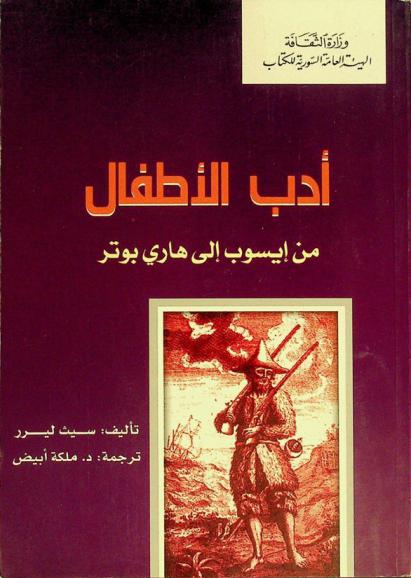
أدب الأطفال من إيسوب إلى هاري بوتر
يستعرض الكتاب تطور أدب الأطفال منذ القصص القديمة التي كتبها إيسوب، والتي تضمنت حكايات ذات عبر وقيم أخلاقية، حتى الأعمال الأدبية الحديثة مثل سلسلة \"هاري بوتر\" لج. ك. رولينج، أدب إيسوب : يتناول الكتاب قصص إيسوب الشهيرة، ويشرح كيف شكلت هذه الحكايات أساسيات أدب الأطفال، من خلال تقديم دروس أخلاقية وقيمية. التحولات الأدبية : يناقش الكتاب كيف تطور أدب الأطفال عبر العصور، متناولا التغيرات في المواضيع والأساليب والتقنيات المستخدمة في كتابة القصص. أدب العصر الحديث : يسلط الضوء على الأدب المعاصر للأطفال، مثل سلسلة \"هاري بوتر\"، ويناقش تأثير هذه الأعمال على الأطفال وعلى الأدب بوجه عام. التحليل النقدي : يقدم الكتاب تحليلا نقديا للأعمال المختلفة، ويناقش كيف يمكن أن تعكس القصص تطورات اجتماعية وثقافية.
Book
Absolute Consistency: Individual versus Population Variation in Annual-Cycle Schedules of a Long-Distance Migrant Bird
Tracks individual bar-tailed godwits 'Limosa lapponica baueri' for two full years (including direct observation during non-breeding seasons in New Zealand and geolocator tracking of round-trip migrations to Alaska) to present a full annual-cycle view of molt, breeding, and migration schedules. Source: National Library of New Zealand Te Puna Matauranga o Aotearoa, licensed by the Department of Internal Affairs for re-use under the Creative Commons Attribution 3.0 New Zealand Licence.
Journal Article

Agronomic phosphorus imbalances across the world's croplands
Increased phosphorus (P) fertilizer use and livestock production has fundamentally altered the global P cycle. We calculated spatially explicit P balances for cropland soils at 0.5° resolution based on the principal agronomic P inputs and outputs associated with production of 123 crops globally for the year 2000. Although agronomic inputs of P fertilizer (14.2 Tg of P·y⁻¹) and manure (9.6 Tg of P·y⁻¹) collectively exceeded P removal by harvested crops (12.3 Tg of P·y⁻¹) at the global scale, P deficits covered almost 30% of the global cropland area. There was massive variation in the magnitudes of these P imbalances across most regions, particularly Europe and South America. High P fertilizer application relative to crop P use resulted in a greater proportion of the intense P surpluses (>13 kg of P·ha⁻¹·y⁻¹) globally than manure P application. High P fertilizer application was also typically associated with areas of relatively low P-use efficiency. Although manure was an important driver of P surpluses in some locations with high livestock densities, P deficits were common in areas producing forage crops used as livestock feed. Resolving agronomic P imbalances may be possible with more efficient use of P fertilizers and more effective recycling of manure P. Such reforms are needed to increase global agricultural productivity while maintaining or improving freshwater quality.
Journal Article

Common envelope evolution: where we stand and how we can move forward
This work aims to present our current best physical understanding of common-envelope evolution (CEE). We highlight areas of consensus and disagreement, and stress ideas which should point the way forward for progress in this important but long-standing and largely unconquered problem. Unusually for CEE-related work, we mostly try to avoid relying on results from population synthesis or observations, in order to avoid potentially being misled by previous misunderstandings. As far as possible we debate all the relevant issues starting from physics alone, all the way from the evolution of the binary system immediately before CEE begins to the processes which might occur just after the ejection of the envelope. In particular, we include extensive discussion about the energy sources and sinks operating in CEE, and hence examine the foundations of the standard energy formalism. Special attention is also given to comparing the results of hydrodynamic simulations from different groups and to discussing the potential effect of initial conditions on the differences in the outcomes. We compare current numerical techniques for the problem of CEE and also whether more appropriate tools could and should be produced (including new formulations of computational hydrodynamics, and attempts to include 3D processes within 1D codes). Finally we explore new ways to link CEE with observations. We compare previous simulations of CEE to the recent outburst from V1309 Sco, and discuss to what extent post-common-envelope binaries and nebulae can provide information, e.g. from binary eccentricities, which is not currently being fully exploited.
Journal Article
Postglacial viability and colonization in North America’s ice-free corridor
During the Last Glacial Maximum, continental ice sheets isolated Beringia (northeast Siberia and northwest North America) from unglaciated North America. By around 15 to 14 thousand calibrated radiocarbon years before present (cal. kyr
bp
), glacial retreat opened an approximately 1,500-km-long corridor between the ice sheets. It remains unclear when plants and animals colonized this corridor and it became biologically viable for human migration. We obtained radiocarbon dates, pollen, macrofossils and metagenomic DNA from lake sediment cores in a bottleneck portion of the corridor. We find evidence of steppe vegetation, bison and mammoth by approximately 12.6 cal. kyr
bp
, followed by open forest, with evidence of moose and elk at about 11.5 cal. kyr
bp
, and boreal forest approximately 10 cal. kyr
bp
. Our findings reveal that the first Americans, whether Clovis or earlier groups in unglaciated North America before 12.6 cal. kyr
bp
, are unlikely to have travelled by this route into the Americas. However, later groups may have used this north–south passageway.
During much of the last ice age, continental ice sheets prevented humans from migrating into North America from Siberia; an environmental reconstruction of the corridor that opened up between the Cordilleran and Laurentide ice sheets reveals that it would have been inhospitable to the initial colonizing humans, who therefore probably entered North America by a different route.
A coastal migration route to the Americas
During much of the last ice age, continental ice sheets prevented humans from migrating into North America from Beringia, the area between Siberia and what is now the Bering Strait. At some point, a route opened up between the Cordilleran and Laurentide ice sheets, but it is thought that this 1,500-kilometre-long ice-free corridor may have been too cold to act as a human migration route. Eske Willerslev and colleagues present a series of environmental reconstructions based on coring of lake sediments in what was once the ice-free corridor. Their data indicate that the corridor would have still been inhospitable even after humans are known to have arrived in the Americas south of the ice. This implies that humans migrated by a coastal route, now submerged by the risen sea.
Journal Article

Controlled trial of lovastatin combined with an open-label treatment of a parent-implemented language intervention in youth with fragile X syndrome
Background
The purpose of this study was to conduct a 20-week controlled trial of lovastatin (10 to 40 mg/day) in youth with fragile X syndrome (FXS) ages 10 to 17 years, combined with an open-label treatment of a parent-implemented language intervention (PILI), delivered via distance video teleconferencing to both treatment groups, lovastatin and placebo.
Method
A randomized, double-blind trial was conducted at one site in the Sacramento, California, metropolitan area. Fourteen participants were assigned to the lovastatin group; two participants terminated early from the study. Sixteen participants were assigned to the placebo group. Lovastatin or placebo was administered orally in a capsule form, starting at 10 mg and increasing weekly or as tolerated by 10 mg increments, up to a maximum dose of 40 mg daily. A PILI was delivered to both groups for 12 weeks, with 4 activities per week, through video teleconferencing by an American Speech-Language Association-certified Speech-Language Pathologist, in collaboration with a Board-Certified Behavior Analyst. Parents were taught to use a set of language facilitation strategies while interacting with their children during a shared storytelling activity. The main outcome measures included absolute change from baseline to final visit in the means for youth total number of story-related utterances, youth number of different word roots, and parent total number of story-related utterances.
Results
Significant increases in all primary outcome measures were observed in both treatment groups. Significant improvements were also observed in parent reports of the severity of spoken language and social impairments in both treatment groups. In all cases, the amount of change observed did not differ across the two treatment groups. Although gains in parental use of the PILI-targeted intervention strategies were observed in both treatment groups, parental use of the PILI strategies was correlated with youth gains in the placebo group and not in the lovastatin group.
Conclusion
Participants in both groups demonstrated significant changes in the primary outcome measures. The magnitude of change observed across the two groups was comparable, providing additional support for the efficacy of the use of PILI in youth with FXS.
Trial registration
US National Institutes of Health (
ClinicalTrials.gov
),
NCT02642653
. Registered 12/30/2015.
Journal Article