
Catalogue Search | MBRL


Are you sure you want to remove the book from the shelf?

{{itemTitle}}
260
result(s) for
"Powell, Larry"
Sort by:
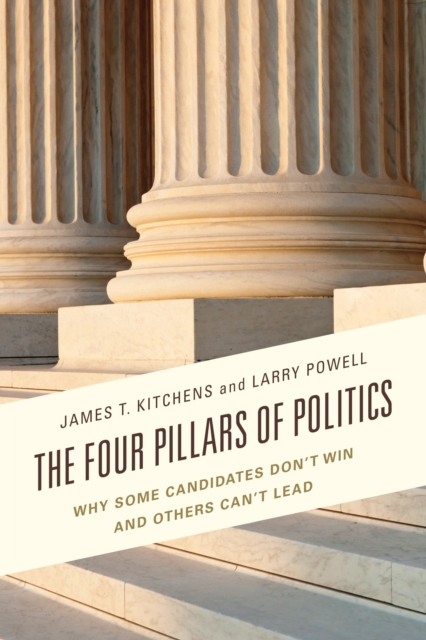
The four pillars of politics
James T. Kitchens and Larry Powell examine why political messages appeal to voters in the United States by exploring the four pillars of the American psyche: fear, national narcissism, consumerism, and religiosity. These pillars, combined with the related matrix of attitudes, beliefs, and values, determine how political communication is understood.
eBook
Dark money, super PACs, and the 2012 election
More than two billion dollars. That’s how much money was spent in the 2012 presidential campaign—the most expensive campaign in history. Each party raised and spent more than one billion dollars as the traditional boundaries of campaign financing were ignored. Both parties could do so because they were playing in a game with new rules—rules that largely developed after the 2010 Supreme Court ruling known as Citizens United. That case removed many restrictions on donation limits, particularly for corporations and unions. The result was the development of a new set of political players called “Super PACs” that were allowed to enter the political arena and spend an unlimited amount of money on behalf of clients. This book looks at how Super PACs raised and spent money and influenced the 2012 election. It provides an insightful look at how both right- and left-leaning groups approached the election and impacted the political process.
eBook

Communicator-in-chief
Communicator-in-Chief: How Barack Obama Used New Media Technology to Win the White House examines the fascinating and precedent-setting role new media technologies and the Internet played in the 2008 presidential campaign that allowed for the historic election of the nation's first African American president. It was the first presidential campaign in which the Internet, the electorate, and political campaign strategies for the White House successfully converged to propel a candidate to the highest elected office in the nation. The contributors to this volume masterfully demonstrate how the Internet is to President Barack Obama what television was to President John Kennedy, thus making Obama a truly twenty-first century communicator and politician. Furthermore, Communicator-in-Chief argues that Obama's 2008 campaign strategies established a model that all future campaigns must follow to achieve any measure of success. The Barack Obama campaign team astutely discovered how to communicate and motivate not only the general electorate but also the technology-addicted Millennial Generation - a generational voting block that will be a juggernaut in future elections.
eBook

Detecting Children’s Fine Motor Skill Development using Machine Learning
Children’s fine motor skills are linked not only to drawing ability but also to cognitive, social-emotional, self-regulatory, and academic development Suggate et al.
Journal of Research in Reading
,
41(1)
, 1–19 (
2018
), Benedetti et al. (
2014
), Liew et al.
Early Education & Development
,
22(4)
, 549–573 (
2011
), Liew (
2012
) and Xie et al. (
2014
). Current educators are assessing children’s fine motor skills by either determining their shape drawing correctness Meisels et al. (
1997
) or measuring their drawing time duration Kochanska et al. (
1997
) and Liew et al. (
2011
) through paper-based assessments. However, these methods involve human experts manually analyzing children’s fine motor skills, which can be time consuming and prone to human error or bias Kim et al. (
2013
) and Lotz et al. (
2005
). With many children using sketch-based applications on mobile devices like smartphones or tablets Anthony et al. (
2012
), computer-based fine motor skill assessment has the potential to address limitations of paper-based assessment by using automated measurements. In this work, we introduce a machine learning approach for analyzing aspects of children’s fine motor skill development. We performed a study with 60 young children (aged 3 to 8 years old), and we implemented classifiers that determine children’s age category based on features related to fine motor skill, predominantly for curvature- and corner-based drawing skills, surpassing the performance of our previous work Kim et al. (
2013
) and of human evaluators. We also present dedicated discussion and statistical testing of sketch recognition features which will further enhance automated fine motor assessment.
Journal Article

Field of Nightmares
According to the Saskatchewan Organic Directorate, this was due to rampant contamination of seed stock and organic fields by unwanted GMO plants, otherwise known as pollen drift. Roundup's pervasiveness relies on skillfully crafted strategies to build goodwill at the community level, especially in schools. Since 1991, the Monsanto Fund Opportunity Scholarship program has awarded more than $1 -million to thousands of grade 12 graduates from Canadian farm families.
Journal Article

Engagement in interpersonal contracts
This paper proposes a theory of interpersonal contracts, arguing that individuals develop implicit relational contracts that are similar to legal contracts in that a series of expectations is generated that relates to both individuals in the relationship. In interpersonal contracts, however, the expectations are implicit and lack the explicit nature that is part of implicit relationships. Further, the theory argues that conflict within these relationships is likely to be triggered by violations of those implicit expectations. A first step in testing the theory is provided by a quantitative study that identifies implicit expectations in one specific interpersonal situation, i.e., the marriage relationship. The data from the study support the idea that implicit expectations are held by individuals in such a relationship.
Journal Article

The Wai in Thai Culture - Greeting, Status-Marking and National Identity Functions
This study examined the role of the Wai from the perspective of people in Thailand. The Wai, the most common greeting used by natives of Thailand, consists of bringing one's palms together while bowing or dipping one's head. Data, gathered by having participants write an essay on the role of the Wai in Thailand, were subjected to content analysis. The analysis indicated that the Wai serves at least five functions in Thai society - utilitarian, status, nationalistic, personal enhancement, and religious functions. Subcategories of behaviors range from using the Wai to appease a bully to its use in religious rituals. These results reflect the complex nature of using and interpreting nonverbal behavior in a high context culture. The results also support the already well documented role of the Wai in terms of status. Adapted from the source document.
Journal Article
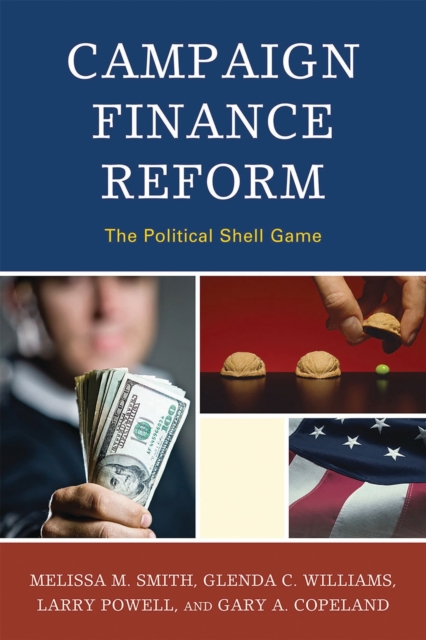
Campaign finance reform
For decades, campaign finance reform has been an on-going topic of discussion. In particular, the Bipartisan Campaign Reform Act of 2002 (BCRA) was heralded as a major breakthrough in controlling the flow of money into campaigns. Almost immediately, political players found other ways to financially manipulate the new laws. Campaign Finance Reform: The Political Shell Game provides an in-depth look at the history of political campaign finance reform with special emphasis on legislative, FEC, and federal court actions from the 1970s to present. In particular, the authors examine the ways that campaigns and independent groups have sought to make end-runs around existing campaign finance rules. Oftentimes the loopholes they find make a significant impact on an election, sparking the next round of campaign finance reform. New rules are then enacted, and new loopholes are found. Like a big political shell game, the amount of money in politics never actually decreases, but instead gets moved around from one organization to another.
eBook