
Catalogue Search | MBRL


Are you sure you want to remove the book from the shelf?

{{itemTitle}}
309
result(s) for
"Power, Martin"
Sort by:

Morrissey : fandom, representations and identities
\"Known for his outspoken and often controversial views on class, ethnicity and sexuality, Morrissey has remained an anti-establishment figure who continues to provoke argument, debate and devotion amongst critics and his many fans. Focusing exclusively on Morrissey's solo career, the collected essays in this important book make for a rich reading of Morrissey and his highly influential creative output.\"--P. [4] of cover.
Book

Transducing chemical energy through catalysis by an artificial molecular motor
Cells display a range of mechanical activities generated by motor proteins powered through catalysis
1
. This raises the fundamental question of how the acceleration of a chemical reaction can enable the energy released from that reaction to be transduced (and, consequently, work to be done) by a molecular catalyst
2
,
3
,
4
,
5
,
6
–
7
. Here we demonstrate the molecular-level transduction of chemical energy to mechanical force
8
in the form of the powered contraction and powered re-expansion of a cross-linked polymer gel driven by the directional rotation of artificial catalysis-driven
9
molecular motors. Continuous 360° rotation of the rotor about the stator of the catalysis-driven motor-molecules incorporated in the polymeric framework of the gel twists the polymer chains of the cross-linked network around one another. This progressively increases writhe and tightens entanglements, causing a macroscopic contraction of the gel to approximately 70% of its original volume. The subsequent addition of the opposite enantiomer fuelling system powers the rotation of the motor-molecules in the reverse direction, unwinding the entanglements and causing the gel to re-expand. Continued powered twisting of the strands in the new direction causes the gel to re-contract. In addition to actuation, motor-molecule rotation in the gel produces other chemical and physical outcomes, including changes in the Young modulus and storage modulus—the latter is proportional to the increase in strand crossings resulting from motor rotation. The experimental demonstration of work against a load by a synthetic organocatalyst, and its mechanism of energy transduction
6
, informs both the debate
3
,
5
,
7
surrounding the mechanism of force generation by biological motors and the design principles
6
,
10
,
11
,
12
,
13
–
14
for artificial molecular nanotechnology.
A cross-linked polymer gel driven by artificial molecular motors transforms chemical energy into mechanical force, achieving powered contraction and re-expansion, demonstrating a considerable advance in understanding energy transduction mechanisms and informing nanotechnology design principles.
Journal Article


Scapegoating During a Time of Crisis: A Critique of Post-Celtic Tiger Ireland
Focusing upon scapegoating in post-crash Ireland, this article considers a pervasive political process that is protective of powerful interests and the status quo following the 2008 Global Financial Crisis. Drawing from group conflict theory and framing analysis as part of a broader critical realist take on society, we consider how blame has been placed on myriad targets, ranging from a collective 'we who went a bit mad with borrowing' to more specific groups such as public sector workers, the unemployed, single mothers and immigrants. In conclusion, we underscore the need for sociology to assert its relevance by challenging such processes and defend civil society in a capitalist world-system that is in structural crisis.
Journal Article


Framing and Shaming: The 2017 Welfare Cheats, Cheat Us All Campaign
The repeated circulation of anti-welfare discourses has served to encourage limited and often incorrect public understandings of issues pertaining to welfare. Central to these processes is the social construction of notions of ‘deservedness’ and ‘undeservedness.’ In this article we examine the 2017 ‘Welfare Cheats, Cheat Us All’ (original emphasis) campaign initiated by the Department of Social Protection in the Republic of Ireland. We present our analysis of the dominant discourses evident in the campaign itself and the in-house discussions in the lead up to the campaign. Our article shows that this Irish campaign rehearses a familiar international discourse which follows distinct patterns or rules, and we evidence, in keeping with other moral panics, the spurious nature of the data being used to exaggerate the scale and extent of welfare ‘fraud’.
Journal Article

Inclusion through football: The case of Diverse City FC
In this piece we document how a football club has proved to be an important mechanism of integration for young Muslim women in Ireland. As has been evidenced elsewhere,[1] and discussed in this piece, Islamophobia is a reality in Irish society, whether as proximal lived experiences of hostility and discrimination, or as structural elements that deploy anti-Muslim tropes. In the face of such exclusion, young Muslim individuals, supported by local civil society actors, have taken it upon themselves to develop a platform, namely the Hijabs and Hat-tricks project, that not only enables inclusion, and develops meaningful integration, but also challenges head-on those tropes that cast them and their communities as ‘other’. Football, in the form of Diverse City FC, forms the focal point of this platform. Based on the experiences of these young Irish Muslims, we argue that football, and indeed sport more broadly, can act as an incredibly effective mechanism for meaningful societal integration. Finally, we argue for the importance of not only understanding the experiences of marginalised groups, such as the Diverse City players, but of the importance of drawing from these experiences to design future strategies for inclusion in Irish society. [1] James Carr, Experiences of Islamophobia: Living with racism in the neoliberal era (London: Routledge, 2016).
Journal Article
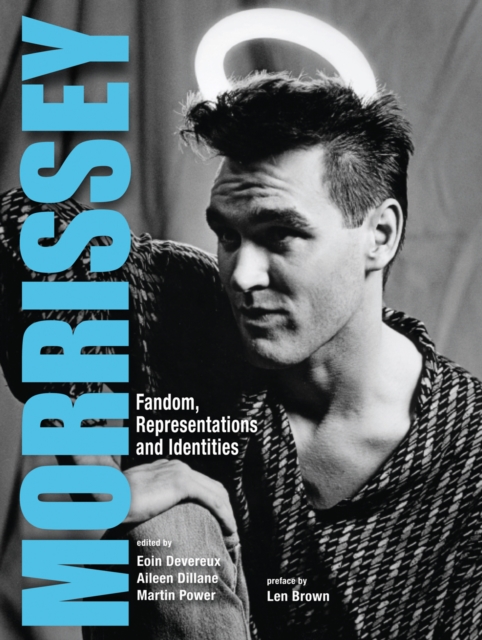
Morrissey
Known for his outspoken and often controversial views on class, ethnicity and sexuality, Morrissey has remained an anti-establishment figure who continues to provoke argument, debate and devotion amongst critics and his many fans. Focusing exclusively on Morrissey's solo career, the collected essays in this important book make for a rich reading of Morrissey and his highly influential creative output. Working across a range of academic disciplines and approaches (including musicology; ethnography; sociology and cultural studies) these essays seek to make sense of the many complexities of this global icon.
eBook

'Sicherheit': examining residents' perceptions of community safety in working-class residential areas undergoing regeneration in Limerick City, Ireland
This paper examines the perceptions of residents' in two housing estates in Limerick, a peripheral Irish city, on how (un)safety effects their day-to-day lives and is an intrinsic element in the production and reproduction of their urban territories. In focusing on these areas which are currently 'undergoing' the largest urban regeneration project in the history of the Irish State, our analysis provides new insights into the intersections between regeneration processes and (un)sicherheit. Significantly, our findings demonstrate that regeneration processes, often billed as enhancing community safety, can in fact contribute to destabilising the triumvirate of safety, certainty and security.
Journal Article
At the edge: media constructions of a stigmatised Irish housing estate
By triangulating analyses of content and reception with a focus on production, this article attempts to understand the dynamics of and underlying reasons for the media Stigmatisation of place. The research described contributes to a body of work examining how mass media and other social forces factor in the creation of negative stereotypes that damage the reputations of the places in which the poor reside. The overarching framework of understanding, provided by Goffman's theory of stigma, is complemented by two further inter-related theoretical approaches, namely Social Exclusion and Political Economy. Combining analyses of media production (practices), media content (discourses) and audience reception (beliefs, attitudes), we analyse the representation of one of Ireland's most deprived public housing estates in the print and broadcast media. Having established the stigmatising character and impact of national and local media content via this tripartite methodology, we focus on identifying and explaining the media practices that serve to (re)produce the estate's 'spoiled identity'. Our analysis of journalists' explanations for these practices identifies the commercial realities, which progressively influence media production, as directly impacting media producers' relationships with, and depictions of, poor places. We conclude by examining debates regarding the potential for rehabilitating a spoiled identity.
Journal Article