
Catalogue Search | MBRL


Are you sure you want to remove the book from the shelf?

{{itemTitle}}
55
result(s) for
"Prettejohn, Elizabeth"
Sort by:


The Cambridge Companion to the Pre-Raphaelites
The group of young painters and writers who coalesced into the Pre-Raphaelite movement in the middle years of the nineteenth century became hugely influential in the development not only of literature and painting, but also more generally of art and design. Though their reputation has fluctuated over the years, their achievements are now recognised and their style enjoyed and studied widely. This volume explores the lives and works of the central figures in the group: among others, the Rossettis, William Holman Hunt, John Everett Millais, Ford Madox Brown, William Morris and Edward Burne-Jones. This is the first book to provide a general introduction to the Pre-Raphaelite movement that integrates its literary and visual art forms. The Companion explains what made the Pre-Raphaelite style unique in painting, poetry, drawing and prose.
eBook

John Singer Sargent
This fascinating introduction explores the life and work of Sargent, contextualising his practice within the times he lived. Beginning with his cosmopolitan childhood in Europe and studio training in Paris, the book charts his rise to fame and establishment as a leading portraitist internationally, up until his final works during the outbreak of the First World War. Touching on his travels, his friendships and the personal connections that influenced his practice, this a true celebration of an extraordinary artist and his paintings, which continue to captivate today.
BOOK

From Aestheticism to Modernism, and Back Again
This paper argues that the conventional art-historical periodization, in which Modernism inexorably supersedes Aestheticism, and the year 1900 marks a radical break in the history of art, is seriously flawed: not only historiographically naïve, it is also tinged with misogyny and homophobia. In a long perspective, it clearly makes sense to divide Victorian Aestheticism from twentieth-century Modernism. But in the shorter time frame of the very end of the Victorian period and the first few years of the twentieth century (the end of the `long nineteenth century`), the divide is not one of period. Aestheticism and Modernism overlap at this historical moment, and both of them involve serious exploration of basic problems in aesthetics and art theory. The difference between them is not a matter of chronology; instead it is a question of art-historical valuation, of what will count (in Clive Bell's term) as `significant` in modern art. The paper compares Aestheticist and Modernist paintings to argue that the similarities between them may be as important as the differences, and that this observation may change our evaluations on both sides.
Journal Article
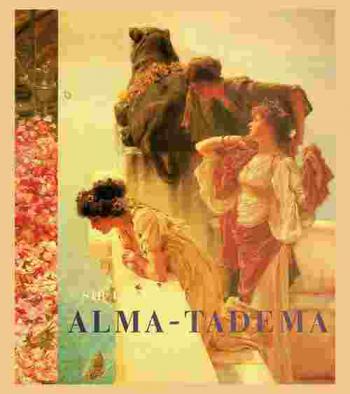

Beauty and art, 1750-2000
What do we mean when we call a work of art `beautiful`? How do perceptions of beauty change with the passage of time? Elizabeth Prettejohn explores these crucial questions, showing the vital relationship between our changing notions of beauty and specific works of art. She charts the story of western art, from eighteenth-century Germany to the late.
eBook

Fashioned by Sargent
Fashioned by Sargent explores the complicated relationship of painting and dress through reproductions of portraits and other works by Sargent, alongside costumes of the period - including garments actually worn by his sitters. Essays illuminate topics such as portraits and performance, gender expression, the New Woman, and the pull of history and the excitement of new ideas.
Book

Pater the classicist : classical scholarship, reception, and aestheticism
This is the first book to address in detail Walter Pater’s important contribution to the study of classical antiquity. Pater is our greatest aesthetic critic. He was also a professional classicist who lectured and gave tutorials at the University of Oxford, and participated in many of the debates fostered by Classics as an academic discipline, a point often downplayed. Yet Pater’s aestheticism and his interests as a classicist went closely together. One might say that the classical tradition in its broadest sense (including the question of how to understand its workings and temporalities) is Pater’s principal subject as a writer. Pater initially approached antiquity obliquely (for example, through the Italian Renaissance or the poetry of William Morris). Later in his career he wrote more, and more directly, about the ancient world, particularly about his first love Greece. Pater’s conception of Classics was cross-disciplinary, outward-looking, and pan-European, and thus a potential model for Classics today. The Pater who emerges is a many-sided, inspirational figure, with a message for today, whose achievement helped to reinvigorate the classical studies that were the very basis of the English educational system of the nineteenth century. The four parts of the book discuss his classicism generally, his fiction set in classical antiquity (especially Marius the Epicurean), his writings on Greek literature and culture, and on ancient philosophy, especially the works of of Plato. The wider Victorian context is also illuminated, and other figures discussed include J. A. Symonds, Henry Nettleship, Vernon Lee, and Jane Harrison.
eBook

Books : \Walter Pater and the language of sculpture,\ by Lene Ostermark-Johansen
The book \"Walter Pater and the language of sculpture,\" by Lene Ostermark-Johansen is reviewed (Ashgate Publishing, 2011). It is a study of the Victorian critic's writings on sculpture.
Journal Article

Solomon, Swinburne, Sappho
In lieu of an abstract, here is a brief excerpt of the content: 103 Solomon, Swinburne, Sappho Eliza beth Pr ettejohn • I have striven to cast my spirit into the mould of hers, to express and represent not the poem but the poet. Swinburne, Notes on Poems and Reviews Everyone knows one fact about Sappho: that she desired other women. As Glenn Most puts it,“For [twentieth-century] culture, Sappho is first of all the emblem of female homosexuality … and secondarily the author of a small number of surviving poems and fragments” (12). But, as Most demonstrates , Sappho became the “emblem of female homosexuality” very late in the history of her reception—2.5 millennia after her death, in fact. This development coincides, unsurprisingly, with the increasing tendency in the nineteenth century to configure homosexuality as an identity, rather than just a sexual practice. In this context, too, there is nothing surprising about the fascination with Sappho in the work of the young painter Simeon Solomon or in that of his friend, the poetAlgernon Charles Swinburne, in the 1860s, when both men were exploring their own unconventional sexual identities. Thus, the first part of my argument is straightforward: the Sappho of Solomon and Swinburne marks a crucial moment in the emergence of the modern image of Sappho as lesbian, as well as in the history of modern artistic and literary constructions of homosexuality.This much has been readily acknowledged in the extensive recent scholarship on Sappho’s reception.1 But I want to make a more ambitious argument, and one that depends on the much longer, and more various, history of Sappho’s reception, beginning with the numerous ancient testimonia. Sappho’s lovers include not only the many women addressed in her poems, but also a variety of male poets, including Alcaeus, Archilochus, and Anacreon, as well as a local ferryman called Phaon;2 according to a Byzantine encyclopedia, she was married to a man called Cercylas of Andros, although we might take that legend with a pinch of salt, since the name translates as “Prick from the Isle of Man”;3 she is also the greatest woman poet of antiquity, comparable among women poets to Homer among men, while Plato calls her the“tenth muse,” the only mortal one.4 Receptions since the Renaissance take victorian review • Volume 34 Number 2 104 up all of these biographical snippets, and invent more—for example, a political Sappho who joins with Alcaeus to oppose the Lesbian tyrant Pittacus and a pedagogical Sappho who runs the ancient equivalent of a ladies’ seminary.5 These multifarious and sometimes incompatible Sapphos also gave rise to theories that there must have been two Sapphos: the one a poet, the other a prostitute, or courtesan, or common lyre-player (Most 15–16). And indeed there is some sense to this, at least as regards the traditions that have come down to us. We have inherited on the one hand a biographical Sappho of outrageous sexuality (whether hetero-, homo-, or polymorphous) and on the other hand a literary Sappho fit to rank with the greatest poets of history. Only at the rarest of intervals do the two Sapphos come together—first, perhaps, in Catullus, the poet whom Swinburne hailed as brother, whose poem 51 is a sensitive Latin translation of the poem by Sappho now known as her fragment 31 (and Catullus gives the name“Lesbia” to his own“docta puella,” his learned mistress); then in the Greek orations of the second-century Platonic philosopher Maximus ofTyre, who sees Sappho’s desire for women as a fully fledged version of the ideal love of Socrates;6 and powerfully in the treatise On the Sublime, by the author traditionally called Longinus, of which more below. My argument is that the Sappho of Swinburne and Solomon marks another moment of this kind, one in which Sappho the poet and Sappho the lover become indivisible.The two Englishmen accomplish this in a way very much in keeping with their nineteenth-century context by making Sappho a lesbian in the new sense of homosexual identity.At the same time, though, they work against the tendency, in receptions of Sappho from their time onward, to reduce her poetic greatness to a mere matter of sexual...
Journal Article