
Catalogue Search | MBRL


Are you sure you want to remove the book from the shelf?

{{itemTitle}}
38
result(s) for
"Pritscher, Conrad P"
Sort by:

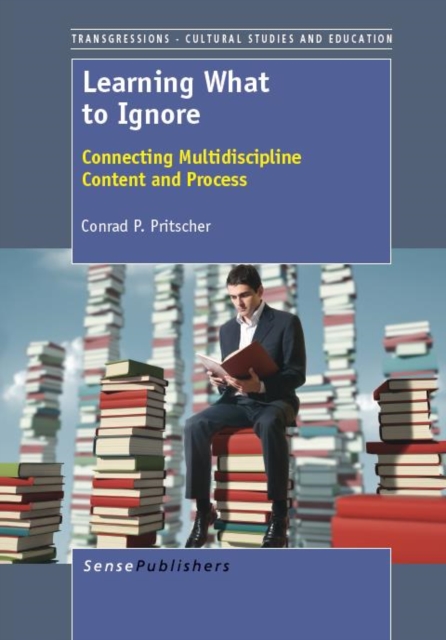
Learning What to Ignore
Pritscher takes an avant-garde approach to learning, pushing the boundaries of the long accepted norm \"certainty and order\" and modernizing education by trading the old \"optimal way\" with a new skill to \"reason with uncertainty\".
eBook


Einstein and Zen
This book makes a strong case for free schooling, comparing the mind of Albert Einstein - who said much - to Zen conscious practice, which says little but encompasses everything. Examining the work of brain researchers, neuroscientists, physicists, and other scholars to illuminate the commonalities between Einstein's thought and the Zen practice of paying attention to one's present experience, the book reveals their many similarities, showing the development of self-direction as a key to fostering compassionate consideration of others and to harmonious, semi-effortless learning and living. Examples demonstrate that students who choose to study what is interesting, remarkable, and important for them tend to become more like Einstein than students with the rigid school curricula; students who are free to learn often demonstrate empathy, and less rigid rule-following, while involved in the process of imaginatively becoming their own oracles and self-educators. (DIPF/Orig.).
Book