
Catalogue Search | MBRL


Are you sure you want to remove the book from the shelf?

{{itemTitle}}
44
result(s) for
"Prokhovnik, Raia"
Sort by:
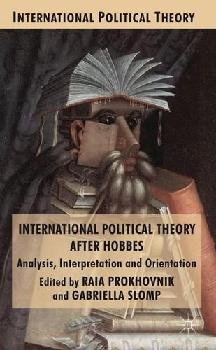
International political theory after Hobbes : analysis, interpretation and orientation
\"The idea of international political theory after Hobbes is a timely and lively focus through which to raise questions about international politics. Contributors explore Hobbes views on contemporary international political theory and on international relations in the context of the history of political thought and Hobbesian realism\"-- Provided by publisher.
BOOK
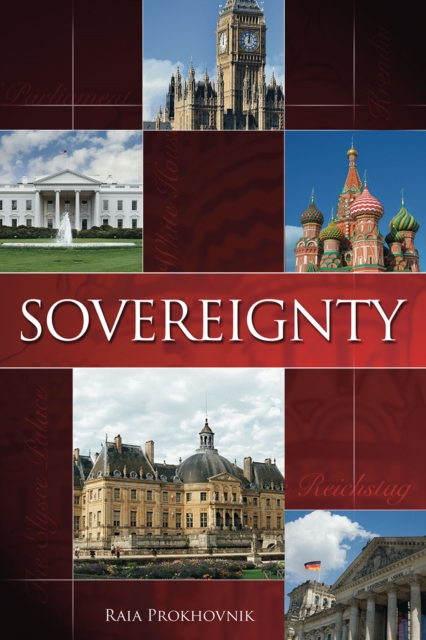
Sovereignty : history and theory
This innovative research monograph on sovereignty argues that the historical examination of the concept and the conceptual analysis of sovereignty are interdependent. The book engages with and makes a significant contribution to the literatures on sovereignty from the history of political thought and political theory. It offers a clear survey and evaluation of interlinked debates within these literatures, and provides lively and scholarly interpretations of thinkers including Bodin, Hobbes, Spinoza, Locke, Rousseau, Kant, Hegel, Foucault and Schmitt.This book will be of interest to historians of political thought, political theorists, political philosophers, IR theorists, and legal theorists.
eBook
Rational Woman
To feminists and some postmodernists reason/emotion and man/woman represent two fundamental polarities, fixed deep within Western philosophy and reflected in the structures of our languages, and two sets of hierarchical power relations in patriarchal society. Raia Prokhovnik challenges the tradition of dualism and argues that rational woman need no longer be a contradiction in terms.
Prokhovnik examines in turn:
the nature of dichotomy, its problems and an alternative
the reason/emotion dichotomy
dichotomies central to the man/woman dualism, such as sex/gender and the heterosexual/ist norm
eBook

rethinking sovereignty
A review essay covering books by 1) Jens Bartelson, Sovereignty as Symbolic Form (2014) and 2) Joan Cocks, On Sovereignty and Other Political Delusions (2014).
Journal Article

Rational Woman
To feminists and some postmodernists reason/emotion and man/woman represent two fundamental polarities, fixed deep within Western philosophy and reflected in the structures of our languages, and two sets of hierarchical power relations in patriarchal society. Raia Prokhovnik challenges the tradition of dualism and argues that ‘rational woman’ need no longer be a contradiction in terms. Prokhovnik examines in turn: the nature of dichotomy, its problems and an alternative the reason/emotion dichotomy dichotomies central to the man/woman dualism, such as sex/gender and the heterosexual/ist norm. She argues for new ‘relational’ conceptions of all the terms involved, emphasizing the relationship or interdependence of reason and emotion, man and woman, rather than placing these terms at opposite poles. Prokhovnik then moves from the abstract to the practical by placing her thesis in the context of recent feminist theory and practice, including the backlash against feminism. She concludes that the second wave of feminism was still tied to a mind/body dichotomy, but that a third wave of feminism is emerging, bringing with it a relational non-dichotomous alternative. Rational Woman offers a clear survey and evaluation of epistemological and ontological debates, but more importantly shows how these debates pertain to current political developments. This work makes a significant contribution to the literature of gender politics, political and feminist theory, sociology and philosophy.
Book

Public and Private Citizenship: From Gender Invisibility to Feminist Inclusiveness
Conceptions of citizenship which rest on an abstract and universal notion of the individual founder on their inability to recognize the political relevance of gender. Such conceptions, because their ‘gender-neutrality’ has the effect of excluding women, are not helpful to the project of promoting the full citizenship of women.
The question of citizenship is often reduced to either political citizenship, in terms of an instrumental notion of political participation, or social citizenship, in terms of an instrumental notion of economic (in)dependence. The paper argues for the recognition of citizenship as gendered, and as an ethical, that is non-instrumental, social status which is distinct from both political participation and economic (in)dependence. What unites us as citizens, in our equal membership of the political community, need not rely on a conception of us as ‘neutral’ (abstract, universalized, genderless) individuals undertaking one specific activity located in the public realm, but can take account of the diverse ways in which we engage in ethically-grounded activities on the basis of our different genders, ethnic and cultural backgrounds and other differences, in both the public and private realms.
A convincing feminist conception of citizenship necessarily involves a radical redefinition of the public/private distinction to accommodate the recognition of citizenship practices in the private realm. The paper builds on the observation that the concept of ‘citizenship’ is broader than the concept of ‘the political’ (or ‘the social/economic’), and contends that feminism provides us with the emancipatory potential of gendered subjectivity, which applies to both men and women. The recognition of gendered subjectivity opens the way to the recognition of the diversity of citizenship practices.
It is
not
that women need to be liberated from the
private
realm, in order to take part in the public realm as equal citizens, but that women – and men – already undertake responsibilities of citizenship in both the public and the private realms.
Journal Article

An interview with Quentin Skinner
The outcome of my reading was that, between 1965 and 1969, I published my first body of research, a sequence of articles in which I argued that Hobbes's theory of political obligation in Leviathan is best understood as a contribution to the debates that were then raging about the usurpation of sovereignty and the relations between conquest and consent. From his Autobiography, I took the suggestion that we should think of all texts as answers to questions, treating the interpretative task as that of seeking to identify the problems that particular texts were attempting to solve. We are always being asked to say how many people ever read the books we study, on pain of being dismissed as elitist if we concede that, for example, few people have ever seriously studied Plato or Hobbes or Rousseau, and fewer still have understood them very well.
Journal Article
Public and Private Citizenship: From Gender Invisibility to Feminist Inclusiveness
Conceptions of citizenship which rest on an abstract and universal notion of the individual founder on their inability to recognize the political relevance of gender. Such conceptions, because their 'gender-neutrality' has the effect of excluding women, are not helpful to the project of promoting the full citizenship of women. The question of citizenship is often reduced to either political citizenship, in terms of an instrumental notion of political participation, or social citizenship, in terms of an instrumental notion of economic (in)dependence. The paper argues for the recognition of citizenship as gendered, and as an ethical, that is non-instrumental, social status which is distinct from both political participation and economic (in)dependence. What unites us as citizens, in our equal membership of the political community, need not rely on a conception of us as 'neutral' (abstract, universalized, genderless) individuals undertaking one specific activity located in the public realm, but can take account of the diverse ways in which we engage in ethically-grounded activities on the basis of our different genders, ethnic and cultural backgrounds and other differences, in both the public and private realms. A convincing feminist conception of citizenship necessarily involves a radical redefinition of the public/private distinction to accommodate the recognition of citizenship practices in the private realm. The paper builds on the observation that the concept of 'citizenship' is broader than the concept of 'the political' (or 'the social/economic'), and contends that feminism provides us with the emancipatory potential of gendered subjectivity, which applies to both men and women. The recognition of gendered subjectivity opens the way to the recognition of the diversity of citizenship practices. It is not that women need to be liberated from the private realm, in order to take part in the public realm as equal citizens, but that women - and men - already undertake responsibilities of citizenship in both the public and the private realms.
Journal Article
Introduction
The title of this book invokes two implied contrasts. 'Rational' suggests a comparison with 'emotion', and also with 'body', 'intuition', 'passions', 'nature', 'experience' and the 'irrational'. This book is primarily concerned, in this first comparison, with the contrast between reason and emotion, and more particularly with the role of emotion in rationality. The second tacit comparison in the title refers to how the term 'woman' is the intimated opposition from 'man'.
Book Chapter
Dichotomy
The argument of this chapter follows directly from the appreciation expressed in the Introduction for the work of Lloyd and others in explicating the negative role of dualisms in the Western intellectual tradition (Lloyd 1993; see also Flax 1992, Green 1995). Plumwood's work (1993, 1995) is also dedicated to documenting the important negative effects of dualism. She highlights the dualism involved in the specific opposition between 'human' and 'nature', leading to a whole series of dichotomous readings of the human condition.
1
Book Chapter