
Catalogue Search | MBRL


Are you sure you want to remove the book from the shelf?

{{itemTitle}}
96
result(s) for
"Putter, Ad"
Sort by:


The Cambridge Companion to the Arthurian Legend
For more than a thousand years, the adventures of King Arthur and his Knights of the Round Table have been retold across Europe. They have inspired some of the most important works of European literature, particularly in the medieval period: the romances of Chrétien de Troyes, Wolfram von Eschenbach's Parzival, Sir Gawain and the Green Knight and Malory's Le Morte d'Arthur. In the nineteenth century, interest in the Arthurian legend revived with Tennyson, Wagner and Twain. This Companion outlines the evolution of the legend from the earliest documentary sources to Spamalot, and analyses how some of the major motifs of the legend have been passed down in both medieval and modern texts. With a map of Arthur's Britain, a chronology of key texts and a guide to further reading, this volume itself will contribute to the continuing fascination with the King and his many legends.
eBook

Linguistic change and metre: the demise of adjectival inflections and the scansion of ‘high’ and ‘sly’ in Chaucer, Gower and Hoccleve
This article examines the inflectional system of adjectives in Chaucer, Gower and Hoccleve, with particular reference to the adjectives ‘high’ and ‘sly’. Since these poets were careful metrists, scansion allows us to determine the syllabic status of adjectives in their verse. While in Chaucer and Gower, the grammatical system for the inflection of monosyllabic adjectives (final -e for weak and plural adjectives) is generally observed, there is good evidence to show that the system was breaking down in the case of ‘high’ and ‘sly’, which frequently appear without inflection in weak position. The article also shows that in Hoccleve's poetry inflectional -e had disappeared altogether in these adjectives, except at line ending. Editorial emendations that depend on this inflection are therefore incorrect. The explanation for the irregular behaviour of ‘high’ and ‘sly’ is probably related to the vulnerability of schwa after front vowels.
Journal Article

In Appreciation of Metrical Abnormality
This article examines Chaucer’s use of headless lines and initial inversion in both his short-line verse and his long-line verse, and compares Chaucer’s use of these metrical licences with that of earlier and later English poets. It shows that in Chaucer’s short-line verse headless lines are much more common than is initial inversion, while the exact opposite is true for Chaucer’s iambic pentameter. Analysing the contexts in which these metrical licences occur, I argue that Chaucer (and his predecessors) used them very deliberately, not only for emphasis and rhetorical effect but also to clarify narrative and syntactical organization. Of particular interest is the use of these devices in the context of non-indicative moods, lists and catalogues, direct speeches and changes of addressee, transitions between narrative sections, and enjambement.
Journal Article

Perfect and Imperfect Rhyme: Romances in the abab Tradition
This article focuses on a group of Middle English romances composed in four-line stanzas rhyming abab. Surviving examples of this form include Thomas of Erceldoune, The Sowdone of Babylon, The Knight of Courtesy, and the fragmentary Partonope of Blois. Since these romances are from different dialect areas, the verse form appears to have been a popular one in medieval England. Examining the quality of the rhymes in the extant manuscripts, we show that both the original poets and the scribes of these romances were happy to tolerate imperfect rhyme. Two common types of imperfect rhyme, \"feature rhyme\" and \"subsequence rhyme,\" are discussed, and we provide analogues for such rhymes in medieval and modern song, from nursery rhymes to Latin hymns. We conclude by suggesting that the use of so-called \"imperfect\" rhyme is linked with oral performance and that it was in fact perfectly acceptable in this context.
Journal Article


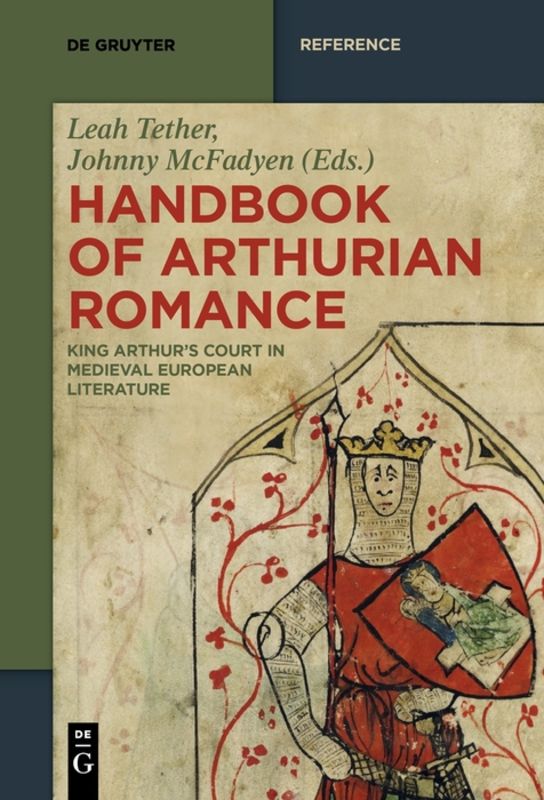
Handbook of Arthurian romance : King Arthur's court in medieval European literature
The renowned and illustrious tales of King Arthur, his knights and the Round Table pervade all European vernaculars, as well as the Latin tradition.Arthurian narrative material, which had originally been transmitted in oral culture, began to be inscribed regularly in the twelfth century, developing from (pseudo-)historical beginnings in the Latin.
eBook