
Catalogue Search | MBRL


Are you sure you want to remove the book from the shelf?

{{itemTitle}}
69,645
result(s) for
"Qi, Li-Li"
Sort by:

الأدوات البرونزية للصين
يعتبر ظهور الأدوات البرونزية قفزة مهمة في تاريخ الحضارة الإنسانية. وعلي الرغم من أن العصر البرونزي في الصين لم يكن الأول في تاريخ البشرية، ولكن الأدوات البرونزية في الصين القديمة قد احتلت مكانة فريدة في تاريخ الحضارة العالمية اعتمادا علي أنواعها المتنوعة وأنماطها الغنية وعملية السبك الدقيقة والدلالة التاريخية والثقافية العميقة التي يحملها كل عمل برونزي في الصين القديمة. وهذا الكتاب الذي بين يدي القارئ الكريم يعرفن بلغة واضحة وحية وبالشرح والصور على أحد اوجه الثقافة والفنون الصينية الشهيرة والتي هي ثقافة البرونز الرائعة في الصين القديمة، فمن خلال قطعة من القطع البرونزية الثمينة يمكننا أن نستمع إلي صوت العصر البرونزي من أماكن بعيدة وتجربة أسلوب فريد من نوعه في ذلك العصر الذي مازالت أسراره بعيدة عن متناول القارئ العربي والتي نحاول من خلال هذا الكتاب أن نقدمها بشكل موجز وواضح لننقل للقارئ الكريم وجها جديدا عليه من أوجه الحضارة الصينية المتميزة.
Book

Traditional Herbal Medicine: A Potential Therapeutic Approach for Adjuvant Treatment of Non-small Cell Lung Cancer in the Future
Lung carcinoma is the primary reason for cancer-associated mortality, and it exhibits the highest mortality and incidence in developed and developing countries. Non-small cell lung cancer (NSCLC) and SCLC are the 2 main types of lung cancer, with NSCLC contributing to 85% of all lung carcinoma cases. Conventional treatment mainly involves surgery, chemoradiotherapy, and immunotherapy, but has a dismal prognosis for many patients. Therefore, identifying an effective adjuvant therapy is urgent. Historically, traditional herbal medicine has been an essential part of complementary and alternative medicine, due to its numerous targets, few side effects and substantial therapeutic benefits. In China and other East Asian countries, traditional herbal medicine is increasingly popular, and is highly accepted by patients as a clinical adjuvant therapy. Numerous studies have reported that herbal extracts and prescription medications are effective at combating tumors. It emphasizes that, by mainly regulating the P13K/AKT signaling pathway, the Wnt signaling pathway, and the NF-κB signaling pathway, herbal medicine induces apoptosis and inhibits the proliferation and migration of tumor cells. The present review discusses the anti-NSCLC mechanisms of herbal medicines and provides options for future adjuvant therapy in patients with NSCLC.
Journal Article

Decorated bacteria-cellulose ultrasonic metasurface
Cellulose, as a component of green plants, becomes attractive for fabricating biocompatible flexible functional devices but is plagued by hydrophilic properties, which make it easily break down in water by poor mechanical stability. Here we report a class of SiO
2
-nanoparticle-decorated bacteria-cellulose meta-skin with superior stability in water, excellent machining property, ultrathin thickness, and active bacteria-repairing capacity. We further develop functional ultrasonic metasurfaces based on meta-skin paper-cutting that can generate intricate patterns of ~10 μm precision. Benefited from the perfect ultrasound insulation of surface Cassie-Baxter states, we utilize meta-skin paper-cutting to design and fabricate ultrathin (~20 μm) and super-light (<20 mg) chip-scale devices, such as nonlocal holographic meta-lens and the 3D imaging meta-lens, realizing complicated acoustic holograms and high-resolution 3D ultrasound imaging in far fields. The decorated bacteria-cellulose ultrasonic metasurface opens the way for exploiting flexible and biologically degradable metamaterial devices with functionality customization and key applications in advanced biomedical engineering technologies.
The researchers report a class of silica-nanoparticle-decorated bacteria-cellulose ultrasonic metasurfaces that feature excellent stability in water and mechanical processability. They demonstrate it as holographic meta-lens and 3D imaging meta-lens.
Journal Article

الحياة
صدرت حديثا عن مؤسسة بيت الحكمة، سلسلة \"قصص الرموز الصينية\"، وهي أول سلسلة تثقيفية وتعليمية مترجمة تتناول البحث في قصص الرموز الصينية، والكشف عن أصل الرموز والحكايات التاريخية التي خلفها، حيث تعتمد على مقولات مبسطة تقود القارئ لمعرفة منابع الرموز الصينية وتاريخ تطورها. وتتشكل السلسلة من خمسة كتب، وهي \"الإنسان، والحيوان، والنبات، والطبيعة، والحياة\"، ويتناول كل منها عددا من الرموز التي يحكي أصلها وطرق كتابتها على مر العصور وصولا لشكلها الحالي، بالإضافة إلى التعريف بأشكال النقوش وأنواع الخطوط الصينية ونماذج لكل منها، والطرق الأساسية لابتكار الرموز الصينية إما المعبرة عن الأشياء، أو المشتقة من معنى أجزائها، كما تتناول السلسلة، الكلمات والعبارات التي تدخل الرموز في تكوينها، والأمثال والحكم والقصص التراثية التي تستخدم الرمز أو مدلولاته في إطار أدبي شيق.
Book

Vitamin K2 Extends Lifespan by Alleviating Mitochondrial Stress via the JNK ‐1/ SIR ‐2.1/ DAF ‐16 Signaling Axis in Caenorhabditis elegans
Vitamin K2 is a fat‐soluble vitamin that has been reported to exhibit significant anti‐stress activity. Anti‐stress properties are considered to be closely associated with lifespan extension. Therefore, we investigated the effects of vitamin K2 on the lifespan and stress resistance of Caenorhabditis elegans , as well as the underlying mechanisms. In the present study, we found that the effects of Vitamin K2 on C. elegans are concentration‐dependent. High concentrations (10 μM) of Vitamin K2 are toxic to C. elegans , whereas lower concentrations (5 μM) are beneficial. Treatment with 5 μM Vitamin K2 can extend the lifespan of C. elegans , enhance its physiological functions, protect the intestinal barrier, and reduce the accumulation of lipofuscin associated with aging. Furthermore, Vitamin K2 enhanced the stress resistance of C. elegans by maintaining mitochondrial morphology, alleviating mitochondrial stress, reducing ROS levels, and improving mitochondrial membrane potential and ATP production. Vitamin K2 activates the JNK‐1/SIR‐2.1/DAF‐16 signaling pathway and upregulates the expression of downstream target genes such as ctl‐1 , ctl‐2 , sod‐1 , sod‐3 , and hsp‐16.2 . We conclude that appropriate doses of Vitamin K2 protect C. elegans from senescence by activating the JNK‐1/SIR‐2.1/DAF‐16‐mediated anti‐mitochondrial oxidative stress pathway. These findings suggest that Vitamin K2 may have beneficial effects on lifespan and mitochondrial health in C. elegans , providing a basis for further investigation into its potential relevance for aging and age‐related diseases in more complex model systems.
Journal Article

China, the EU and international investment law : reforming investor-state dispute settlement
\"This book provides an original and critical analysis of the most contentious subjects being negotiated in the China-EU Comprehensive Agreement on Investment (CAI). It focuses on the pathway of reforming investor-state dispute settlement (ISDS) from both Chinese and European perspectives in the context of the China-EU CAI and beyond. The book is divided into three parts. Part I examines key and controversial issues of the China-EU CAI negotiations, including market access, sustainable development, human rights, as well as comparing distinct features between the China-EU CAI and the China-US BIT. Part II concentrates on the institutional reform of investor-state arbitration with an extensive analysis of the EU's approach to replacing the private nature of investment arbitration with the public nature of an investment court. Part III addresses the core substantive and procedural issues concerning ISDS, such as the role of domestic courts in investment dispute settlement, the status of state-owned enterprises (SOEs) as investors, transparency, and protection of victims in investment dispute resolution\"-- Provided by publisher.
Book

Social friction vs. cognitive efficiency: A comparative analysis of help-seeking behaviors in human communities and generative AI
Generative AI agents (e.g., ChatGPT) provide a private, low-latency environment for knowledge acquisition, distinct from public online communities where social evaluation is prevalent. This study investigates how the removal of social evaluation threats in AI interactions alters learners’ help-seeking strategies. We analyzed a matched corpus of 30,000 dialogue turns from LMSYS-Chat-1M (Human-AI) and Stack Exchange (Human-Human) using computational linguistic methods (LIWC-22 and RoBERTa). Results show that in AI interactions, learners almost completely abandon defensive impression management strategies (such as hedges) and politeness markers that are mandatory in human communities. Furthermore, contrary to the expectation that users would “confess” ignorance to AI, we found that learners adopt an authoritative “Director” stance rather than a humble “Petitioner” role. These findings suggest that AI is not merely a social substitute but a functional tool that allows users to bypass the cognitive costs of social negotiation. The shift implies a trade-off: AI maximizes information retrieval efficiency but potentially reduces the ‘desirable difficulties’ associated with problem formulation. This transformation highlights a potential for reduced practice in the cognitive processes traditionally required to structure ambiguity in collaborative settings.
Journal Article
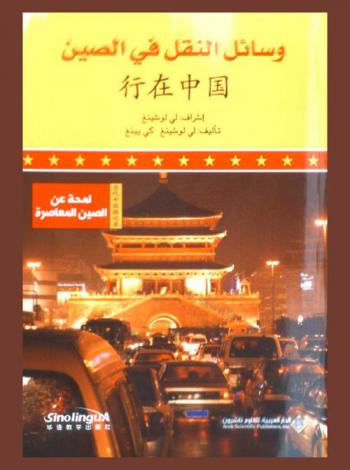
وسائل النقل في الصين
يستعرض كتاب \"وسائل النقل\" الذي نشر ضمن سلسلة الصين في مائة عام عن مؤسسة بيت الحكمة عدًدا من المحاور الأساسية منها أحوال الطرق في أواخر عهد أسرة تشينغ، وسمات وسائل النقل بما فيها العربات التي يحملها الرجال، أو تلك التي تجرها الخيول، والعربات الرسمية والمحفات الشعبية التي تقل العامة من الناس، بالإضافة إلى وصف للجسور المتنوعة والسفن وأنواع الزوارق المختلفة، وحركة النقل في عصر الحكومة الوطنية لجمهورية الصين وملامح ظهور وسائل النقل الحديثة، ومنها عربات اليد والحنطور الغربي والدراجة الهوائية والسيارة التي تعمل بالمحرك، بالإضافة إلى تطور السكك الحديدية والقطارات الحديثة، والتطورات الكبيرة في صناعة السفن ووسائل النقل البحري والبواخر المتطورة.
BOOK

Network pharmacology, prognostic analysis and experimental validation elucidate the therapeutic mechanism of Dingxiang Guanshitong in esophageal cancer
This study aimed to investigate the target genes of active components in Dingxiang Guanshitong (DGST) and evaluate their significance in the prognosis of esophageal cancer (EC) through integrated approaches, including network pharmacology, molecular docking, prognostic analysis, and in vitro experiments. EC-related data were obtained from TCGA database, while SymMap and TCMSP databases were utilized to identify DGST’s bioactive components and their targets. A comprehensive network was constructed to map component-target-pathway interactions. Bioinformatics analysis revealed 113 key signaling pathways and 424 differentially expressed targets associated with DGST and EC. Univariate Cox regression analysis identified 21 target genes significantly correlated with overall survival (OS) in EC patients, among which six exhibited pharmacological activity. Molecular docking confirmed strong binding affinities between DGST’s active components and critical targets. In vitro experiments demonstrated that DGST suppressed migration, invasion, and proliferation of TE-1 and EC-109 cell lines while promoting apoptosis. Furthermore, DGST significantly upregulated the protein and mRNA expression of the prognostic factor NFKBIA, while downregulating GPER1, HK2, MAOB, TNFRSF10B, and ECE1. This study is the first to elucidate the molecular mechanisms underlying DGST’s anti-EC effects. DGST exerts its anti-cancer activity by targeting prognosis-related genes and modulating the expression of critical molecular markers, thereby inhibiting EC progression and improving therapeutic outcomes. These findings provide a robust scientific foundation for the clinical application of DGST and further exploration of its mechanistic basis.
Graphical abstract
Journal Article