
Catalogue Search | MBRL


Are you sure you want to remove the book from the shelf?

{{itemTitle}}
2
result(s) for
"Qian, Kun, author"
Sort by:

Imperial-Time-Order : Literature, Intellectual History, and China's Road to Empire
\"Imperial-Time-Order is an engagingly written critical study on a persistent historical way of thinking in modern China. Defined as normalization of unification and moralization of time, Qian suggests, the imperial-time-order signifies a temporal structure of empire that has continued to shape the way modern China developed itself conceptually. Weaving together intellectual debates with literary and media representations of imperial history since the late Qing period, ranging from novels, stage plays, films, to television series, Qian traces the different temporalities of each period and takes 'time' as the analytical node by which issues of empire, nation, family, morality, individual and collective subjectivity are constructed and contested\"--Provided by publisher.
Book
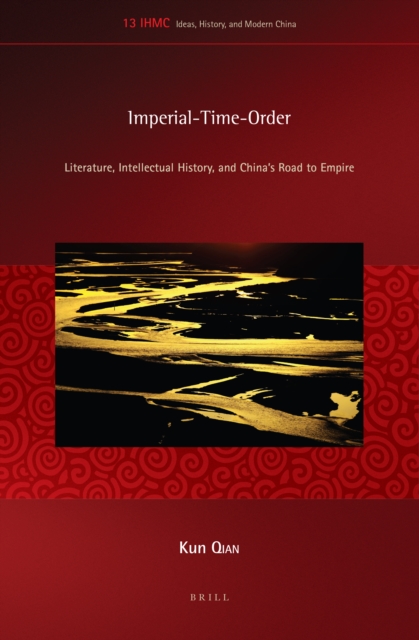
Imperial-Time-Order
Imperial-Time-Order is an engagingly written critical study on a persistent historical way of thinking in modern China. Defined as normalization of unification and moralization of time, Qian suggests, the imperial-time-order signifies a temporal structure of empire that has continued to shape the way modern China developed itself conceptually. Weaving together intellectual debates with literary and media representations of imperial history since the late Qing period, ranging from novels, stage plays, films, to television series, Qian traces the different temporalities of each period and takes \"time\" as the analytical node by which issues of empire, nation, family, morality, individual and collective subjectivity are constructed and contested.
eBook