
Catalogue Search | MBRL


Are you sure you want to remove the book from the shelf?

{{itemTitle}}
2,602
result(s) for
"Quan, Sheng"
Sort by:


Conversational question answering: a survey
Question answering (QA) systems provide a way of querying the information available in various formats including, but not limited to, unstructured and structured data in natural languages. It constitutes a considerable part of conversational artificial intelligence (AI) which has led to the introduction of a special research topic on conversational question answering (CQA), wherein a system is required to understand the given context and then engages in multi-turn QA to satisfy a user’s information needs. While the focus of most of the existing research work is subjected to single-turn QA, the field of multi-turn QA has recently grasped attention and prominence owing to the availability of large-scale, multi-turn QA datasets and the development of pre-trained language models. With a good amount of models and research papers adding to the literature every year recently, there is a dire need of arranging and presenting the related work in a unified manner to streamline future research. This survey is an effort to present a comprehensive review of the state-of-the-art research trends of CQA primarily based on reviewed papers over the recent years. Our findings show that there has been a trend shift from single-turn to multi-turn QA which empowers the field of Conversational AI from different perspectives. This survey is intended to provide an epitome for the research community with the hope of laying a strong foundation for the field of CQA.
Journal Article
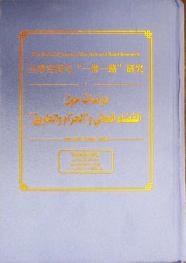
دراسات حول الفضاء العالمي و\الحزام والطريق\ : (مجلد البيئة الإيكولوجية)
إن معظم الدول والمناطق على طول «الحزام والطريق» هي دول نامية، وتعاني جميعا من مشكلات في البيئة الإيكولوجية أكثر أو أقل، كما إنها تواجه تحديات ضخمة في التوازن بين التنمية وحماية البيئة. وتواجه هذه البلدان النامية فرصا غير مسبوقة أتاحها المفهوم الاستراتيجي لمبادرة «الحزام والطريق»، كما أن كيفية التعامل مع التحدي المتمثل في حماية البيئة الإيكولوجية أثناء بناء وتطوير «الحزام والطريق» هي المهمة الأساسية التي تواجهها البلدان النامية بما فيها الصين. ويناقش هذا الكتاب ويلخص الخلفية البيئية الإيكولوجية للبلدان/ المناطق المشاركة في مبادرة \"الحزام والطريق\" والمشكلات الرئيسية في هذا الجانب.
Book

Deciphering the genomic characters of Ptygonotus chinghaiensis, a high-altitude grasshopper endemic to the Qinghai-Tibet Plateau, using low-coverage short-read sequencing
Background
The Qinghai-Tibet Plateau, the world’s youngest plateau, harbors a unique biodiversity shaped by its extreme environmental conditions. Genomic adaptations in its endemic insects, particularly those with large genomes such as grasshoppers (5.6–20 Gb), remain underexplored. Here, we present the first genomic analysis of
Ptygonotus chinghaiensis
, a high-altitude grasshopper endemic to this region, using low-coverage short-read sequencing.
Results
We estimated the haploid genome size of
P. chinghaiensis
at 12.17 Gb, with repetitive elements comprising 72.34%, predominantly DNA transposons, long terminal repeat (LTR) retrotransposons, and long interspersed nuclear elements (LINEs). Recent bursts of transposable elements (TEs) activity appear to have driven genomic expansion in this species. The 45S rRNA DNA operon, encoding the small subunit rRNA (ssrRNA), 5.8S rRNA, and large subunit rRNA (lsrRNA), was assembled into an 8,000 bp contig. The mitochondrial genome, spanning 16,750 bp, provided evolutionary insights, with divergence dated to 10.84 Mya during the late Neogene.
Conclusion
This study offers the first genome-wide characterization of a Qinghai-Tibet Plateau-endemic grasshopper, providing critical resources for understanding high-altitude adaptation and genomic evolution. These findings enhance our knowledge of adaptive mechanisms in extreme environments and the evolutionary dynamics of plateau-endemic insects.
Journal Article

Adaptive Thermal Imaging Signal Analysis for Real-Time Non-Invasive Respiratory Rate Monitoring
(1) Background: This study presents an adaptive, contactless, and privacy-preserving respiratory-rate monitoring system based on thermal imaging, designed for real-time operation on embedded edge hardware. The system continuously processes temperature data from a compact thermal camera without external computation, enabling practical deployment for home or clinical vital-sign monitoring. (2) Methods: Thermal frames are captured using a 256×192 TOPDON TC001 camera and processed entirely on an NVIDIA Jetson Orin Nano. A YOLO-based detector localizes the nostril region in every even frame (stride = 2) to reduce the computation load, while a Kalman filter predicts the ROI position on skipped frames to maintain spatial continuity and suppress motion jitter. From the stabilized ROI, a temperature-based breathing signal is extracted and analyzed through an adaptive median–MAD hysteresis algorithm that dynamically adjusts to signal amplitude and noise variations for breathing phase detection. Respiratory rate (RR) is computed from inter-breath intervals (IBI) validated within physiological constraints. (3) Results: Ten healthy subjects participated in six experimental conditions including resting, paced breathing, speech, off-axis yaw, posture (supine), and distance variations up to 2.0 m. Across these conditions, the system attained a MAE of 0.57±0.36 BPM and an RMSE of 0.64±0.42 BPM, demonstrating stable accuracy under motion and thermal drift. Compared with peak-based and FFT spectral baselines, the proposed method reduced errors by a large margin across all conditions. (4) Conclusions: The findings confirm that accurate and robust respiratory-rate estimation can be achieved using a low-resolution thermal sensor running entirely on an embedded edge device. The combination of YOLO-based nostril detector, Kalman ROI prediction, and adaptive MAD–hysteresis phase that self-adjusts to signal variability provides a compact, efficient, and privacy-preserving solution for non-invasive vital-sign monitoring in real-world environments.
Journal Article

A weighted interval rough number based method to determine relative importance ratings of customer requirements in QFD product planning
Customer requirements (CRs) play a significant role in the product development process, especially in the early design stage. Quality function deployment (QFD), as a useful tool in customer-oriented product development, provides a systematic approach towards satisfying CRs. Customers are heterogeneous and their requirements are often vague, therefore, how to determine the relative importance ratings (RIRs) of CRs and eventually evaluate the final importance ratings is a critical step in the QFD product planning process. Aiming to improve the existing approaches by interpreting various CR preferences more objectively and accurately, this paper proposes a weighted interval rough number method. CRs are rated with interval numbers, rather than a crisp number, which is more flexible to adapt in real life; also, the fusion of customer heterogeneity is addressed by assigning different weights to customers based on several factors. The consistency of RIRs is maintained by the proposed procedures with design rules. A comparative study among fuzzy weighted average method, rough number method and the proposed method is conducted at last. The result shows that the proposed method is more suitable in determining the RIRs of CRs with vague information.
Journal Article
Privacy-Preserving Approach for Early Detection of Long-Lie Incidents: A Pilot Study with Healthy Subjects
(1) Background: Detecting long-lie incidents—where individuals remain immobile after a fall—is essential for timely intervention and preventing severe health consequences. However, most existing systems focus only on fall detection, neglect post-fall monitoring, and raise privacy concerns, especially in real-time, non-invasive applications; (2) Methods: This study proposes a lightweight, privacy-preserving, long-lie detection system utilizing thermal imaging and a soft-voting ensemble classifier. A low-resolution thermal camera captured simulated falls and activities of daily living (ADL) performed by ten healthy participants. Human pose keypoints were extracted using MediaPipe, followed by the computation of five handcrafted postural features. The top three classifiers—automatically selected based on cross-validation performance—formed the soft-voting ensemble. Long-lie conditions were identified through post-fall immobility monitoring over a defined period, using rule-based logic on posture stability and duration; (3) Results: The ensemble model achieved high classification performance with accuracy, precision, recall, and an F1 score of 0.98. Real-time deployment on a Raspberry Pi 5 demonstrated the system is capable of accurately detecting long-lie incidents based on continuous monitoring over 15 min, with minimal posture variation; (4) Conclusion: The proposed system introduces a novel approach to long-lie detection by integrating privacy-aware sensing, interpretable posture-based features, and efficient edge computing. It demonstrates strong potential for deployment in homecare settings. Future work includes validation with older adults and integration of vital sign monitoring for comprehensive assessment.
Journal Article

Deep graph level anomaly detection with contrastive learning
Graph level anomaly detection (GLAD) aims to spot anomalous graphs that structure pattern and feature information are different from most normal graphs in a graph set, which is rarely studied by other researchers but has significant application value. For instance, GLAD can be used to distinguish some different characteristic molecules in drug discovery and chemical analysis. However, GLAD mainly faces the following three challenges: (1) learning more comprehensive graph level representations to differ normal graphs and abnormal graphs, (2) designing an effective graph anomaly evaluation paradigm to capture graph anomalies from the local and global graph perspectives, (3) overcoming the number imbalance problem of normal and abnormal graphs. In this paper, we combine graph neural networks and contrastive learning to build an end-to-end GLAD framework for solving the three challenges above. We aim to design a new graph level anomaly evaluation way, which first utilizes the contrastive learning strategy to enhance different level representations of normal graphs from node and graph levels by a graph convolution autoencoder with perturbed graph encoder. Then, we evaluate the error of them with corresponding representations of the generated reconstruction graph to detect anomalous graphs. Extensive experiments on ten real-world datasets from three areas, such as molecular, protein and social network anomaly graphs, show that our model can effectively detect graph level anomaly from the majority and outperform existing advanced methods.
Journal Article
Analysis of codon usage patterns in Hirudinaria manillensis reveals a preference for GC-ending codons caused by dominant selection constraints
Background
Hirudinaria manillensis
is an ephemeral, blood-sucking ectoparasite, possessing anticoagulant capacities with potential medical applications. Analysis of codon usage patterns would contribute to our understanding of the evolutionary mechanisms and genetic architecture of
H. manillensis
, which in turn would provide insight into the characteristics of other leeches. We analysed codon usage and related indices using 18,000 coding sequences (CDSs) retrieved from
H. manillensis
RNA-Seq data.
Results
We identified four highly preferred codons in
H. manillensis
that have G/C-endings. Points generated in an effective number of codons (ENC) plot distributed below the standard curve and the slope of a neutrality plot was less than 1. Highly expressed CDSs had lower ENC content and higher GC content than weakly expressed CDSs. Principal component analysis conducted on relative synonymous codon usage (RSCU) values divided CDSs according to GC content and divided codons according to ending bases. Moreover, by determining codon usage, we found that the majority of blood-diet related genes have undergone less adaptive evolution in
H. manillensis
, except for those with homologous sequences in the host species.
Conclusions
Codon usage in
H. manillensis
had an overall preference toward C-endings and indicated that codon usage patterns are mediated by differential expression, GC content, and biological function. Although mutation pressure effects were also notable, the majority of genetic evolution in
H. manillensis
was driven by natural selection.
Journal Article
Characterization of chemosensory genes in the subterranean pest Gryllotalpa Orientalis based on genome assembly and transcriptome comparison
Background
Chemosensory perception plays a vital role in insect survival and adaptability, driving essential behaviours such as navigation, mate identification, and food location. This sensory process is governed by diverse gene families, including odorant-binding proteins (OBPs), olfactory receptors (ORs), ionotropic receptors (IRs), chemosensory proteins (CSPs), gustatory receptors (GRs), and sensory neuron membrane proteins (SNMPs). The oriental mole cricket (
Gryllotalpa orientalis
Burmeister), an invasive pest with an underground, phyllophagous lifestyle, causes substantial crop damage. This study characterizes the chemosensory gene repertoire of
G. orientalis
based on de novo genome assembly and transcriptomic analysis.
Results
We present a draft genome of
G. orientalis
at the scaffold level, spanning 2.94 Gb and comprising 10,497 scaffolds. This assembly encodes 19,155 protein-coding genes, including 158 chemosensory genes: 30 odorant receptors (ORs), 64 ionotropic receptors (IRs), ten gustatory receptors (GRs), 28 odorant-binding proteins (OBPs), 25 chemosensory proteins (CSPs), and a single sensory neuron membrane protein (SNMP). Expression analysis indicated that 71 chemosensory genes were actively expressed in the head, thorax, and legs, with ORs and OBPs showing higher expression in the head and legs. In contrast, GRs and IRs were predominantly expressed in the head.
Conclusions
This study provides the first comprehensive identification of chemosensory gene families in the
G. orientalis
genome, characterized as a scaffold-level draft genome. These findings provide a basis for future functional studies and highlight the role of chemoreception in the subterranean environment.
Journal Article