
Catalogue Search | MBRL


Are you sure you want to remove the book from the shelf?

{{itemTitle}}
49
result(s) for
"Quinan, Jack"
Sort by:


In the Thought of the World
Shortly after Frank Lloyd Wright completed the Larkin Administration Building in 1906, Russell Sturgis, a leading American architecture critic, wrote a scathing review in the Architectural Record, characterizing the building as “extremely ugly” and “a monster of awkwardness.”¹ For his part, Wright, upon hearing of the building’s demise forty-two years later, said that he believed that the building “had taken its place in the thought of the world.”² History has proven Sturgis wrong, but how can we measure the validity of Wright’s claim?
The Larkin Building is firmly entrenched in histories of architectural modernism, beginning with Henry-Russell Hitchcock’s Modern Architecture:
Book Chapter
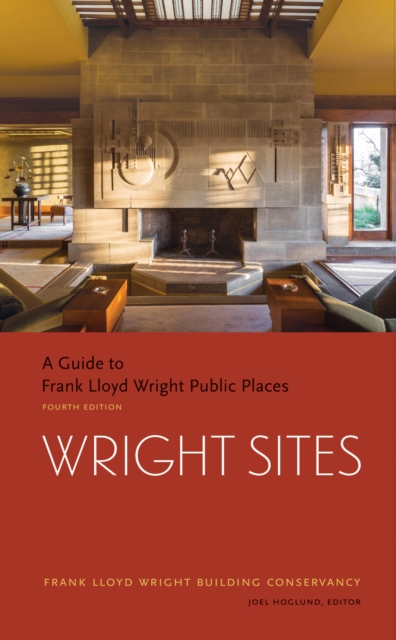
Guide To Visiting Frank Lloyd Wright Public Places : A Guide To Visiting Frank Lloyd Wright Buildings
Frank Lloyd Wright's groundbreaking designs, innovative construction techniques, and inviting interiors continue to astound and inspire generations of architects and nonarchitects alike. The only comprehensive collection of Wright-designed buildings open to the public in the United States and Japan, Wright Sites has been revised and expanded to celebrate the 150th anniversary of the architect's birth in June 1867. The fourth edition of our best-selling guidebook contains twenty new sites, updated site descriptions and access information, and, for the first time, color photographs. It also includes itineraries for Wright road trips, a list of archives, and a selected bibliography.The introduction, revised for this edition, is by Jack Quinan, a founding member of the Frank Lloyd Wright Building Conservancy and author of Frank Lloyd Wright's Martin House.
eBook

Exhibitions: \Frank Lloyd Wright: From Within Outward\
An exhibition detailing the career of architect Frank Lloyd Wright, held at the Solomon R. Guggenhem Museum in New York, New York from May to August 2009 and then at Guggenheim Bilbao in Spain from October 2009 to February 2010, is reviewed.
Journal Article
Frank Lloyd Wright, Preservation, and the Question of Authenticity
English Reflects on authenticity in historic preservation in response to events surrounding the restoration of Frank Lloyd Wright's Darwin D. Martin House complex in Buffalo, NY, including the construction of three buildings in Buffalo from designs by Wright that were not realized during his lifetime.
Journal Article

In the Thought of the World
This chapter focuses on the Larkin Building, which is firmly entrenched in histories of architectural modernism, such as Henry-Russell Hitchcock's Modern Architecture: Romanticism and Reintegration of 1929. It cites Hendrik Petrus Berlage's Amsterdam Stock Exchange, Peter Behren's AEG Turbine Factory, and Otto Wagner's Post Office Savings Bank as buildings that rival Frank Lloyd Wright's Larkin commission for architectural distinction at the turn of the twentieth century. It also reviews the origins of Wright's Larkin Building in the company's history, its material characteristics, and its principal functions. The chapter weighs the Larkin Building against similar considerations of three European buildings in order to identify the ideas and qualities that all four architects shared while also demonstrating characteristics in Wright's building. It describes the Larkin Administration Building that was modern in the abstractness of its blocklike forms and its many innovations.
Book Chapter

Wright sites : a guide to Frank Lloyd Wright public places
A comprehensive guide to Frank Lloyd Wright-designed buildings open to the public--with travel itineraries and information on seventy-four sites.Frank Lloyd Wright's groundbreaking designs, innovative construction techniques, and inviting interiors continue to astound and inspire generations of architects and design aficionados.
eBook