
Catalogue Search | MBRL


Are you sure you want to remove the book from the shelf?

{{itemTitle}}
130
result(s) for
"Raffensperger, Christian"
Sort by:

The Kingdom of Rus
As scholarship continues to expand the idea of medieval Europe beyond \"the West,\" the Rus' remain the final frontier relegated to the European periphery. Examining a wide range of medieval sources, and through an innovative analysis of medieval titles, The Kingdom of Rus' challenges the perception of Rus' as an eastern \"other\" - advancing the idea of the Rus' as a kingdom deeply integrated with medieval Europe.
eBook
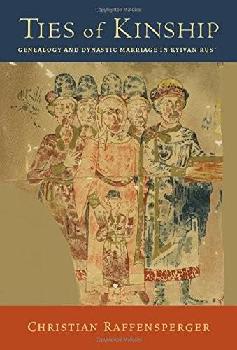
Ties of kinship : genealogy and dynastic marriage in Kyivan Rusʹ
\"Describes and analyzes the dynastic marriages of the descendants of Volodimer, the first ruler of Kyivan Rus', across medieval Europe from the tenth through the twelfth centuries and presents more than twenty-two genealogical charts with accompanying bibliographic information\"-- Provided by publisher.
Book
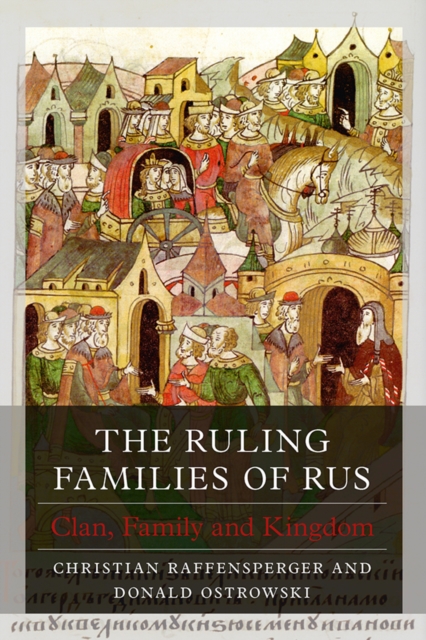
The Ruling Families of Rus
This is a new history of the region known as Kyivan Rus', a state in eastern and northern Europe from the late ninth to the mid-sixteenth century that encompassed a variety of polities and peoples, including Lithuanian, Polish, Ottoman and others. This account for the first time focuses on the history of the region via families, which allows the discussion of a wider region and a larger group of people than has been possible before. The book examines the development of Rus, Lithuania, Muscovy and Tver, and their relations and interconnections with the Mongols, Byzantines and many other peoples. This readable yet thoroughly scholarly book will appeal to anyone with an interest in the history of eastern Europe, a region that is crucial in world politics today.
eBook

Conflict, Bargaining, and Kinship Networks in Medieval Eastern Europe
\"This study examines conflict and conflict resolution in medieval Eastern Europe. The author argues that the posturing, limited violence, and shifting alliances within kinship networks often determined the outcome of conflicts in the region, without extensive bloodshed or large-scale warfare\"-- Provided by publisher.
Book
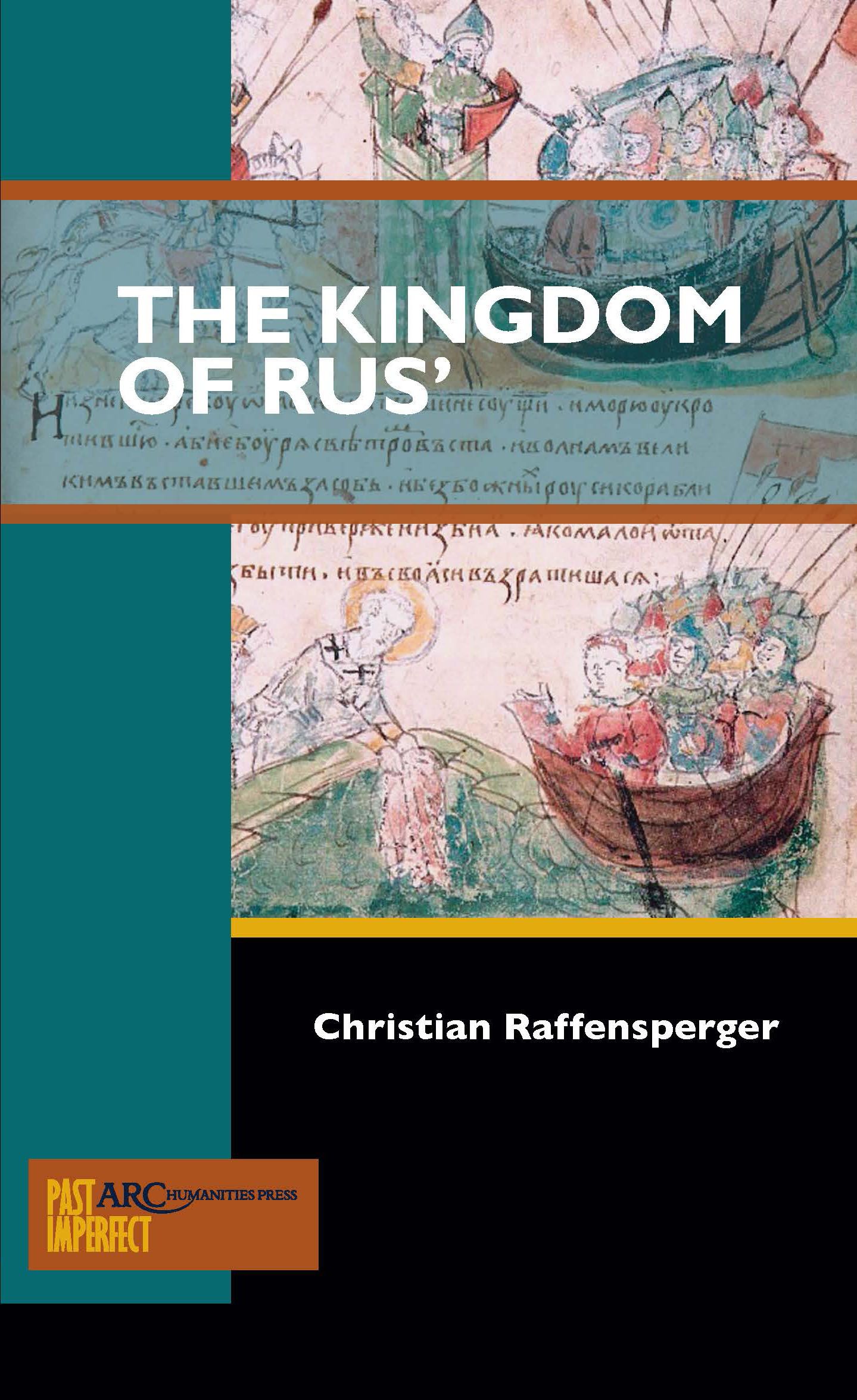
The Kingdom of Rus
As scholarship continues to expand the idea of medieval Europe beyond \"the West,\" the Rus' remain the final frontier relegated to the European periphery. The Kingdom of Rus' challenges the perception of Rus' as an eastern \"other\" – advancing the idea of the Rus' as a kingdom deeply integrated with medieval Europe, through an innovative analysis of medieval titles. Examining a wide range of medieval sources, this book exposes the common practice in scholarship of referring to Rusian rulers as princes as a relic of early modern attempts to diminish the Rus'. Not only was Rus' part and parcel of medieval Europe, but in the eleventh and twelfth centuries Rus' was the largest kingdom in Christendom.
As scholarship continues to expand the idea of medieval Europe beyond \"the West,\" the Rus' remain the final frontier relegated to the European periphery. The Kingdom of Rus' challenges the perception of Rus' as an eastern \"other\" – advancing the idea of the Rus' as a kingdom deeply integrated with medieval Europe, through an innovative analysis of medieval titles. Examining a wide range of medieval sources, this book exposes the common practice in scholarship of referring to Rusian rulers as princes as a relic of early modern attempts to diminish the Rus'. Not only was Rus' part and parcel of medieval Europe, but in the eleventh and twelfth centuries Rus' was the largest kingdom in Christendom.
eBook


Mykhailo Hrushevśkyi and the Construction of the Medieval History of Ruś
At the end of the nineteenth century, Mykhailo Hrushevśkyi began writing his monumental History of Ukraine-Ruś. This ten-volume work rewrote the history of Ukraine in many ways, including writing Kyivan Ruś into the history of medieval Europe. This was a clear challenge to the normative Russian narrative of a Ruś tied to Byzantium. Despite the breadth of Hrushevśkyi’s scholarship, his view lost out in the battle for controlling the memory of Ruś and its relations with the rest of the medieval world.
Part of the reason why Hrushevśkyi’s worldview lost was the challenge from Vasilii Kliuchevskii’s Short Course on Russian History, as well as the enormous popularity of both the book series and the instructor. This article compares the treatment of Ruś in both Hrushevśkyi’s and Kliuchevskii’s works to see how they discuss Ruś as part of medieval Europe, and then goes a step further by examining how medievalists of that time considered and used the work of Hrushevśkyi. Finally, the article suggests issues which prevented the widespread acceptance of Hrushevśkyi’s work which would have, or could have, remade the map of medieval Europe in twentieth-century scholarship.
Journal Article
Mykhailo Hrushevs´kyi and the Construction of the Medieval History of Rus
At the end of the nineteenth century, Mykhailo Hrushevs 'kyi began writing his monumental History of Ukraine-Rus This ten-volume work rewrote the history of Ukraine in many ways, including writing Kyivan Rus ' into the history of medieval Europe. This was a clear challenge to the normative Russian narrative of a Rus ' tied to Byzantium. Despite the breadth of Hrushevs 'kyi's scholarship, his view lost out in the battle for controlling the memory of Rus ' and its relations with the rest of the medieval world. Part of the reason why Hrushevs 'kyi's worldview lost was the challenge from Vasilii Kliuchevskii's Short Course on Russian History, as well as the enormous popularity of both the book series and the instructor. This article compares the treatment of Rus' in both Hrushevs'kyi's and Kliuchevskii's works to see how they discuss Rus ' as part of medieval Europe, and then goes a step further by examining how medievalists of that time considered and used the work of Hrushevs 'kyi. Finally, the article suggests issues which prevented the widespread acceptance of Hrushevs 'kyi's work which would have, or could have, remade the map of medieval Europe in twentieth-century scholarship.
Journal Article

Volodimer the Bold: A Counter-factual History of Eleventh-Century Rus
One of the ways that we can profitably discuss what happened in the past is, counterintuitively, by asking not just \"why did x happen\" but \"what if x did not happen?\" Attempting to answer such a question involves an in-depth inquiry into the surrounding events and requires the historian to question the underlying causes of a whole host, indeed a spreading wave, of events that all might be affected by one particular change. This article posits the idea that if Volodimer, the eldest son of Iaroslav the Wise had lived to inherit - Rusian and even medieval European more broadly, history would be changed.
Journal Article