
Catalogue Search | MBRL


Are you sure you want to remove the book from the shelf?

{{itemTitle}}
711
result(s) for
"Ray, Robert L"
Sort by:

Medicating foster care children with psychotropic drugs : an examimation
Foster children, often being removed from neglectful or abusive homes, are one of the country's most vulnerable populations. With the often traumatic circumstances that define their early lives, it is no wonder studies show their tendency for more mental health conditions than other children. Facing these and other significant challenges surrounding foster care programs, state authorities, caseworkers, and parents, are given few options on appropriate treatments. These options often include prescribing heavy-duty psychotropic drugs such as antidepressants and, in some cases, even antipsychotics - drugs which have little research available supporting their use in children. This book examines the practice of medicating America's foster children with a focus on the financial and societal costs.
Book

Two-particle correlations on transverse momentum: an untapped resource for studying relativistic heavy-ion collision dynamics
Two-particle correlation projections onto two-dimensional transverse momentum coordinates ( p t 1 , p t 2 ) allow access to properties of the relativistic heavy-ion collision system which are complementary to that studied using angular correlations. Examples include the degree of thermal equilibration and the variance of dynamical fluctuations in hard-scattering processes. Results for minimum-bias Au + Au collisions at √ s NN = 200 are presented, with the structures described by two phenomenological models. The correlations structures and extracted physical quantities are then compared to theoretical predictions. Conclusions from these comparisons regarding global equilibration, fluctuations in soft and semi-hard QCD processes, and the effects of the hot, dense collision medium are presented.
Journal Article

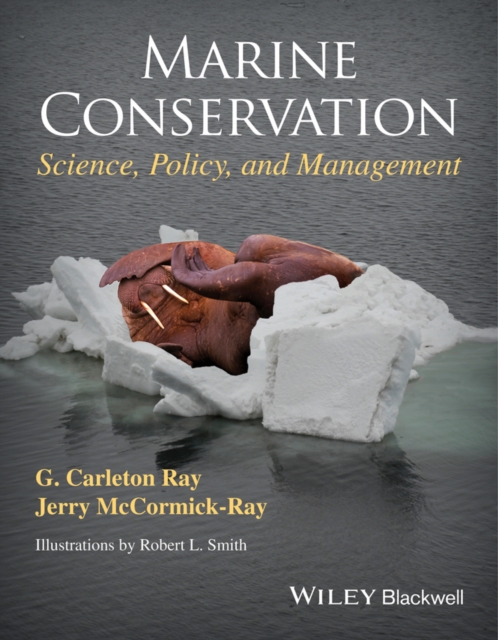
Marine conservation
Providing a guide for marine conservation practice, Marine Conservation takes a whole-systems approach, covering major advances in marine ecosystem understanding. Its premise is that conservation must be informed by the natural histories of organisms together with the hierarchy of scale-related linkages and ecosystem processes. The authors introduce a broad range of overlapping issues and the conservation mechanisms that have been devised to achieve marine conservation goals. The book provides students and conservation practitioners with a framework for thoughtful, critical thinking in order to incite innovation in the 21st century. \"Marine Conservation presents a scholarly but eminently readable case for the necessity of a systems approach to conserving the oceans, combining superb introductions to the science, law and policy frameworks with carefully chosen case studies. This superb volume is a must for anyone interested in marine conservation, from students and practitioners to lay readers and policy-makers.\" —Simon Levin, George M. Moffett Professor of Biology, Department of Ecology & Evolutionary Biology, Princeton University
eBook
Minimizing statistical and systematic bias in transverse momentum correlations for relativistic heavy-ion collisions
Two-particle correlation measurements and analysis are an important component of the relativistic heavy-ion physics program. In particular, particle pair-number correlations on two-dimensional transverse momentum (\\(p_t\\)) allow unique access to soft, semi-hard and hard-scattering processes in these collisions. Precise measurements of this type of correlation are essential for understanding the dynamics in heavy-ion collisions. However, transverse momentum correlation measurements are especially vulnerable to statistical and systematic biases. In this paper the origins of these large bias effects are explained and mathematical correlation forms are derived from mean-\\(p_t\\) fluctuation quantities in the literature. Monte Carlo simulations are then used to determine the conditions, e.g. multiplicity and collision centrality bin widths, where each correlation form is minimally biased. The ranges of applicability for each correlation quantity are compared. Several are found to reproduce the assumed input correlations with reasonable fidelity over a wide range of conditions encountered in practical analysis of data.
Paper
Cardiac rehabilitation : a guide to practice in the 21st century
This detailed reference provides practical strategies and a scientific foundation for designing and implementing cardiac rehabilitation services to relieve the symptoms of cardiovascular disease patients through exercise training and risk reduction and secondary prevention, improve quality of life, and decrease mortality.Emphasizes multidisciplinary care that includes exercise training, behavioral interventions, and education and counseling regarding lifestyle changes and other aspects of secondary prevention!Written by world-renowned physicians, nurses, exercise physiologists, psychologists, dietitians, educators, and counselors in the field, Cardiac Rehabilitationpresents evidence-based medicine as the cornerstone of clinical cardiology practice discusses interventions that limit the physiological and psychological effects of cardiac illness offers guidelines that enable elderly patients to maintain self-sufficiency and functional independence describes means of social and workplace reintegration evaluates policies for maintaining high-quality care, efficacy, and safety in an atmosphere of diminishing resources explains the role of managed care in moving rehabilitative care into the home, workplace, and other nontraditional sites assesses new interactive technologies that aid in tracking patient data gives pragmatic recommendations for the delivery of cardiac rehabilitative care in the next millenium and more!Advocating integrated, high-quality, consistent cardiac rehabilitation services for the well-being of patients recovering from a variety of cardiovascular problems and procedures, Cardiac Rehabilitation is ideally suited for cardiologists, cardiovascular surgeons, primary care physicians, cardiac rehabilitation professionals, cardiac care nurses, dietitians, physical and occupational therapists, exercise physiologists, psychologists, behavioral counselors, hospital managers, health plan designers, and upper-level undergraduate, graduate, and medical school students in these disciplines.
eBook


Scrubber upgrade achieves 95% removal efficiency
Initial operation of Plains-Escalante Generation and Transmission Cooperative Inc.'s Unit 1 flue gas desulfurization (FGD) system at the Plains Escalante Generating Station (PEGS) near Albuquerque, New Mexico, in late 1984 indicated a sulfur dioxide removal efficiency of about 60%, well below the FGD system performance guarantee of 95% removal. In October 1985, Plains received a noncompliance citation from the State of New Mexico. Based on previous testing, the FGD supplier proposed to modify the recycle spray headers and nozzles. Providing complete spray coverage and increasing the gas-liquid contact surface area were keys to solving the sulfur dioxide efficiency problems at PEGS. Gas distribution was improved by adding perforated plates to distribute the gas more evenly. Gas-liquid contact was improved primarily by better spray distribution, which was achieved by strategically positioning the nozzles to prevent areas void of spray coverage. Reagent additives did not significantly increase sulfur dioxide removal efficiency.
Magazine Article