
Catalogue Search | MBRL


Are you sure you want to remove the book from the shelf?

{{itemTitle}}
147
result(s) for
"Ray, Satyajit"
Sort by:
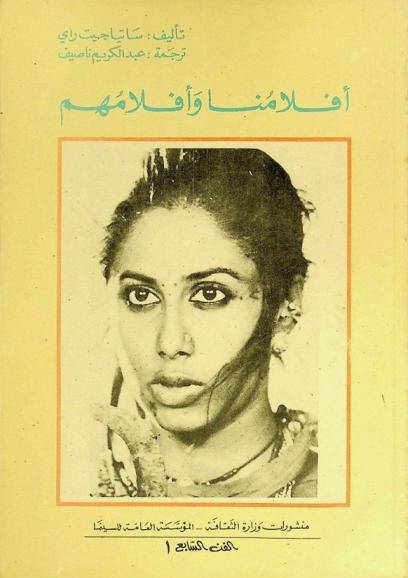
أفلامنا وأفلامهم
يستعيد المخرج والمؤلف (ساتيا جيت راي) في كتابه \"أفلامنا وأفلامهم\" الذي يروي فيه مذكراته، ذكرياته عن العمل في الفيلم فيقول : حين أعود فأتأمل إنتاج فيلم \"باتر بانشالي\" أجدني غير واثق مما إذا كان قد حمل لي من الألم أكثر مما حمل لي من السرور، إذ يصعب على أن أصف العذابات الخاصة التي يعنيها البدء في إنتاج فيلم رغم الافتقار للمال، فالفترات الزمنية الطويلة من البطالة المضاعفة لا تترك في النفس شيئا سوى أعمق أشكال الاكتئاب. إن مجرد رؤيتك للسيناريو يصيبك بالمرض، فضلا عن الأفكار التي تراودك حول توشيته ببعض التفاصيل أو إضفاء بعض اللمسات على الحوار.
Book

Immunogenicity of somatic mutations in human gastrointestinal cancers
It is unknown whether the human immune system frequently mounts a T cell response against mutations expressed by common epithelial cancers. Using a next-generation sequencing approach combined with high-throughput immunologic screening, we demonstrated that tumor-infiltrating lymphocytes (TILs) from 9 out of 10 patients with metastatic gastrointestinal cancers contained CD4⁺ and/or CD8⁺ T cells that recognized one to three neo-epitopes derived from somatic mutations expressed by the patient's own tumor. There were no immunogenic epitopes shared between these patients. However, we identified in one patient a human leukocyte antigen–C*08:02–restricted T cell receptor from CD8⁺ TILs that targeted the KRASG12D hotspot driver mutation found in many human cancers. Thus, a high frequency of patients with common gastrointestinal cancers harbor immunogenic mutations that can potentially be exploited for the development of highly personalized immunotherapies.
Journal Article
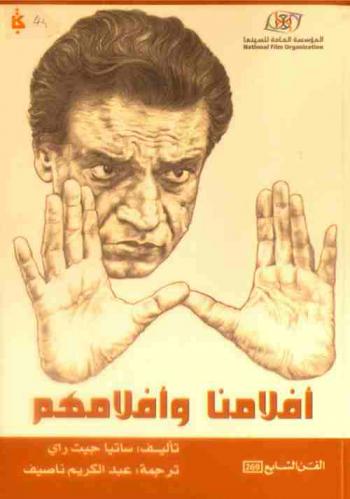
أفلامنا وأفلامهم
يستعيد المخرج والمؤلف (ساتيا جيت راي) في كتابه \"أفلامنا وأفلامهم\" الذي يروي فيه مذكراته، ذكرياته عن العمل في الفيلم فيقول : حين أعود فأتأمل إنتاج فيلم \"باتر بانشالي\" أجدني غير واثق مما إذا كان قد حمل لي من الألم أكثر مما حمل لي من السرور، إذ يصعب على أن أصف العذابات الخاصة التي يعنيها البدء في إنتاج فيلم رغم الافتقار للمال، فالفترات الزمنية الطويلة من البطالة المضاعفة لا تترك في النفس شيئا سوى أعمق أشكال الاكتئاب. إن مجرد رؤيتك للسيناريو يصيبك بالمرض، فضلا عن الأفكار التي تراودك حول توشيته ببعض التفاصيل أو إضفاء بعض اللمسات على الحوار.
BOOK

Memory T cells targeting oncogenic mutations detected in peripheral blood of epithelial cancer patients
T cells targeting shared oncogenic mutations can induce durable tumor regression in epithelial cancer patients. Such T cells can be detected in tumor infiltrating lymphocytes, but whether such cells can be detected in the peripheral blood of patients with the common metastatic epithelial cancer patients is unknown. Using a highly sensitive in vitro stimulation and cell enrichment of peripheral memory T cells from six metastatic cancer patients, we identified and isolated CD4
+
, and CD8
+
memory T cells targeting the mutated KRAS
G12D
and KRAS
G12V
variants, respectively, in three patients. In an additional two metastatic colon cancer patients, we detected CD8
+
neoantigen-specific cells targeting the mutated SMAD5 and MUC4 proteins. Therefore, memory T cells targeting unique as well as shared somatic mutations can be detected in the peripheral blood of epithelial cancer patients and can potentially be used for the development of effective personalized T cell-based cancer immunotherapy across multiple patients.
Adoptive cell therapy (ACT) using neoantigen-specific T cells can lead to tumor regression. Here the authors use an in vitro stimulation approach to isolate tumor specific memory T cells from peripheral blood of metastatic epithelial cancer patients targeting unique as well as shared mutations in the KRAS oncogene.
Journal Article
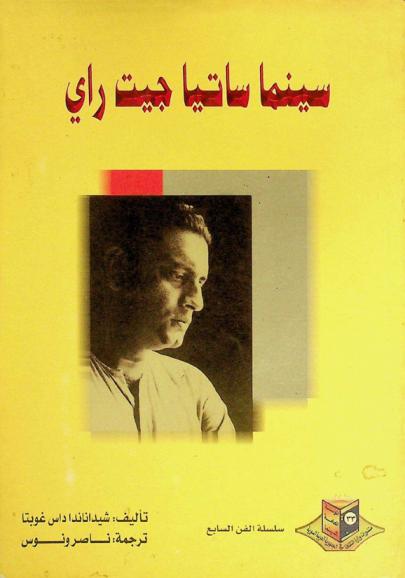
سينما ساتياجيت راي
يعتبر السينمائي الهندي ساتيا جيت راي (1921-1992) واحدا من أهم المخرجين في العالم. أول أفلامه كان باتر بانشالي» أو «أغنية الطريق. وهو الفيلم الذي حقق له وللسينما الهندية شهرة عالمية عندما فاز بجائزة مهرجان كان الدولي لعام 1956. ثم تتالت أفلامه إلى أن وصلت إلى ستة وثلاثين فيلما عام 1991 ومعظمها أفلام تؤرخ للجوانب الأكثر فقرا وبؤسا في المجتمع الهندي. هذا الكتاب بمثابة مسيرة ذاتية فنية وجدانية عن هذا المخرج كتبه صديقه الناقد شيداناندا داس غوبتا الذي شاركه العمل في مجالات مختلفة. وقد نشر بمناسبة مرور خمسة وعشرين سنة على انطلاقة باتر بانشالي.
Book

Recognition of human gastrointestinal cancer neoantigens by circulating PD-1+ lymphocytes
Tumor-resident lymphocytes can mount a response against neoantigens expressed in microsatellite-stable gastrointestinal (GI) cancers, and adoptive transfer of neoantigen-specific lymphocytes has demonstrated antitumor activity in selected patients. However, whether peripheral blood could be used as an alternative minimally invasive source to identify lymphocytes targeting neoantigens in patients with GI cancer with relatively low mutation burden is unclear. We used a personalized high-throughput screening strategy to investigate whether PD-1 expression in peripheral blood could be used to identify CD8+ or CD4+ lymphocytes recognizing neoantigens identified by whole-exome sequencing in 7 patients with GI cancer. We found that neoantigen-specific lymphocytes were preferentially enriched in the CD8+PD-1+/hi or CD4+PD-1+/hi subsets, but not in the corresponding bulk or PD-1- fractions. In 6 of 7 individuals analyzed we identified circulating CD8+ and CD4+ lymphocytes targeting 6 and 4 neoantigens, respectively. Moreover, neoantigen-reactive T cells and a T cell receptor (TCR) isolated from the CD8+PD-1+ subsets recognized autologous tumor, albeit at reduced levels, in 2 patients with available cell lines. These data demonstrate the existence of circulating T cells targeting neoantigens in GI cancer patients and provide an approach to generate enriched populations of personalized neoantigen-specific lymphocytes and isolate TCRs that could be exploited therapeutically to treat cancer.
Journal Article
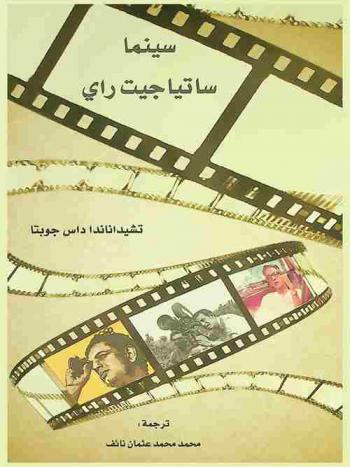
سينما ساتياجيت راي
يعد هذا الكتاب أول دراسة شاملة لكاتب هندي عن المخرج السينمائي البنغالي الفريد ومتعدد المواهب، ساتياجيت راي، ويقدم تفاصيل عن أفلامه التي قدمها عبر مسيرته المهنية التي امتدت أربعة عقود. يتناول الكتاب أفلام راي بدءا من فيلمه الأول والشهير «أغنية الطريق» وصولا إلى فيلمه الأخير «أجانتوك» بتفصيل نقدي تدعمه معرفة المؤلف اللصيقة بالمخرج وبأعماله واطلاعه على المصادر الأجنبية المختلفة التي تناولته. ويركز الكتاب على المصادر الأدبية التي اعتمدت عليها أفلام راي، ومدى تأثير معرفته بالثقافة والموسيقى الغربية على ثقافته الهندية وفنه وعقليته. وعلى الرغم من أن عنوان الكتاب هو سينما ساتياجيت راي، إلا أنه، ومن خلال أفلام راي، يؤرخ لأكثر من مئة وخمسين عاما من تاريخ الهند في الفلسفة، والدين، والسياسة، والفن، والثقافة، والخصائص الاجتماعية.
Book

Split inactivated COBRA vaccine elicits protective antibodies against H1N1 and H3N2 influenza viruses
Development of broadly reactive or universal influenza vaccines will be a paradigm shifting event for the influenza vaccine field. These next generation vaccines could replace the current standard of care with vaccines that elicit broadly cross-protective immune responses. However, a variety of in vitro and in vivo models are necessary to make the best assessments of these vaccine formulations to determine their mechanisms of action, and allow for downselection of candidates prior to human clinical trials. Our group has developed the computationally optimized broadly reactive antigen (COBRA) technology to develop HA head-based strategies to elicit antibodies against H1, H3, and H5 influenza strains. These vaccines elicit broadly reactive antibody responses that neutralize not only historical and contemporary vaccine strains, but also co-circulating variants in mice. In this study, we used H1 and H3 HA antigens in a split, inactivated vaccine (IIV) formulation in combination with the AF03 squalene-in-water emulsion adjuvant in ferrets immunologically naïve to influenza virus. The H3 COBRA IIV vaccine T11 elicited antibodies with HAI activity against more H3N2 influenza strains compared to IIV expressing wild-type H3 HA antigens, except for IIV vaccines expressing the HA from A/Texas/50/2012 (Tx/12) virus. H1 COBRA IIV vaccines, P1 and X6, elicited antibodies that recognized a similar number of H1N1 viruses as those antibodies elicited by IIV expressing the A/California/07/2009 (CA/09) HA. Ferrets vaccinated with the P1 or X6 COBRA IIV were protected against CA/09 challege and cleared virus from the lungs of the ferrets, similar to ferrets vaccinated with the CA/09 IIV.
Journal Article

Identification of HLA class II-restricted T cell receptors against shared PIK3CA mutations in patients with epithelial cancers
PIK3CA
is the third most common mutated gene in epithelial cancers, behind only
TP53
and
KRAS
. Somatic
PIK3CA
mutations occur predominantly in the protein’s hotspot locations H1047, E545, E542 and N345, and evidence of those alterations eliciting immune responses has been limited. HLA class I-restricted TCRs against E545K and H1047L have, only recently, been identified following in vitro sensitization (IVS) with peripheral blood lymphocytes (PBL) from normal donors. In this study, we examined the immunogenicity of PIK3CA in patients with epithelial cancers of diverse histology, by testing TIL and antigen-experienced PBL against autologous hotspot PIK3CA mutations. Two distinct TCRs specific to PIK3CA
N345K
, restricted by HLA-class II pair DPB1*04:01/DPA1*01:03, were identified in a patient with colon cancer, following independently a TIL screen and an IVS of memory CD4 +
T
cells from the peripheral blood. Patient PBL engineered to express each TCR suppressed the in vitro growth of two cell lines modified to express the DPB1*04:01/DPA1*01:03 pair and full length PIK3CA
N345K
protein. A TCR specific to the PIK3CA
E545K
, restricted by HLA-DRB1*04:01, was also identified following IVS of memory CD4 + PBL from another patient, with rectal cancer. Autologous PBL, gene engineered to express the PIK3CA
E545K
-specific TCR, suppressed the in vitro growth of two cancer cell lines, which endogenously expressed the PIK3CA
E545K
neoantigen. This study identified three PIK3CA-specific TCRs against two shared mutations, restricted by common HLA-class II molecules, using antigen-experienced TIL and memory PBL from patients with epithelial cancers and may further allow the development of off-the-shelf
T
cell immunotherapy strategies targeting PIK3CA.
Journal Article
Correction: Split inactivated COBRA vaccine elicits protective antibodies against H1N1 and H3N2 influenza viruses
[This corrects the article DOI: 10.1371/journal.pone.0204284.].
Journal Article