
Catalogue Search | MBRL


Are you sure you want to remove the book from the shelf?

{{itemTitle}}
3,237
result(s) for
"Raymond, V"
Sort by:
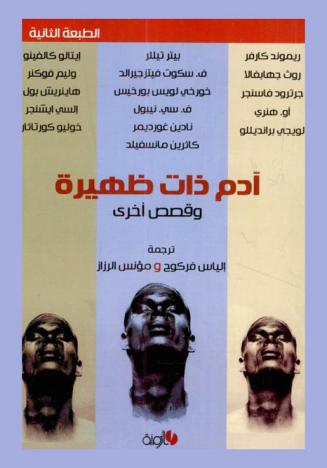
آدم ذات ظهيرة وقصص أخرى
(آدم ذات ظهيرة) مجموعة قصص مختارة لأشهر الكتاب ترجمة الأديبين الأردنيين إلياس فركوح ومؤنس الرزاز، ما يفرق بين قصص هذه المجموعة هو ذاته ما يجمع بينها ونعني بحثها الدائم عن أقاليم جديدة للكتابة وابتكارها المتنوع لطرائق وأساليب في القص تتناسب وجدة هذا الأقاليم ولقد قام المترجمان بانتقاء هذه القصص من مراحل مختلفة مر بها فن القصة القصيرة خلال هذا القرن فمن (أو. هنري) إلى (بورخيس) ومن (فيتزجيرالد) إلى (كالفينو)، مما يمنح هذه المختارات ميزتين قل أن وجدا في مختارات غيرها، الأولى : إنها تغطي معظم خارطة القصة القصيرة العالمية من حيث النهج وزاوية الرؤيا والثانية : إنها تضم قصصا لكتاب تترجم أعمالهم لأول مرة إلى العربية، أمثال (إلسي إيشنجر) و(نادين غورديمر) و(روث جهابفالا) و(بيتر تيللر) و(ريموند كارفر) وغيرها من الأسماء التي تحتل مركز الصدارة بين كتاب القصة القصيرة في العالم اليوم.
BOOK

PyCBC Inference: A Python-based Parameter Estimation Toolkit for Compact Binary Coalescence Signals
We introduce new modules in the open-source PyCBC gravitational-wave astronomy toolkit that implement Bayesian inference for compact-object binary mergers. We review the Bayesian inference methods implemented and describe the structure of the modules. We demonstrate that the PyCBC Inference modules produce unbiased estimates of the parameters of a simulated population of binary black hole mergers. We show that the parameters' posterior distributions obtained using our new code agree well with the published estimates for binary black holes in the first Advanced LIGO-Virgo observing run.
Journal Article

Selective DNA-PKcs inhibition extends the therapeutic index of localized radiotherapy and chemotherapy
Potentiating radiotherapy and chemotherapy by inhibiting DNA damage repair is proposed as a therapeutic strategy to improve outcomes for patients with solid tumors. However, this approach risks enhancing normal tissue toxicity as much as tumor toxicity, thereby limiting its translational impact. Using NU5455, a newly identified highly selective oral inhibitor of DNA-dependent protein kinase catalytic subunit (DNA-PKcs) activity, we found that it was indeed possible to preferentially augment the effect of targeted radiotherapy on human orthotopic lung tumors without influencing acute DNA damage or a late radiation-induced toxicity (fibrosis) to normal mouse lung. Furthermore, while NU5455 administration increased both the efficacy and the toxicity of a parenterally administered topoisomerase inhibitor, it enhanced the activity of doxorubicin released locally in liver tumor xenografts without inducing any adverse effect. This strategy is particularly relevant to hepatocellular cancer, which is treated clinically with localized drug-eluting beads and for which DNA-PKcs activity is reported to confer resistance to treatment. We conclude that transient pharmacological inhibition of DNA-PKcs activity is effective and tolerable when combined with localized DNA-damaging therapies and thus has promising clinical potential.
Journal Article

Investigation of three clusters of COVID-19 in Singapore: implications for surveillance and response measures
Three clusters of coronavirus disease 2019 (COVID-19) linked to a tour group from China, a company conference, and a church were identified in Singapore in February, 2020.
We gathered epidemiological and clinical data from individuals with confirmed COVID-19, via interviews and inpatient medical records, and we did field investigations to assess interactions and possible modes of transmission of severe acute respiratory syndrome coronavirus 2 (SARS-CoV-2). Open source reports were obtained for overseas cases. We reported the median (IQR) incubation period of SARS-CoV-2.
As of Feb 15, 2020, 36 cases of COVID-19 were linked epidemiologically to the first three clusters of circumscribed local transmission in Singapore. 425 close contacts were quarantined. Direct or prolonged close contact was reported among affected individuals, although indirect transmission (eg, via fomites and shared food) could not be excluded. The median incubation period of SARS-CoV-2 was 4 days (IQR 3–6). The serial interval between transmission pairs ranged between 3 days and 8 days.
SARS-CoV-2 is transmissible in community settings, and local clusters of COVID-19 are expected in countries with high travel volume from China before the lockdown of Wuhan and institution of travel restrictions. Enhanced surveillance and contact tracing is essential to minimise the risk of widespread transmission in the community.
None.
Journal Article

AZD7648 is a potent and selective DNA-PK inhibitor that enhances radiation, chemotherapy and olaparib activity
DNA-dependent protein kinase (DNA-PK) is a critical player in the DNA damage response (DDR) and instrumental in the non-homologous end-joining pathway (NHEJ) used to detect and repair DNA double-strand breaks (DSBs). We demonstrate that the potent and highly selective DNA-PK inhibitor, AZD7648, is an efficient sensitizer of radiation- and doxorubicin-induced DNA damage, with combinations in xenograft and patient-derived xenograft (PDX) models inducing sustained regressions. Using ATM-deficient cells, we demonstrate that AZD7648, in combination with the PARP inhibitor olaparib, increases genomic instability, resulting in cell growth inhibition and apoptosis. AZD7648 enhanced olaparib efficacy across a range of doses and schedules in xenograft and PDX models, enabling sustained tumour regression and providing a clear rationale for its clinical investigation. Through its differentiated mechanism of action as an NHEJ inhibitor, AZD7648 complements the current armamentarium of DDR-targeted agents and has potential in combination with these agents to achieve deeper responses to current therapies.
DNA-dependent protein kinase (DNA-PK) plays a major role in the DNA damage response upon double-strand break formation. Here, the authors show that the DNA-PK inhibitor AZD7648, enhances the activity of radiotherapy, chemotherapy and the PARP inhibitor olaparib in multiple mouse tumour models.
Journal Article

Transcript Expression Data from Human Islets Links Regulatory Signals from Genome-Wide Association Studies for Type 2 Diabetes and Glycemic Traits to Their Downstream Effectors
The intersection of genome-wide association analyses with physiological and functional data indicates that variants regulating islet gene transcription influence type 2 diabetes (T2D) predisposition and glucose homeostasis. However, the specific genes through which these regulatory variants act remain poorly characterized. We generated expression quantitative trait locus (eQTL) data in 118 human islet samples using RNA-sequencing and high-density genotyping. We identified fourteen loci at which cis-exon-eQTL signals overlapped active islet chromatin signatures and were coincident with established T2D and/or glycemic trait associations. At some, these data provide an experimental link between GWAS signals and biological candidates, such as DGKB and ADCY5. At others, the cis-signals implicate genes with no prior connection to islet biology, including WARS and ZMIZ1. At the ZMIZ1 locus, we show that perturbation of ZMIZ1 expression in human islets and beta-cells influences exocytosis and insulin secretion, highlighting a novel role for ZMIZ1 in the maintenance of glucose homeostasis. Together, these findings provide a significant advance in the mechanistic insights of T2D and glycemic trait association loci.
Journal Article

Nervonic Acid Attenuates Accumulation of Very Long-Chain Fatty Acids and is a Potential Therapy for Adrenoleukodystrophy
Adrenoleukodystrophy (ALD) is an X-linked inherited peroxisomal disorder due to mutations in the ALD protein and characterized by accumulation of very long-chain fatty acids (VLCFA), specifically hexacosanoic acid (C26:0). This can trigger other pathological processes such as mitochondrial dysfunction, oxidative stress, and inflammation, which if involves the brain tissues can result in a lethal form of the disease called childhood cerebral ALD. With the recent addition of ALD to the Recommended Uniform Screening Panel, there is an increase in the number of individuals who are identified with ALD. However, currently, there is no approved treatment for pre-symptomatic individuals that can arrest or delay symptom development. Here, we report our observations investigating nervonic acid, a monounsaturated fatty acid as a potential therapy for ALD. Using ALD patient-derived fibroblasts, we examined whether nervonic acid can reverse VLCFA accumulation similar to erucic acid, the active ingredient in Lorenzo's oil, a dietary intervention believed to alter disease course. We have shown that nervonic acid can reverse total lipid C26:0 accumulation in a concentration-dependent manner in ALD cell lines. Further, we show that nervonic acid can protect ALD fibroblasts from oxidative insults, presumably by increasing intracellular ATP production. Thus, nervonic acid can be a potential therapeutic for individuals with ALD, which can alter cellular biochemistry and improve its function.
Journal Article

Upright versus supine MRI: effects of body position on craniocervical CSF flow
Background
Cerebrospinal fluid (CSF) circulation between the brain and spinal canal, as part of the glymphatic system, provides homeostatic support to brain functions and waste clearance. Recently, it has been observed that CSF flow is strongly driven by cardiovascular brain pulsation, and affected by body orientation. The advancement of MRI has allowed for non-invasive examination of the CSF hydrodynamic properties. However, very few studies have addressed their relationship with body position (e.g., upright versus supine). It is important to understand how CSF hydrodynamics are altered by body position change in a single cardiac phase and how cumulative long hours staying in either upright or supine position can affect craniocervical CSF flow.
Methods
In this study, we investigate the changes in CSF flow at the craniocervical region with flow-sensitive MRI when subjects are moved from upright to supine position. 30 healthy volunteers were imaged in upright and supine positions using an upright MRI. The cranio-caudal and caudo-cranial CSF flow, velocity and stroke volume were measured at the C2 spinal level over one cardiac cycle using phase contrast MRI. Statistical analysis was performed to identify differences in CSF flow properties between the two positions.
Results
CSF stroke volume per cardiac cycle, representing CSF volume oscillating in and out of the cranium, was ~ 57.6% greater in supine (p < 0.0001), due to a ~ 83.8% increase in caudo-cranial CSF peak velocity during diastole (p < 0.0001) and extended systolic phase duration when moving from upright (0.25 ± 0.05 s) to supine (0.34 ± 0.08 s; p < 0.0001). Extrapolation to a 24 h timeframe showed significantly larger total CSF volume exchanged at C2 with 10 h spent supine versus only 5 h (p < 0.0001).
Conclusions
In summary, body position has significant effects on CSF flow in and out of the cranium, with more CSF oscillating in supine compared to upright position. Such difference was driven by an increased caudo-cranial diastolic CSF velocity and an increased systolic phase duration when moving from upright to supine position. Extrapolation to a 24 h timeframe suggests that more time spent in supine position increases total amount of CSF exchange, which may play a beneficial role in waste clearance in the brain.
Journal Article

Benefit of re-operation and salvage therapies for recurrent glioblastoma multiforme: results from a single institution
The optimal management of recurrent glioblastoma (GBM) has yet to be determined. We aim to assess the benefits of re-operation and salvage therapies (chemotherapy and/or re-irradiation) for recurrent GBM and to identify prognostic factors associated with better survival. All patients who underwent surgery for GBM between January 2005 and December 2012 followed by adjuvant radiotherapy, and who developed GBM recurrence on imaging were included in this retrospective study. Univariate and multivariate analysis was performed using Cox models in order to identify factors associated with overall survival (OS). One hundred and eighty patients treated to a dose of 60 Gy were diagnosed with recurrent GBM. At a median follow-up time of 6.2 months, the median survival (MS) from time of recurrence was 6.6 months. Sixty-nine patients underwent repeat surgery for recurrence based on imaging. To establish the benefits of repeat surgery and salvage therapies, 68 patients who underwent repeat surgery were matched to patients who did not based on extent of initial resection and presence of subventricular zone involvement at recurrence. MS for patients who underwent re-operation was 9.6 months, compared to 5.3 months for patients who did not have repeat surgery (
p
< 0.0001). Multivariate analysis in the matched pairs confirmed that repeat surgery with the addition of other salvage treatment can significantly affect patient outcome (HR 0.53). Re-operation with additional salvage therapies for recurrent GBM provides survival prolongation at the time of progression.
Journal Article

What happens when flow ends? How and why your creativity is limited after a flow experience
Flow is touted for the enjoyment it provides and for its relationship with concurrent task performance. But what happens when flow ends, and you move on to your next task? Our research demonstrates that there is a cost to being in flow in this regard. Specifically, the findings of three studies with 746 participants demonstrate that a person who just experienced flow carries forward a figurative tunnel vision which limits their creativity. This is important because flow can happen throughout daily life and can thus impair many creative tasks. In fact, our findings demonstrate that common activities can elicit a flow state that produces the effect on multiple subsequent tasks. Specifically, participants who experienced flow while playing video games in Study 1 were less creative in their subsequent two tasks compared to those who did not experience flow. This finding was replicated in Study 2 with a new flow inducing task. Study 2 also confirmed cognitive flexibility as an underlying mechanism wherein flow leads to a reduction in cognitive flexibility. Lastly, Study 3 shows that people can experience flow while shopping online, and if they do, their creativity is impaired in their next task. The negative carry-over effect was not equal for all forms of creativity, however; it consistently limited verbal creativity, but had limited influence on figural creativity. These findings make several theoretical contributions regarding the nature of flow and its consequences, while also providing practical insights for people structuring their day to increase creativity.
Journal Article