
Catalogue Search | MBRL


Are you sure you want to remove the book from the shelf?

{{itemTitle}}
1,575
result(s) for
"Read, Paul"
Sort by:

Web-based videoconferencing for rural palliative care consultation with elderly patients at home
PurposeProviding specialized palliative care support to elderly patients in rural areas can be challenging. The purpose of this study was to gain a preliminary understanding of the experience of using mobile web-based videoconferencing (WBVC) for conducting in-home palliative care consults with elderly rural patients with life-limiting illness.MethodsThis was a descriptive, exploratory, proof-of-concept study with a convenience sample of 10 WBVC visits. A palliative care clinical nurse specialist (PC-CNS), in the home with the patient/family and home care nurse (HC-N), used a laptop computer with webcam and speakerphone to connect to a distant palliative care physician consultant (PC-MD) over a secure Internet connection. Data was collected using questionnaires, interviews, and focus groups.ResultsAnalysis of qualitative data revealed four themes: communication, logistics, technical issues, and trust. Participants reported they were comfortable discussing concerns by WBVC and felt it was an acceptable and convenient way to address needs. Audiovisual quality was not ideal but was adequate for communication. Use of WBVC improved access and saved time and travel. Fears were expressed about lack of security of information transmitted over the Internet.ConclusionsUsing WBVC for in-home palliative care consults could be an acceptable, effective, feasible, and efficient way to provide timely support to elderly rural patients and their families. Having a health care provider in the home during the WBVC is beneficial. WBVC visits have advantages over telephone calls, but limitations compared to in-person visits, suggesting they be an alternative but not replacement for in-person consultations.
Journal Article


Is It Time We Better Understood the Tests We are Using for Return to Sport Decision Making Following ACL Reconstruction? A Critical Review of the Hop Tests
There has been a move towards a criterion-based return to play in recent years, with 4 single-leg hop tests commonly used to assess functional performance. Despite their widespread integration, research indicates that relationships between ‘passing’ ‘hop test criteria and successful outcomes following rehabilitation are equivocal, and, therefore, require further investigation. This critical review includes key information to examine the evolution of these tests, their reliability, relationships with other constructs, and sensitivity to change over time. Recommendations for how measurement and administration of the tests can be improved are also discussed. The evidence presented in this review shows that hop tests display good reliability and are sensitive to change over time. However, the use of more than 2 hop tests does not appear to be necessary due to high collinearity and no greater sensitivity to detect abnormality. The inclusion of other hop tests in different planes may give greater information about the current function of the knee, particularly when measured over time using both relative and absolute measures of performance. It is recommended that the contralateral limb be tested prior to surgery for a more relevant benchmark for performance, and clinicians are strongly advised to measure movement quality, as hop distance alone appears to overestimate the recovery of the knee.
Journal Article

Bird photographer of the year. Collection 4
\"The Bird Photographer of the Year competition celebrates the artistry of bird photography, and this large-format book is lavishly illustrated to reflect this. A celebration of avian beauty and diversity, it is a tribute to both the dedication and passion of the photographers as well as a reflection of the quality of today's modern digital imaging systems. The book includes the winning and short-listed images from the competition, now in its fourth year, showcasing some of the finest bird photography, with a foreword by BTO President and head judge, Chris Packham. A proportion of the profits from the book goes directly to the BTO to support their conservation work. The advent of digital technology has revolutionised photography in recent years, and the book brings to life some of the most stunning bird photography currently on offer. It features a vast variety of photographs by hardened pros, keen amateurs and hobbyists alike, reflecting the huge diversity of bird enthusiasts and nature lovers which is so important in ensuring their conservation and survival\"--Provided by publisher.
Book
Neuromuscular Risk Factors for Knee and Ankle Ligament Injuries in Male Youth Soccer Players
Injuries reported in male youth soccer players most commonly occur in the lower extremities, and include a high proportion of ligament sprains at the ankle and knee with a lower proportion of overuse injuries. There is currently a paucity of available literature that examines age- and sex-specific injury risk factors for such injuries within youth soccer players. Epidemiological data have reported movements that lead to non-contact ligament injury include running, twisting and turning, over-reaching and landing. Altered neuromuscular control during these actions has been suggested as a key mechanism in females and adult populations; however, data available in male soccer players is sparse. The focus of this article is to review the available literature and elucidate prevalent risk factors pertaining to male youth soccer players which may contribute to their relative risk of injury.
Journal Article
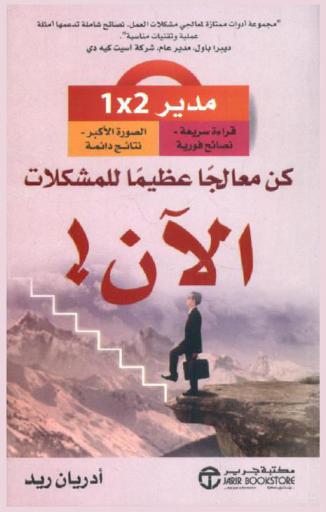
كن معالجا عظيما للمشكلات الآن ! : مدير 2 × 1 قراءة سريعة-نصائح فورية-الصورة الأكبر-نتائج دائمة
هذا الكتاب مصمم لمساعدتك على حل المشكلات في لحظة ويمنحك معرفة أعمق لضمان نتائج تدوم طويلا تتعلم بطريقتك استخدم النصائح السبع سريعة القراءة على الفور ثم تاخذ وقتك لاستكشاف فصول الصورة الشاملة وتحلل مشكلات وفرص العمل بموضوعية وفاعلية لتوليد مجموعة واسعة من الحلول الممكنة واستخدم \"مخططات تحليل المشكلة\" في ورقة واحدة لاستكشاف المشكلات وفحصها كمدير طموح تحتاج إلى المعلومات المناسبة في الوقت المناسب لمساعدتك على التقدم في مسيرتك المهنية.
Book

Using Unilateral Strength, Power and Reactive Strength Tests to Detect the Magnitude and Direction of Asymmetry: A Test-Retest Design
The aims of the present study were to determine test-retest reliability for unilateral strength and power tests used to quantify asymmetry and determine the consistency of both the magnitude and direction of asymmetry between test sessions. Twenty-eight recreational trained sport athletes performed unilateral isometric squat, countermovement jump (CMJ) and drop jump (DJ) tests over two test sessions. Inter-limb asymmetry was calculated from both the best trial and as an average of three trials for each test. Test reliability was computed using the intraclass correlation coefficient (ICC), coefficient of variation (CV) and standard error of measurement (SEM). In addition, paired samples t-tests were used to determine systematic bias between test sessions and Kappa coefficients to report how consistently asymmetry favoured the same side. Within and between-session reliability ranged from moderate to excellent (ICC range = 0.70–0.96) and CV values ranged from 3.7–13.7% across tests. Significant differences in asymmetry between test sessions were seen for impulse during the isometric squat (p = 0.04; effect size = –0.60) but only when calculating from the best trial. When computing the direction of asymmetry across test sessions, levels of agreement were fair to substantial for the isometric squat (Kappa = 0.29–0.64), substantial for the CMJ (Kappa = 0.64–0.66) and fair to moderate for the DJ (Kappa = 0.36–0.56). These results show that when asymmetry is computed between test sessions, the group mean is generally devoid of systematic bias; however, the direction of asymmetry shows greater variability and is often inter-changeable. Thus, practitioners should consider both the direction and magnitude of asymmetry when monitoring inter-limb differences in healthy athlete populations.
Journal Article

The best horror of the year. Volume ten
A group of mountain climbers, caught in the dark, fights to survive their descent; An American band finds more than they bargained for in Mexico while scouting remote locations for a photo shoot; A young student's exploration into the origins of a mysterious song leads him on a winding, dangerous path through the US's deep south; A group of kids scaring each other with ghost stories discovers alarming consequences. The Best Horror of the Year showcases the previous year's best offerings in horror short fiction. This edition includes award-winning and critically acclaimed authors Mark Morris, Kaaron Warren, John Langan, Carole Johnstone, Brian Hodge, and others. For more than three decades, award-winning editor and anthologist Ellen Datlow has had her finger on the pulse of the latest and most terrifying in horror writing. Night Shade Books is proud to present the tenth volume in this annual series, a new collection of stories to keep you up at night.
BOOK

Using machine learning to improve our understanding of injury risk and prediction in elite male youth football players
The purpose of this study was to examine whether the use of machine learning improved the ability of a neuromuscular screen to identify injury risk factors in elite male youth football players.
Prospective cohort study.
355 elite youth football players aged 10–18 years old completed a prospective pre-season neuromuscular screen that included anthropometric measures of size, as well as single leg countermovement jump (SLCMJ), single leg hop for distance (SLHD), 75% hop distance and stick (75%Hop), Y-balance anterior reach and tuck jump assessment. Injury incidence was monitored over one competitive season. Risk profiling was assessed using traditional regression analyses and compared to supervised machine learning algorithms constructed using decision trees.
Using continuous data, multivariate logistic analysis identified SLCMJ asymmetry as the sole significant predictor of injury (OR 0.94, 0.92–0.97, p<0.001), with a specificity of 97.7% and sensitivity of 15.2% giving an AUC of 0.661. The best performing decision tree model provided a specificity of 74.2% and sensitivity of 55.6% with an AUC of 0.663. All variables contributed to the final machine model, with asymmetry in the SLCMJ, 75%Hop and Y-balance, plus tuck jump knee valgus and anthropometrics being the most frequent contributors.
Although both statistical methods reported similar accuracy, logistic regression provided very low sensitivity and only identified a single neuromuscular injury risk factor. The machine learning model provided much improved sensitivity to predict injury and identified interactions of asymmetry, knee valgus angle and body size as contributing factors to an injurious profile in youth football players.
Journal Article