
Catalogue Search | MBRL


Are you sure you want to remove the book from the shelf?

{{itemTitle}}
312
result(s) for
"Reader, John"
Sort by:

Potato : a history of the propitious esculent
Photojournalist Reader (Africa: A Biography of the Continent) traces the humble potato from its roots in the Peruvian Andes to J.R. Simplot's multibillion-dollar-a-year French fry business. Despite its predilection to disease, the potato is a highly adaptable, high-yield, and nutrient-packed foodstuff. While this title focuses primarily on the potato's presence in South America and Europe, it also touches on Papua New Guinea, New Zealand, and China-currently the world's largest producer and consumer of potatoes. Verdict: Curiously little attention is paid to the tuber's contributions to the culinary and beverage landscape; the UK subtitle of this work, \"The Potato in World History,\" provides a more accurate description of the focus of the text.
Book

The guidance receptor plexin D1 is a mechanosensor in endothelial cells
Shear stress on arteries produced by blood flow is important for vascular development and homeostasis but can also initiate atherosclerosis
1
. Endothelial cells that line the vasculature use molecular mechanosensors to directly detect shear stress profiles that will ultimately lead to atheroprotective or atherogenic responses
2
. Plexins are key cell-surface receptors of the semaphorin family of cell-guidance signalling proteins and can regulate cellular patterning by modulating the cytoskeleton and focal adhesion structures
3
–
5
. However, a role for plexin proteins in mechanotransduction has not been examined. Here we show that plexin D1 (PLXND1) has a role in mechanosensation and mechanically induced disease pathogenesis. PLXND1 is required for the response of endothelial cells to shear stress in vitro and in vivo and regulates the site-specific distribution of atherosclerotic lesions. In endothelial cells, PLXND1 is a direct force sensor and forms a mechanocomplex with neuropilin-1 and VEGFR2 that is necessary and sufficient for conferring mechanosensitivity upstream of the junctional complex and integrins. PLXND1 achieves its binary functions as either a ligand or a force receptor by adopting two distinct molecular conformations. Our results establish a previously undescribed mechanosensor in endothelial cells that regulates cardiovascular pathophysiology, and provide a mechanism by which a single receptor can exhibit a binary biochemical nature.
PLXND1 is a mechanosensor that is required for endothelial cells to respond to shear stress both in vitro and in vivo by regulating the site-specific distribution of atherosclerotic lesions.
Journal Article
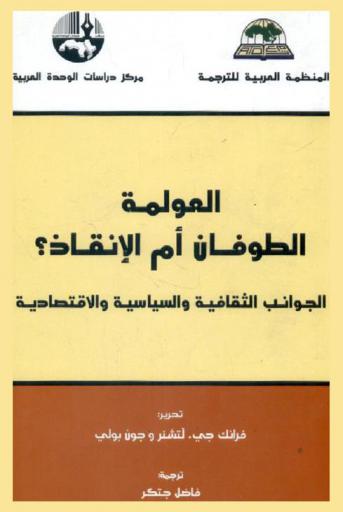
العولمة : الطوفان أم الإنقاذ ؟ : الجوانب الثقافية والسياسية والاقتصادية
ما العولمة ؟ كيف يعيشها الناس ؟ كيف نستطيع أن نفسرها ؟ ما المشكلات التي تنطوي عليها ؟ لماذا أثارت جدلا ؟ إلى أين تقود العالم؟ يحاول هذا الكتاب / الدليل الإجابة عن مثل هذه الأسئلة بطيف واسع من المواد المتنوعة المأخوذة في المقام الأول من مصادر متوافرة باللغة الإنكليزية تلقي الضوء على الوجوه العديدة للعولمة. وهذه المواد المختارة تبين مجتمعه كيف تفضي، إلى مجتمع عالمي متزايد الأشكال الكوكبية لظواهر تبادل التبعية والتنظيم والوعي، تدريجيا التكامل والاندماج باطراد. تبقى العولمة أكثر من \"كلية\" ذات شعبية كوكبية، إن العبارة تلتقط بالغ الأهمية. -تاريخيا تحولا عالميا يكشف هذا الكتاب أن العولمة ليست ظاهرة اقتصادية فقط بل هي ظاهرة ذات أبعاد سياسية وثقافية مثيرة، كما يكشف أن العولمة ليست مجرد مسخ من صنع الإمبريالية الغربية، فهو يشير إلى منابع كثيرة للفعل والثقافة الكوكبيين عبر العالم، وتنوع القراءات بالذات يشهد على عدم وجود أي إجماع حول محاسن العولمة ومساوئها، فوائد العولمة ومضارها. باختصار تظل العولمة ظاهرة مركبو، معقدة وخلافية.
BOOK
Footprint evidence of early hominin locomotor diversity at Laetoli, Tanzania
Bipedal trackways discovered in 1978 at Laetoli site G, Tanzania and dated to 3.66 million years ago are widely accepted as the oldest unequivocal evidence of obligate bipedalism in the human lineage
1
–
3
. Another trackway discovered two years earlier at nearby site A was partially excavated and attributed to a hominin, but curious affinities with bears (ursids) marginalized its importance to the paleoanthropological community, and the location of these footprints fell into obscurity
3
–
5
. In 2019, we located, excavated and cleaned the site A trackway, producing a digital archive using 3D photogrammetry and laser scanning. Here we compare the footprints at this site with those of American black bears, chimpanzees and humans, and we show that they resemble those of hominins more than ursids. In fact, the narrow step width corroborates the original interpretation of a small, cross-stepping bipedal hominin. However, the inferred foot proportions, gait parameters and 3D morphologies of footprints at site A are readily distinguished from those at site G, indicating that a minimum of two hominin taxa with different feet and gaits coexisted at Laetoli.
Reanalysis of bipedal trackways from Laetoli site A in Tanzania suggest that the footprints were made by a hominin that coexisted with at least one other hominin species.
Journal Article

Haemodynamic and extracellular matrix cues regulate the mechanical phenotype and stiffness of aortic endothelial cells
Endothelial cells (ECs) lining blood vessels express many mechanosensors, including platelet endothelial cell adhesion molecule-1 (PECAM-1), that convert mechanical force into biochemical signals. While it is accepted that mechanical stresses and the mechanical properties of ECs regulate vessel health, the relationship between force and biological response remains elusive. Here we show that ECs integrate mechanical forces and extracellular matrix (ECM) cues to modulate their own mechanical properties. We demonstrate that the ECM influences EC response to tension on PECAM-1. ECs adherent on collagen display divergent stiffening and focal adhesion growth compared with ECs on fibronectin. This is because of protein kinase A (PKA)-dependent serine phosphorylation and inactivation of RhoA. PKA signalling regulates focal adhesion dynamics and EC compliance in response to shear stress
in vitro
and
in vivo
. Our study identifies an ECM-specific, mechanosensitive signalling pathway that regulates EC compliance and may serve as an atheroprotective mechanism that maintains blood vessel integrity
in vivo
.
Endothelial cells at the inner surface of blood vessels are exposed to mechanical forces as a result of blood flow. Here the authors show that the interaction of extracellular matrix proteins with adhesion molecules on the endothelial cell surface determines cellular stiffness and sensitivity to mechanical forces.
Journal Article

Mechanical Regulation of Protein Translation in the Cardiovascular System
The cardiovascular system can sense and adapt to changes in mechanical stimuli by remodeling the physical properties of the heart and blood vessels in order to maintain homeostasis. Imbalances in mechanical forces and/or impaired sensing are now not only implicated but are, in some cases, considered to be drivers for the development and progression of cardiovascular disease. There is now growing evidence to highlight the role of mechanical forces in the regulation of protein translation pathways. The canonical mechanism of protein synthesis typically involves transcription and translation. Protein translation occurs globally throughout the cell to maintain general function but localized protein synthesis allows for precise spatiotemporal control of protein translation. This Review will cover studies on the role of biomechanical stress -induced translational control in the heart (often in the context of physiological and pathological hypertrophy). We will also discuss the much less studied effects of mechanical forces in regulating protein translation in the vasculature. Understanding how the mechanical environment influences protein translational mechanisms in the cardiovascular system, will help to inform disease pathogenesis and potential areas of therapeutic intervention.
Journal Article

Mechanical Forces and Their Effect on the Ribosome and Protein Translation Machinery
Mechanical forces acting on biological systems, at both the macroscopic and microscopic levels, play an important part in shaping cellular phenotypes. There is a growing realization that biomolecules that respond to force directly applied to them, or via mechano-sensitive signalling pathways, can produce profound changes to not only transcriptional pathways, but also in protein translation. Forces naturally occurring at the molecular level can impact the rate at which the bacterial ribosome translates messenger RNA (mRNA) transcripts and influence processes such as co-translational folding of a nascent protein as it exits the ribosome. In eukaryotes, force can also be transduced at the cellular level by the cytoskeleton, the cell’s internal filamentous network. The cytoskeleton closely associates with components of the translational machinery such as ribosomes and elongation factors and, as such, is a crucial determinant of localized protein translation. In this review we will give (1) a brief overview of protein translation in bacteria and eukaryotes and then discuss (2) how mechanical forces are directly involved with ribosomes during active protein synthesis and (3) how eukaryotic ribosomes and other protein translation machinery intimately associates with the mechanosensitive cytoskeleton network.
Journal Article

Natural Aminoacyl tRNA Synthetase Fragment Enhances Cardiac Function after Myocardial Infarction
A naturally-occurring fragment of tyrosyl-tRNA synthetase (TyrRS) has been shown in higher eukaryotes to 'moonlight' as a pro-angiogenic cytokine in addition to its primary role in protein translation. Pro-angiogenic cytokines have previously been proposed to be promising therapeutic mechanisms for the treatment of myocardial infarction. Here, we show that systemic delivery of the natural fragment of TyRS, mini-TyrRS, improves heart function in mice after myocardial infarction. This improvement is associated with reduced formation of scar tissue, increased angiogenesis of cardiac capillaries, recruitment of c-kitpos cells and proliferation of myocardial fibroblasts. This work demonstrates that mini-TyrRS has beneficial effects on cardiac repair and regeneration and offers support for the notion that elucidation of the ever expanding repertoire of noncanonical functions of aminoacyl tRNA synthetases offers unique opportunities for development of novel therapeutics.
Journal Article

Haemodynamics Regulate Fibronectin Assembly via PECAM
Fibronectin (FN) assembly and fibrillogenesis are critically important in both development and the adult organism, but their importance in vascular functions is not fully understood. Here we identify a novel pathway by which haemodynamic forces regulate FN assembly and fibrillogenesis during vascular remodelling. Induction of disturbed shear stress
in vivo
and
in vitro
resulted in complex FN fibril assembly that was dependent on the mechanosensor PECAM. Loss of PECAM also inhibited the cell-intrinsic ability to remodel FN. Gain- and loss-of-function experiments revealed that PECAM-dependent RhoA activation is required for FN assembly. Furthermore, PECAM
−/−
mice exhibited reduced levels of active β1 integrin that were responsible for reduced RhoA activation and downstream FN assembly. These data identify a new pathway by which endothelial mechanotransduction regulates FN assembly and flow-mediated vascular remodelling.
Journal Article