
Catalogue Search | MBRL


Are you sure you want to remove the book from the shelf?

{{itemTitle}}
90
result(s) for
"Rearden, Alice"
Sort by:

Tengautuli Atkuk / The Flying Parka
Parkas are part of a living tradition in southwest Alaska. Some
are ornamented with tassels, beads, and elaborate stitching; others
are simpler fur or birdskin garments. Although fewer fancy parkas
are sewn today, many people still wear those made for them by their
mothers and other relatives.
\"Parka-making\" conversations touch on every aspect of Yup'ik
life-child rearing, marriage partnerships, ceremonies and masked
dances, traditional oral instructions, and much more. In The
Flying Parka , more than fifty Yup'ik men and women share
sewing techniques and \"parka stories,\" speaking about the
significance of different styles, the details of family designs,
and the variety of materials used in creating these functional and
culturally important garments.
Based on nearly two decades of conversations with Yup'ik sewing
groups and visits to the National Museum of the American Indian and
the National Museum of Natural History, this volume documents the
social importance of parkas, the intricacies of their construction,
and their exceptional beauty. It features over 170 historical and
contemporary images, full bilingual versions of six parka stories,
and a glossary in Yup'ik and English.
eBook

Tengautuli Atkuk / The Flying Parka
A unique collaboration celebrating the importance of parkas in Yup'ik material cultureParkas are part of a living tradition in southwest Alaska. Some are ornamented with tassels, beads, and elaborate stitching; others are simpler fur or birdskin garments. Although fewer fancy parkas are sewn today, many people still wear those made for them by their mothers and other relatives.\"Parka-making\" conversations touch on every aspect of Yup'ik life-child rearing, marriage partnerships, ceremonies and masked dances, traditional oral instructions, and much more. In The Flying Parka, more than fifty Yup'ik men and women share sewing techniques and \"parka stories,\" speaking about the significance of different styles, the details of family designs, and the variety of materials used in creating these functional and culturally important garments. Based on nearly two decades of conversations with Yup'ik sewing groups and visits to the National Museum of the American Indian and the National Museum of Natural History, this volume documents the social importance of parkas, the intricacies of their construction, and their exceptional beauty. It features over 170 historical and contemporary images, full bilingual versions of six parka stories, and a glossary in Yup'ik and English.
eBook

Ellavut / Our Yup'ik World and Weather
Ellavut / Our Yup'ik World and Weather is a result of nearly ten years of gatherings among Yup'ik elders to document the qanruyutet (words of wisdom) that guide their interactions with the environment. In an effort to educate their own young people as well as people outside the community, the elders discussed the practical skills necessary to live in a harsh environment, stressing the ethical and philosophical aspects of the Yup'ik relationship with the land, ocean, snow, weather, and environmental change, among many other elements of the natural world.
At every gathering, at least one elder repeated the Yup'ik adage, \"The world is changing following its people.\" The Yup'ik see environmental change as directly related not just to human actions, such as overfishing or burning fossil fuels, but also to human interactions. The elders encourage young people to learn traditional rules and proper behavior--to act with compassion and restraint--in order to reverse negative impacts on their world. They speak not only to educate young people on the practical skills they need to survive but also on the knowing and responsive nature of the world in which they live.
eBook
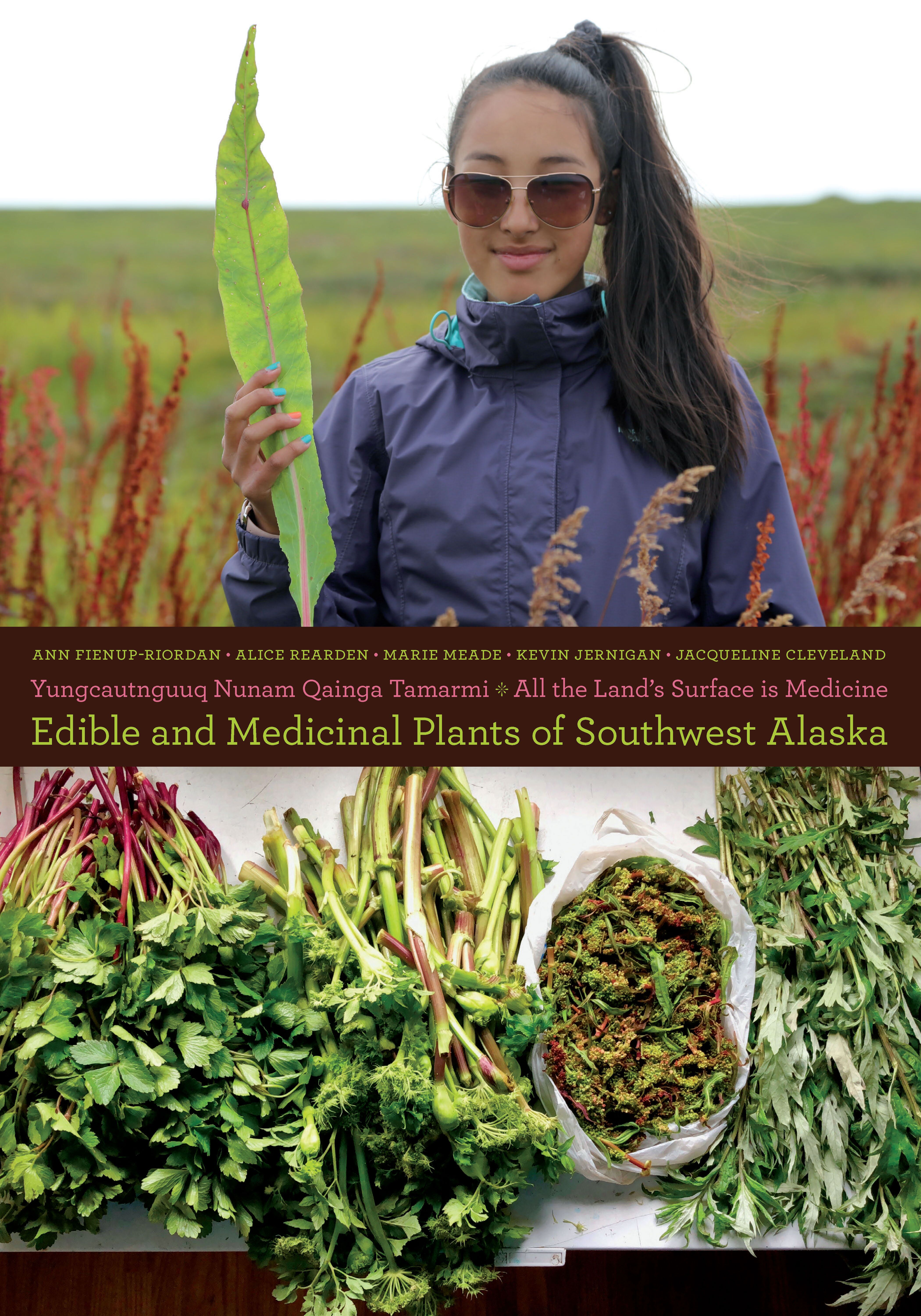
Yungcautnguuq Nunam Qainga Tamarmi/All the Land's Surface Is Medicine
In this book, close to one hundred men and women from all over southwest Alaska share knowledge of their homeland and the plants that grow there.They speak eloquently about time spent gathering and storing plants and plant material during snow-free months, including gathering greens during spring, picking berries each summer, harvesting tubers.
eBook

Interacting Sea‐Level Rise, Sea‐Ice Loss, Storm Flooding, Erosion, and Permafrost Thaw Threaten Ecosystems, Wildlife, and Communities on the Yukon‐Kuskokwim Delta
The Yukon‐Kuskokwim Delta has the largest intertidal wetland in North America, is a globally critical breeding area for waterbirds, and is home to the largest regional indigenous population in the Arctic. Here, coastal tundra ecosystems, wildlife, and indigenous communities are highly vulnerable to sea‐ice loss in the Bering Sea, sea‐level rise, storm flooding, erosion, and collapsing ground from permafrost thaw caused by climate warming. These drivers interact in non‐linear ways to increase flooding, salinization, and sedimentation, and thus, alter ecosystem trajectories and broader landscape evolution. Rapid changes in these factors over decadal time scales are highly likely to cause transformative shifts in coastal ecosystems across roughly 70% of the outer delta this century. We project saline and brackish ecotypes on the active delta floodplain with frequent sedimentation will maintain dynamic equilibrium with sea‐level rise and flooding, slightly brackish ecotypes on the inactive floodplain with infrequent flooding and low sedimentation rates will be vulnerable to increased flooding and likely transition to more saline and brackish ecotypes, and fresh lacustrine and lowland ecotypes on the abandoned floodplain with permafrost plateaus will be vulnerable to thermokarst, salinization and flooding that will shift them toward brackish ecosystems. This will greatly affect bird nesting and foraging habitats, with both winners and losers. Already, some Yup'ik communities are facing relocation of their low‐lying villages. The societal challenges and consequences of adapting to these changing landscapes are enormous and will require a huge societal effort. Plain Language Summary The Yukon‐Kuskokwim Delta in western Alaska has the largest intertidal wetland in North America, is a globally critical breeding area for waterbirds, and is home to the largest regional indigenous population in the Arctic. Increasing sea‐level rise, sea‐ice loss, and storms in the Bering Sea are driving changes in flooding, erosion, salinization, sediment and organic‐matter accumulation, plant damage and vegetation shifts, ground‐ice aggradation and permafrost thaw on the delta, but these processes interact in non‐linear ways across inland gradients. We developed a conceptual model of how interactions among these factors will lead to the widespread transformation of coastal ecosystems over decadal time scales, although the changes vary by landscape. The projected changing flooding regimes and ecological shifts will affect bird nesting and foraging habitats, and are likely to affect bird populations, with both winners and losers. Already, 10 of 18 Yup'ik communities on the outer delta have severe flooding, erosion and permafrost thaw problems and are facing relocation of their low‐lying villages. The societal challenges and consequences of adapting to these changing landscapes are enormous and will require a huge societal effort. Key Points Sea‐level rise, sea‐ice loss, and permafrost thaw interact to increase storm flooding, salinization, and sedimentation Rapid physical changes over decadal time scales are leading to the widespread transformation of coastal ecosystems this century Ecological shifts will alter bird habitat use and numerous Yup'ik communities are facing relocation of their low‐lying villages
Journal Article
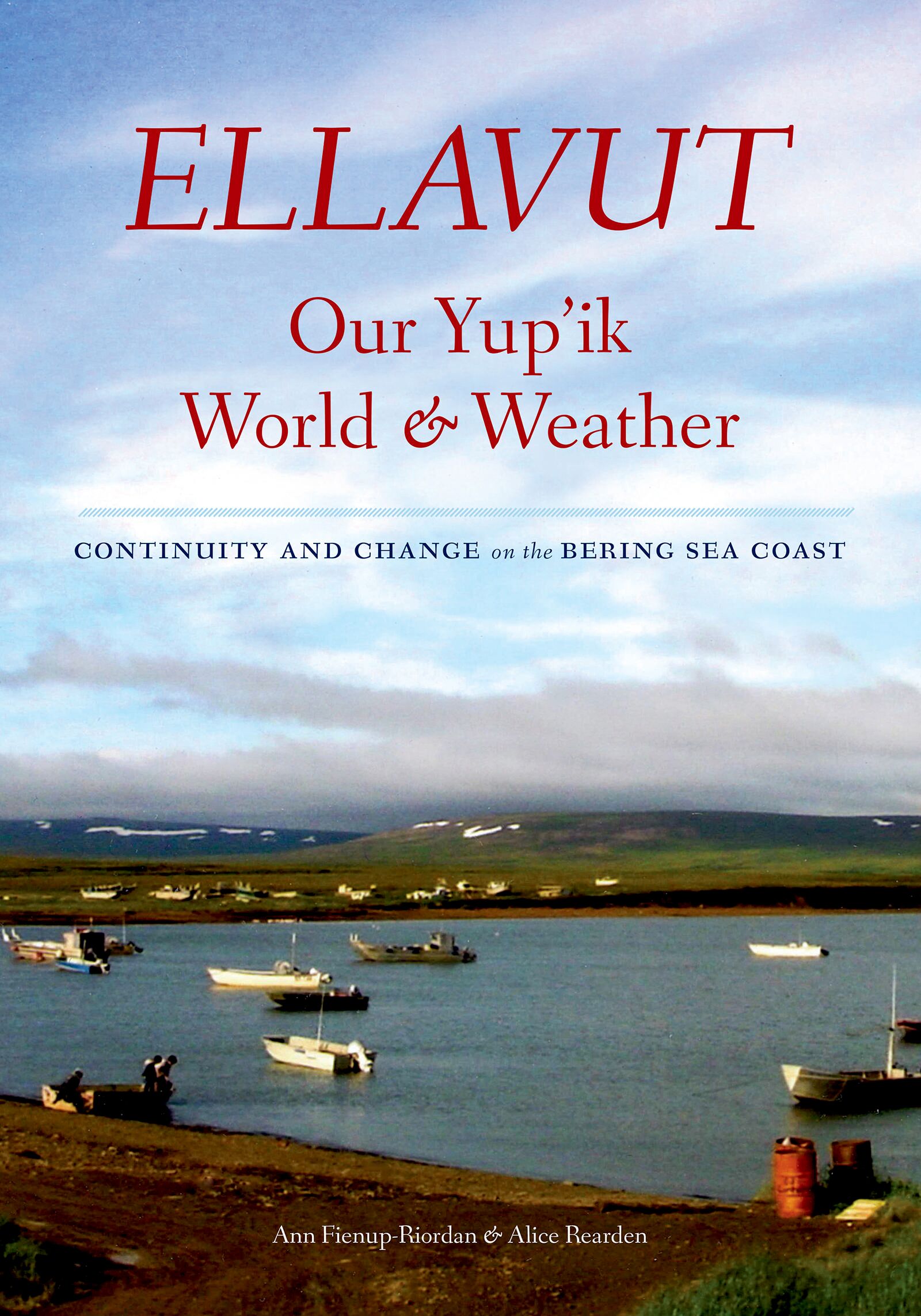
Ellavut / Our Yup'ik World and Weather
Ellavut / Our Yup'ik World and Weather is a result of nearly ten years of gatherings among Yup'ik elders to document the qanruyutet (words of wisdom) that guide their interactions with the environment. In an effort to educate their own young people as well as people outside the community, the elders discussed the practical skills necessary to live in a harsh environment, stressing the ethical and philosophical aspects of the Yup'ik relationship with the land, ocean, snow, weather, and environmental change, among many other elements of the natural world.At every gathering, at least one elder repeated the Yup'ik adage, \"The world is changing following its people.\" The Yup'ik see environmental change as directly related not just to human actions, such as overfishing or burning fossil fuels, but also to human interactions. The elders encourage young people to learn traditional rules and proper behavior--to act with compassion and restraint--in order to reverse negative impacts on their world. They speak not only to educate young people on the practical skills they need to survive but also on the knowing and responsive nature of the world in which they live.
eBook

Qaluyaarmiuni Nunamtenek Qanemciput / Our Nelson Island Stories
In this volume Nelson Island elders describe hundreds of traditionally important places in the landscape, from camp and village sites to tiny sloughs and deep ocean channels, contextualizing them through stories of how people interacted with them in the past and continue to know them today. The stories both provide a rich, descriptive historical record and detail the ways in which land use has changed over time.
Nelson Islanders maintained a strongly Yup'ik worldview and subsistence lifestyle through the 1940s, living in small settlements and moving with the seasonal cycle of plant and animal abundances. The last sixty years have brought dramatic changes, including the concentration of people into five permanent, year-round villages. The elders have mapped significant places to help perpetuate an active relationship between the land and their people, who, despite the immobility of their villages, continue to rely on the fluctuating bounty of the Bering Sea coastal environment.
eBook

Yungcautnguuq nunam qainga tamarmi: edible and medicinal plants of Southwest Alaska = The entire surface of the land is medicine
In this book, close to one hundred men and women from all over southwest Alaska share knowledge of their homeland and the plants that grow there. They speak eloquently about time spent gathering and storing plants and plant material during snow-free months, including gathering greens during spring, picking berries each summer, harvesting tubers from the caches of tundra voles, and gathering a variety of medicinal plants. The book is intended as a guide to the identification and use of edible and medicinal plants in southwest Alaska, but also as an enduring record of what Yup'ik men and women know and value about plants and the roles plants continue to play in Yup'ik lives.
eBook

Imarpik Elitaituq
Coastal residents early learned an attitude of humility and respect for the ocean which sustained them— an attitude that went hand in hand with the practical skills of ocean hunting. John Eric (March 2007:52, 101) reflected this high regard: “As someone who has lived along the ocean, I have always viewed it as the most important element of our environment. We cannot live without the ocean. Our ancestors sustained themselves mainly from the ocean. It was their source of clothing, it provided skin boots, seal-gut rain garments, kayaks, and pants. Also, all species of fish enter the rivers from the
Book Chapter