
Catalogue Search | MBRL


Are you sure you want to remove the book from the shelf?

{{itemTitle}}
70,394
result(s) for
"Reddy, A."
Sort by:


Comparison of adductor canal block and IPACK block (interspace between the popliteal artery and the capsule of the posterior knee) with adductor canal block alone after total knee arthroplasty: a prospective control trial on pain and knee function in immediate postoperative period
BackgroundAdductor canal block (ACB) is a peripheral nerve blockade technique that provides good pain control in patients undergoing total knee arthroplasty which however does not relieve posterior knee pain. The recent technique of an ultrasound-guided local anesthetic infiltration of the interspace between popliteal artery and the capsule of posterior knee (IPACK) has shown promising results in providing significant posterior knee analgesia without affecting the motor nerves.Materials and methodsA prospective study was conducted from September 2016 to March 2017 in a total of 120 patients undergoing unilateral total knee arthroplasty. The initial 60 consecutive patients received ACB + IPACK (Group 1, n = 60), and the subsequent 60 patients received ACB alone (Group 2, n = 60). All patients were evaluated with VAS score for pain recorded at 8 h, postoperative day (POD) 1 and POD 2 after the surgery. The secondary outcome measures assessed were the range of movement (ROM) and ambulation distance.ResultsVAS score showed significantly (p < 0.005) better values in ACB + IPACK group compared to the ACB group. The mean ROM of knee and ambulation distance also showed significantly better values in ACB + IPACK group compared to the ACB group.ConclusionACB + IPACK is a promising technique that offers improved pain management in the immediate postoperative period without affecting the motor function around the knee joint resulting in better ROM and ambulation compared to ACB alone.
Journal Article


Epigenetic mechanisms in diabetic complications and metabolic memory
The incidence of diabetes and its associated micro- and macrovascular complications is greatly increasing worldwide. The most prevalent vascular complications of both type 1 and type 2 diabetes include nephropathy, retinopathy, neuropathy and cardiovascular diseases. Evidence suggests that both genetic and environmental factors are involved in these pathologies. Clinical trials have underscored the beneficial effects of intensive glycaemic control for preventing the progression of complications. Accumulating evidence suggests a key role for epigenetic mechanisms such as DNA methylation, histone post-translational modifications in chromatin, and non-coding RNAs in the complex interplay between genes and the environment. Factors associated with the pathology of diabetic complications, including hyperglycaemia, growth factors, oxidant stress and inflammatory factors can lead to dysregulation of these epigenetic mechanisms to alter the expression of pathological genes in target cells such as endothelial, vascular smooth muscle, retinal and cardiac cells, without changes in the underlying DNA sequence. Furthermore, long-term persistence of these alterations to the epigenome may be a key mechanism underlying the phenomenon of ‘metabolic memory’ and sustained vascular dysfunction despite attainment of glycaemic control. Current therapies for most diabetic complications have not been fully efficacious, and hence a study of epigenetic mechanisms that may be involved is clearly warranted as they can not only shed novel new insights into the pathology of diabetic complications, but also lead to the identification of much needed new drug targets. In this review, we highlight the emerging role of epigenetics and epigenomics in the vascular complications of diabetes and metabolic memory.
Journal Article
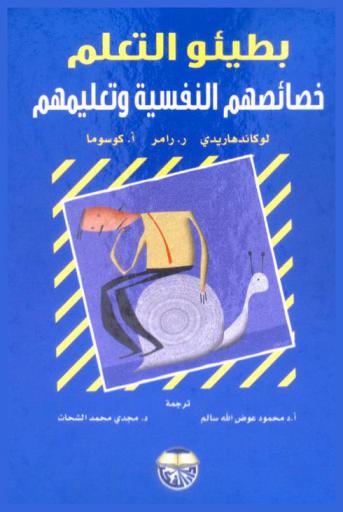
بطيئو التعلم : خصائصهم النفسية وتعليمهم
إن الهدف من هذا الكتاب هو تبصير الخبراء والباحثين في مجال التربية والتعليم بوجه عام والتربية الخاصة بوجه خاص فالمكشلة التي تؤرق كل المعلمين هي كيفية تقديم التدريس الملائم للطلبة بطئي التعلم-المتعلمين الذين يقعون في أسفل درجة السلم-الموجودين في كل صف في كل مستوى صفي ، وهذا الكتاب يقدم الاستراتيجيات الفكرية والاستراتيجيات العلمية للمعلمين الحاليين واللاحقين لجعلهم معلمين أكثر فعالية للطلبة بطيئي التعلم، ويوضح التطور الذي حدث في العقود الأخيرة أن سلوك المعلم يؤثر بدرجة كبيرة على تحصيل الطالب وليك يحقق المعلمون تأثيرا أفضل على تعلم الطالب.
Book

Austro-Asiatic Tribes of Northeast India Provide Hitherto Missing Genetic Link between South and Southeast Asia
Northeast India, the only region which currently forms a land bridge between the Indian subcontinent and Southeast Asia, has been proposed as an important corridor for the initial peopling of East Asia. Given that the Austro-Asiatic linguistic family is considered to be the oldest and spoken by certain tribes in India, Northeast India and entire Southeast Asia, we expect that populations of this family from Northeast India should provide the signatures of genetic link between Indian and Southeast Asian populations. In order to test this hypothesis, we analyzed mtDNA and Y-Chromosome SNP and STR data of the eight groups of the Austro-Asiatic Khasi from Northeast India and the neighboring Garo and compared with that of other relevant Asian populations. The results suggest that the Austro-Asiatic Khasi tribes of Northeast India represent a genetic continuity between the populations of South and Southeast Asia, thereby advocating that northeast India could have been a major corridor for the movement of populations from India to East/Southeast Asia.
Journal Article

Benzalkonium chloride-induced dry eye disease animal models: Current understanding and potential for translational research
Dry eye disease (DED) is an emerging health issue affecting people worldwide. There have been rapid advances in the development of novel molecules and targeted therapies for the treatment of DED in the recent past. For testing and optimizing these therapies, it is necessary to have reliable experimental animal models of DED. One such approach is the use of benzalkonium chloride (BAC). Several BAC-induced DED models of rabbits and mice have been described in literature. BAC induces high levels of proinflammatory cytokines in the cornea and conjunctiva, along with epithelial cell apoptosis and reduction of mucins, which leads to tear film instability, thereby successfully simulating human DED. The stability of these models directs whether the treatment is to be applied while BAC is being instilled or after its cessation. In this review, we summarize the previously described BAC animal models of DED and present original data on rabbit DED models created using 0.1%, 0.15%, and 0.2% BAC administration twice daily for two consecutive weeks. The 0.2% BAC model sustained DED signs for 3 weeks, while 0.1% and 0.15% models sustained DED signs for 1-2 weeks after BAC discontinuation. Overall, these models look promising and continue to be used in various studies to investigate the efficacy of therapeutic drugs for DED treatment.
Journal Article
A review of rabbit models of meibomian gland dysfunction and scope for translational research
Dry eye disease (DED) is an emerging global health concern with meibomian gland dysfunction (MGD) being the most common subtype of DED. Despite being quite prevalent, the pathophysiological mechanisms governing MGD are poorly understood. Animal models for MGD can be a valuable resource to advance our understanding of this entity and explore novel diagnostic and therapeutic modalities. Although a lot of literature on rodent MGD models exists, a comprehensive review on rabbit animal models is lacking. Rabbits offer a great advantage over other animals as models for studying both DED and MGD. Rabbits have a widely exposed ocular surface and meibomian gland anatomy comparable with humans, which makes performing dry eye diagnostic tests possible using clinically validated imaging platforms. The existing MGD models in rabbits can broadly be classified as pharmacologically induced and surgically induced models. Most models show keratinization of the meibomian gland orifice with plugging as the final common pathway for developing MGD. Thus, understanding the advantages and disadvantages of each rabbit MGD model can help researchers choose the appropriate experimental plan based on the objective of the study. In this review, we discuss the comparative anatomy of the meibomian glands in humans and rabbits, various rabbit models of MGD, translational applications, unmet needs, and future directions in developing MGD models in rabbits.
Journal Article

A review on violation of drinking water specifications in water supply and research publications
Water contains many chemical constituents, some of which are harmful to human beings. Epidemiological and hydrochemical studies identified those chemical characteristics, and administrators brought out drinking water standards to ensure a safe water supply. Though well-laid down procedures and regulations exist at different levels, people still suffer from scores of waterborne diseases due to violation or non-compliance of such regulations by people engaged in the water supply. Similarly, it can be noticed that inter-disciplinary researchers involved in water chemistry and human health misquote the drinking water standards leading to the propagation of distorted information. Ignorance or lack of complete knowledge on specific fine points about the drinking water specifications (DWS) could cause these inadvertent omissions. Intricacies and fine print of drinking water guidelines/regulations/standards of World Health Organization (WHO) and India are discussed. Discrepancies in using these standards by different user agencies and researchers are illustrated. Ambiguities in the drinking water standards that could confuse are deliberated. The review paper intends to bring to light the shortcomings in the implementation of DWS. It also aimed to encourage scientists and experts to use the information about DWS with absolute care and utilize the latest and genuine DWS obtained from an authentic source. The Paper also emphasizes the necessity for impetus in research on water contamination and adverse effects on human beings in the light of tremendous progress in analytical chemistry and medical sciences. The findings can be used to update the DWS at regular intervals.
Journal Article

Thermopriming triggers splicing memory in Arabidopsis
Thermopriming induces genome-wide differential gene expression and alternative splicing patterns, and establishes a ‘splicing memory’ that helps plants to survive subsequent and otherwise lethal heat stress.
Abstract
Abiotic and biotic stresses limit crop productivity. Exposure to a non-lethal stress, referred to as priming, can allow plants to survive subsequent and otherwise lethal conditions; the priming effect persists even after a prolonged stress-free period. However, the molecular mechanisms underlying priming are not fully understood. Here, we investigated the molecular basis of heat-shock memory and the role of priming in Arabidopsis thaliana. Comprehensive analysis of transcriptome-wide changes in gene expression and alternative splicing in primed and non-primed plants revealed that alternative splicing functions as a novel component of heat-shock memory. We show that priming of plants with a non-lethal heat stress results in de-repression of splicing after a second exposure to heat stress. By contrast, non-primed plants showed significant repression of splicing. These observations link ‘splicing memory’ to the ability of plants to survive subsequent and otherwise lethal heat stress. This newly discovered priming-induced splicing memory may represent a general feature of heat-stress responses in plants and other organisms as many of the key components are conserved among eukaryotes. Furthermore, this finding could facilitate the development of novel approaches to improve plant survival under extreme heat stress.
Journal Article