
Catalogue Search | MBRL


Are you sure you want to remove the book from the shelf?

{{itemTitle}}
215
result(s) for
"Reid, Alan (Alan D.)"
Sort by:


Effect of Oral Probiotic Lactobacillus rhamnosus GR-1 and Lactobacillus reuteri RC-14 on the Vaginal Microbiota, Cytokines and Chemokines in Pregnant Women
Spontaneous preterm birth is associated with vaginal microbial dysbiosis. As certain strains of lactobacilli help restore homeostasis in non-pregnant women, the goal was to determine the effect of Lactobacillus rhamnosus GR-1 and Lactobacillus reuteri RC-14 administered orally, twice daily for 12 weeks on the vaginal microbiota, cytokines and chemokines of low-risk pregnant women. A double-blind, placebo-controlled, randomized trial comparing probiotic lactobacilli to placebo daily was performed in 86 asymptomatic pregnant women who had an Intermediate or Bacterial Vaginosis Nugent score at 13 weeks. After drop outs, 32 women receiving probiotics and 34 receiving placebo completed the study. The Nugent score returned to normal in 30% of the women in both groups at 28 weeks and was maintained until 35 weeks. The majority of subjects had normal pregnancy outcomes. Ninety-three bacterial species were detected at 13 weeks, with Lactobacillus iners, Lactobacillus crispatus, Gardnerella vaginalis and Atopobium vaginae being the most abundant across pregnancy. There was no difference in the Shannon diversity index between the probiotic and placebo groups at 13, 28 or 35 weeks. Almost all subjects consumed fermented foods and many of the organisms in the vagina are also known to be present in fermented foods. Interleukin-4 in the placebo group and Interleukin-10 in both probiotic and placebo groups increased slightly at 28 weeks but were not different at 35 weeks when compared to 13 weeks. In conclusion, this study showed no adverse issues resulting from 12 week use of probiotic Lactobacillus strains GR-1 and RC-14 during pregnancy in women at low risk for premature birth. The vaginal microbiota demonstrated flux irrespective of this oral probiotic administration.
Journal Article

The aging anesthesiologist: a narrative review and suggested strategies
Purpose
To address an aging anesthesia workforce, we review the relevant changes and implications associated with age in order to stimulate discussion at the individual, local, and national levels regarding appropriate changes in practice aimed at protecting patient safety.
Principal findings
In a 2013 survey of Canadian Anesthesiologists, 22% were aged 55-64 yr, 7% were aged 65-74 yr, and 3% were older than 74 yr. Clinical abilities decline with age, making older anesthesiologists more likely than their younger colleagues to be associated with adverse patient events. Anesthesiologists older than 65 yr in Ontario, Quebec, and British Columbia had 50% more cases involving litigation and almost twice the number of cases involving severe patient injury compared with anesthesiologists younger than 51 yr of age. In the absence of overt deterioration in skills, decisions about reducing activities and retirement are left largely to individuals despite their limited ability to self-assess competence. This state of affairs may contribute to the increased incidence of adverse events and poor patient outcomes.
Conclusions
Provincial regulatory bodies have peer assessment programs to evaluate physicians at random, following a complaint, and at certain ages, but all have limitations. Simulation has been used widely for training and assessment in the aviation industry as well as in automobile driving exams. Simulation can assess crisis recognition and management, which is crucial in anesthesiology and not well assessed by other methods, and could assist elderly anesthesiologists during the pre-retirement phase of their careers. A standardized schedule for winding down would have advantages for physicians, their department, and their patients. A suggested schedule might include no further on-call duties for those aged 60 yr and older, no further high-acuity cases for those aged 65 yr and older, and retirement from operating room (OR) clinical practice (with possible continuation of non-OR clinical or other non-clinical activities, if desired) at age 70 yr. These timelines could be extended with satisfactory performance in annual simulation sessions involving assessment and practice in crisis management.
Journal Article

Globalization, the Nation-State and the Citizen
The past decade has seen an explosion of interest in civics and citizenship education. There have been unprecedented developments in citizenship education taking place in schools, adult education centers, or in the less formally structured spaces of media images and commentary around the world. This book provides an overview of the development of civics and citizenship education policy across a range of nation states. The contributors, all widely respected scholars in the field of civics and citizenship education, provide a thorough understanding of the different ways in which citizenship has been taken up by educators, governments and the wider public. Citizenship is never a single given, unproblematic concept, but rather its meanings have to be worked through and developed in terms of the particularities of socio-political location and history. This volume promotes a wider and more grounded understanding of the ways in which citizenship education is enacted across different nation states in order to develop education for active and participatory citizenry in both local and global contexts.
Alan Reid is Professor of Education in the School of Education, University of South Australia.
Judith Gill is Associate Professor of Education in the School of Education, University of South Australia.
Alan Sears is a Professor of Social Studies Education and a member of the Citizenship Education Research and Development Group at the University of New Brunswick in Canada.
Section A: Introduction 1. The Forming of Citizens in a Globalising World Alan Reid, Judith Gill and Alan Sears Section B: Case Studies 2. In Whose Interest? Australian Schooling and the Changing Contexts of Citizenship Alan Reid and Judith Gill 3. Education, Citizenship and the Construction of a New Democracy in Brazil Tristan McCowan and Cleonice Puggian 4. South African Post-Apartheid Realities and Citizenship Education Kogila Moodley 5. Citizenship Education in Pakistan: Changing Policies and Practices in Changing Social-Political Contexts Bernadette Dean 6. The Dilemmas of Singapore’s National Education in the Global Society Mark Baildon and Jasmine B-Y Sim 7. State and Civil Society Embattled in Colonialism, Capitalism and Nationalism: Civic Education and its Politics in Hong Kong Thomas Kwan-choi Tse 8. England: Searching for Citizenship Ian Davies 9. Perceptions of the Past and Education of Future Citizens in Contemporary Russia Nelli Piattoeva 10. ‘Common-sense Citizenship’, ‘Citizenship Tourism’ and Citizenship Education in an Era of Globalisation: The Case of Ireland during the Celtic Tiger Era Audrey Bryan 11. A Paradigm Shift in the Political Culture and in Educating for Citizenship? The Case of the United States of America Thomas J. Scott and John Cogan 12. The State and the Citizen in Mexican Civic Education: An Evolving Story Bradley Levinson 13. Possibilities and Problems: Citizenship Education in a Multinational State: The Case of Canada Alan Sears Section C: Reflections and Analysis 14. Oppositions and Possibilities Walter Parker 15. Citizenship and the Nation-State: Affinity, Identity and Belonging Audrey Osler 16. Neo-Statism and Post-Globalisation as Contexts for New Times Kerry Kennedy 17. Politics, Citizenship Education Policy in Twelve Countries, and Cosmopolitanism: A Commentary Yvonne Hébert
eBook

Is There a Role for Probiotics in the Prevention of Preterm Birth?
Preterm birth (PTB) continues to be a global health challenge. An over-production of inflammatory cytokines and chemokines, as well as an altered maternal vaginal microbiome has been implicated in the pathogenesis of inflammation/infection-associated PTB. Lactobacillus represents the dominant species in the vagina of most healthy pregnant women. The depletion of Lactobacillus in women with bacterial vaginosis (BV) has been associated with an increased risk of PTB. It remains unknown at what point an aberrant vaginal microbiome composition specifically induces the cascade leading to PTB. The ability of oral or vaginal lactobacilli probiotics to reduce BV occurrence and/or dampen inflammation is being considered as a means to prevent PTB. Certain anti-inflammatory properties of lactobacilli suggest potential mechanisms. To date, clinical studies have not been powered with sufficiently high rates of PTB, but overall, there is merit in examining this promising area of clinical science.
Journal Article

Some t-tests for N-of-1 trials with serial correlation
N-of-1 trials allow inference between two treatments given to a single individual. Most often, clinical investigators analyze an individual's N-of-1 trial data with usual t-tests or simple nonparametric methods. These simple methods do not account for serial correlation in repeated observations coming from the individual. Existing methods accounting for serial correlation require simulation, multiple N-of-1 trials, or both. Here, we develop t-tests that account for serial correlation in a single individual. The development includes effect size and precision calculations, both of which are useful for study planning. We then use Monte Carlo simulation to evaluate statistical properties of these serial t-tests, namely, Type I and II errors, and confidence interval widths, and compare these statistical properties to those of analogous usual t-test. The serial t-tests clearly outperform the usual t-tests commonly used in reporting N-of-1 results. Examples from N-of-1 clinical trials in fibromyalgia patients and from a behavioral health setting exhibit how accounting for serial correlation can change inferences. These t-tests are easily implemented and more appropriate than simple methods commonly used; however, caution is needed when analyzing only a few observations.
Journal Article


Investigating Children's Physical Activity and Play in Green School Grounds: Reflections on Methods and Initial Results from Pilot Work
This paper discusses five data collection methods that have been used as part of a pilot study investigating the relationship between school ground design, physical activity, and quality of play. Five simple procedures were tested at a Canadian school with green school grounds. First, the researchers performed 38 systematic, periodic macro-observations in the school grounds to understand distribution patterns of the physical activities of the entire student population, using the SOPLAY coding schema. Then, researchers worked with the individuals and groups from a fourth grade class (average age, 9 years old). Data collection involved direct micro-observations of children's play to ascertain where children were playing, their activities, and what relationship their activities had to the designed landscape. Then, to investigate children's perspectives on their play (e.g., reasons for their play choices, motivating factors, desires and dislikes), the researchers involved 15 students in three additional child-centered data collection activities: mapping, guided walks and photographs, and interviews. The paper describes the purpose and features of each method, presents illustrative material, reflects on contexts for and strengths and weaknesses of the data collection methods, and offers recommendations for future research.
Journal Article

Exome sequencing and analysis of 454,787 UK Biobank participants
A major goal in human genetics is to use natural variation to understand the phenotypic consequences of altering each protein-coding gene in the genome. Here we used exome sequencing
1
to explore protein-altering variants and their consequences in 454,787 participants in the UK Biobank study
2
. We identified 12 million coding variants, including around 1 million loss-of-function and around 1.8 million deleterious missense variants. When these were tested for association with 3,994 health-related traits, we found 564 genes with trait associations at
P
≤ 2.18 × 10
−11
. Rare variant associations were enriched in loci from genome-wide association studies (GWAS), but most (91%) were independent of common variant signals. We discovered several risk-increasing associations with traits related to liver disease, eye disease and cancer, among others, as well as risk-lowering associations for hypertension (
SLC9A3R2
), diabetes (
MAP3K15
,
FAM234A
) and asthma (
SLC27A3
). Six genes were associated with brain imaging phenotypes, including two involved in neural development (
GBE1
,
PLD1
). Of the signals available and powered for replication in an independent cohort, 81% were confirmed; furthermore, association signals were generally consistent across individuals of European, Asian and African ancestry. We illustrate the ability of exome sequencing to identify gene–trait associations, elucidate gene function and pinpoint effector genes that underlie GWAS signals at scale.
Whole-exome sequencing analysis of 454,787 individuals in the UK Biobank is used to examine the association of protein-coding variants with nearly 4,000 health-related traits, identifying 564 distinct genes with significant trait associations.
Journal Article
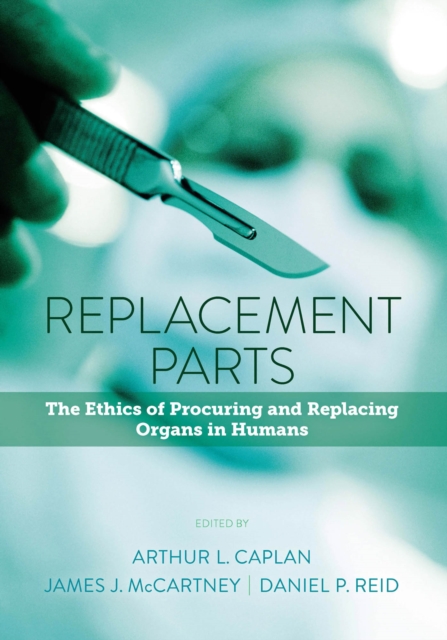
Replacement Parts
In Replacement Parts, internationally renowned bioethicist Arthur L. Caplan and coeditors James J. McCartney and Daniel P. Reid assemble a collection of previously published writings from medicine, philosophy, economics, and religion that address the ethical challenges raised by organ transplantation.
eBook