
Catalogue Search | MBRL


Are you sure you want to remove the book from the shelf?

{{itemTitle}}
239
result(s) for
"Reilly, Benjamin"
Sort by:

Ranked Choice Voting in Australia and America: Do Voters Follow Party Cues?
Ranked choice voting (RCV) is experiencing a surge of interest in the United States, highlighted by its 2018 use for Congressional elections in Maine, the first application of a ranked ballot for national-level elections in American history. A century ago, the same system was introduced in another federal, two-party continental-sized democracy: Australia. RCV’s utility as a solution to inter-party coordination problems helps to explain its appeal in both countries, underscoring the potential benefits of a comparative analytical approach. This article examines this history of adoption and then turns to a comparison of recent RCV elections in Maine with state elections in New South Wales and Queensland, the two Australian states which share the same form of RCV as that used in the United States. This comparison shows how candidate and party endorsements influence voters’ rankings and can, over time, promote reciprocal exchanges between parties and broader systemic support for RCV. Such cross-partisan support helps explain the stability of RCV in Australia, with implications for the system’s prospects in the United States.
Journal Article

Cross-Ethnic Voting: An Index of Centripetal Electoral Systems
Centripetal approaches to democracy in divided societies seek to promote inter-ethnic accommodation and moderation by making politicians dependent on the electoral support of groups other than their own base. Such cross-ethnic voting stands in contrast to situations where politicians need only the support of their own co-ethnics to win elections. This distinction can be used to evaluate the utility of centripetal electoral systems in promoting voting across ethnic divides. To do so, this article begins by considering some critiques of centripetalism, showing that cross-ethnic voting is more common in both institutional design and actual practice than some critics believe. It then moves on to examine cases of cross-ethnic voting via ethnically designated party lists, cross-regional party formation rules, at-large communal or sectoral seat reservations, and uni-directional vote-pooling, using these cases to construct an index of strong, moderate and weak centripetal electoral systems.
Journal Article
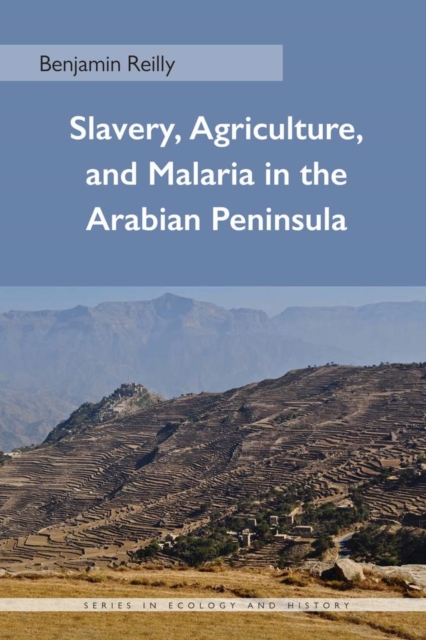
Slavery, Agriculture, and Malaria in the Arabian Peninsula
This book illuminates a previously unstudied phenomenon: the large-scale employment of people of African ancestry as slaves in agricultural oases within the Arabian Peninsula. The key to understanding this unusual system is the prevalence of malaria within Arabian Peninsula oases and drainage basins, which rendered agricultural lands in Arabia extremely unhealthy for people without genetic or acquired resistance to malarial fevers. In this way, Arabian slave agriculture had unexpected similarities to slavery as practiced in the Caribbean and Brazil. This book synthesizes a body of historical and ethnographic data about slave-based agriculture in the Arabian Peninsula. Reilly uses an innovative methodology to analyze the limited historical record and a multidisciplinary approach to complicate our understandings of the nature of work in an area that is popularly thought of solely as desert.
eBook


Social Choice in the South Seas: Electoral Innovation and the Borda Count in the Pacific Island Countries
Many of the small island democracies of the South Pacific are natural laboratories for constitutional and electoral experimentation, but have tended to be ignored by comparative political science research. This article examines one apparently unknown case of electoral innovation from the region: the use of Borda count voting procedures for elections in the Pacific Island states of Nauru and Kiribati. It introduces the basic concept of the Borda count and its relation to other electoral systems, and surveys arguments about the virtues and drawbacks of Borda count electoral systems. It then discusses in some detail the way that the Borda count is used for elections in Nauru and Kiribati, including the political impact of the system, and empirical examples of different types of strategic behaviour at work. It concludes by examining the broader significance of these cases for comparative studies of democracy, elections, social choice, and voting theory. /// Nombre de démocraties des petites îles du Pacifique sud sont des laboratoires naturels pour l'expérimentation en matière constitutionnelle et électorale. L'auteur étudie un cas apparemment inconnu d'innovation électorale: l'utilisation de la formule de Borda dans les élections du Nauru et du Kiribati. Il énumère les avantages et les inconvénients du système de Borda, avant de donner les détails de son application aux élections des deux îles. Il analyse l'impact du système et donne des exemples empiriques. Les conclusions sont à prendre en considération par l'étude comparative de la démocratie et par les théories du choix social et du comportement électoral.
Journal Article

Cardinal Numbers
The use of demographic data about cardinal mortality drawn from Salvador Miranda’s “Cardinals of the Holy Roman Church” archive confirms and quantifies the greater vulnerability of northern Europeans to Rome’s malarial fevers relative to their Roman counterparts. Non-Italian visitors to Rome suffered about three times the rate of malaria deaths as did Italians and Greeks, who had acquired various defenses against malaria. Northern Italians were far less susceptible than expected to Rome’s malarial fevers, however, whereas Iberian visitors to Rome were far more so. The eventual decline of malaria in Rome was not so much a function of climate change as of Rome’s steady post-1600 population growth.
Journal Article