
Catalogue Search | MBRL


Are you sure you want to remove the book from the shelf?

{{itemTitle}}
44
result(s) for
"Reilly, Cole"
Sort by:
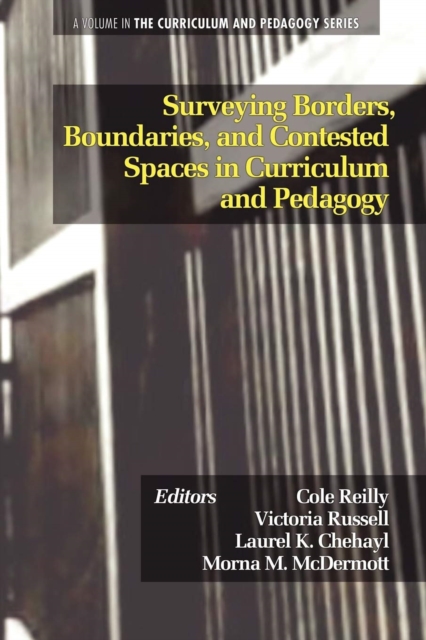
Surveying Borders, Boundaries, and Contested Spaces in Curriculum and Pedagogy
This series advances scholarship on curriculum and instruction, educational empowerment, agency, and social justice. It aims to create democratic spaces in education through research, arts-based projects, social action, and community engagement, emphasizing democracy, transparency, and diversity.
eBook


Excavations at Poggio Civitate (Murlo): The 2023 Field Season
Excavation during the 2023 field season at Poggio Civitate focused on areas immediately west of Piano del Tesoro and further refined our understanding of the form and development of the building known as Early Phase Orientalizing Complex Building 4 (abbreviated EPOC4). In addition, excavation re-examined the western area of Orientalizing Complex Building 2/Workshop (abbreviated OC2/Workshop) as well as areas immediately north of OC2/Workshop.
Journal Article
2024 Excavations at Poggio Civitate (Murlo)
Excavation during the 2024 season revealed new evidence related to industrial activities at Poggio Civitate as well as traces of habitation and related activities located to the east of Piano del Tesoro.
Journal Article

Surveying Borders, Boundaries, and Contested Spaces in Curriculum and Pedagogy. Curriculum and Pedagogy Series
The Curriculum and Pedagogy book series is an enactment of the mission and values espoused by the Curriculum and Pedagogy Group, an international educational organization serving those who share a common faith in democracy and a commitment to public moral leadership in schools and society. Accordingly, the mission of this series is to advance scholarship that engages critical dispositions towards curriculum and instruction, educational empowerment, individual and collectivized agency, and social justice. The purpose of the series is to create and nurture democratic spaces in education, an aspect of educational thought that is frequently lacking in the extant literature, often jettisoned via efforts to de-politicize the study of education. Rather than ignore these conversations, this series offers the capacity for educational renewal and social change through scholarly research, arts-based projects, social action, academic enrichment, and community engagement. Authors will evidence their commitment to the principles of democracy, transparency, agency, multicultural inclusion, ethnic diversity, gender and sexuality equity, economic justice, and international cooperation. Furthermore, these authors will contribute to the development of deeper critical insights into the historical, political, aesthetic, cultural, and institutional subtexts and contexts of curriculum that impact educational practices. Believing that curriculum studies and the ethical conduct that is congruent with such studies must become part of the fabric of public life and classroom practices, this book series brings together prose, poetry, and visual artistry from teachers, professors, graduate students, early childhood leaders, school administrators, curriculum workers and planners, museum and agency directors, curators, artists, and various under-represented groups in projects that interrogate curriculum and pedagogical theories. This book begins with \"Cognitive Imperialism and Decolonizing Research: Modes of Transformation,\" a foreword by Marie Battiste, and \"Putting it Together.\" This book is divided into four sections. Section I, Theory and Practice: (In)Forming (Trans)Forming (Re)Forming, contains the following: (1) Editing Crew: More than Just Carets (Amy Shema); (2) Get Real: Math in the Real World (Erin M. Humphries); and (3) Looking for June Cleaver: Reclaiming Equity in the High School English Language Arts Classroom (David L. Humpal). Section II, Transcending the Confines of Inside(R)/Outside)R, contains the following: (4) Traveling Curriculum's Borders: Curricular Implications for Schools along the Texas-Mexico Border (Jaime Lopez); (5) Navigating Borderlands of Accountability: An Autoethnographic Exploration (Melissa Castaneda); and (6) Echoes Down the Rabbit Hole: Voices Heard and Lost in the Land of Professional Development Schools (Victoria Russell). Section III, Translating Silence and Noise, contains the following: (7) Power Negotiations and Race-Centric, Race-Avoidant and Seemingly Race-Neutral Academic Tasks (Myosha McAfee); (8) To What Extent Am I Part of the Problem?: Strategizing Identity Politics While Instructing a Multicultural Teacher Education Course (Cole Reilly); and (9) Dramatic Encounters: The Role of the Private and Public in Understandings of Social Justice through Conflict (Antonino Giambrone). Section IV, Troubling Capital and Deficit, contains the following: (10) Border Inquiry (Melina Martinez); (11) The Influence of West African Languages on African American Vernacular: Ebonics Crisis in Oakland, California Revisited (Michael Takafor Ndemanu); (12) Literacy sin Fronteras: Deconstructing Borders for Language and Cultural Inclusion (Elva Reza-Lopez, Blanca Caldas Chumbes and Christian Belden); and (13) Anti-Racist Teacher Education Curriculum: Toward a Reconceptualization of the Racial Framework of Prospective Teachers (Nicole V. Williams). Also included are: (1) \"A Funny Thing Happened on the Way to Editing this Book: Considering Borders & Boundaries Between \"Public\" & \"Art\" in Framing Arts-Based Education Research,\" an epilogue; and (2) \"Something about Hats: Teaching, Researching, and Teaching Research for Understanding,\" an afterword.
Book

Reading gender(ing) through pedagogy in action: A multiple case study employing Critical Discourse Analysis
Feminism as a frame of reference (and feminist pedagogy in particular) attributes the socialization process of gendering primarily to cultural influences and media representations along with attitudes and ideals taught/learned at home. However, schools too are pivotal sites of such social constructivism, particularly with regard to appreciating sex and gender issues. At some level, schools unavoidably do teach such cultural constructions. When teachers neglect to disrupt, challenge, or queer gendered hegemonies (e.g., sex stereotypes, presumed sex role norms, and language representing gender bias), students may read their silence or inaction as an implicit endorsement of such taken-for-granted matters. As such, educators, particularly those in elementary education, have a responsibility to acknowledge and explore the role(s) they play in (or write into) the hidden curriculum of gendering. Drawing upon video technology, this study describes the pedagogical interactions (e.g., the language of instruction, teacher response, and class discussion) between and among students and their teacher as they negotiate gender-themed works of children’s literature during classroom read-alouds. Specifically, this research employs Critical Discourse Analysis (CDA) to illustrate how discourses of gender are pedagogically engaged within and throughout such interactions. Four emergent themes of discourse are identified: (1) binary conventions [e.g., constructing activities, perspectives, (cap)abilities, and consequences as gendered]; (2) feminized identities [e.g., princess- and sissy-talk]; (3) designer labels off-the-rack [e.g., using clothing to construct, allow for, motivate, and/or exoticize gendered identities]; and (4) “informed outsiders ” [e.g., courtship, marriage, and child rearing as understood by children]. Ultimately, this study aims to encourage ongoing reflection as well as consciousness raising among veteran and preservice teachers with regard to the gendered discourses they might encourage, exercise, and/or exclude as part of their overall instruction, beyond just those lessons that entail reading aloud to others.
Dissertation

A Collaborative Planning Framework for Integrated Urban Water Management with an Application in Dual Water Supply: A Case Study in Fort Collins, Colorado
Urban water management is essential to our quality of life. As much of our urban water supply infrastructure reaches the end of its useful life, water managers are using the opportunity to explore alternative strategies that may enable them to better meet modern urban water challenges. Water managers must navigate the labyrinth of balancing stakeholder needs, considering all costs and benefits, reducing decision risk, and, most importantly, ensuring public health and protecting the environment. Innovative water managers need guidance and tools to help manage this complex decision space. This dissertation proposes a collaborative, risk-informed, triple bottom line, multi-criteria decision analysis (CRTM) planning framework for integrated urban water management decisions. The CRTM framework emerged from the obstacles and stakeholder needs encountered during a study evaluating alternative dual water supply strategies in Fort Collins, Colorado. The study evaluated four strategies for the dual supply of raw and treated water including centralized and decentralized water treatment, varying distribution system scales, and integration of existing irrigation ditches with raw water landscape irrigation systems. The results suggest that while the alternative dual water supply strategies offer many social and environmental benefits, the optimal strategies are dependent on local conditions and stakeholder priorities. The sensitivity analysis revealed the key parameters driving uncertainty in alternative performance were regulatory and political reinforcing the importance of participation from a wide variety of stakeholders. Evaluation of the decision process suggests the CRTM framework increased knowledge sharing between study participants. Stakeholder contributions enabled a comprehensive evaluation of the option space while examining the financial, social and environmental benefits and trade-offs of the alternatives. Most importantly, evolving the framework successfully maintained stakeholder participation throughout the study.
Dissertation
Ira Shor: Shoring up Pedagogy, Politics, and Possibility for Educational Empowerment
Born in 1945 to a working-class, Jewish family, Ira Shor was raised in a rentcontrolled apartment in the South Bronx, surrounded by many other Eastern European families. Both his parents were first-generation Americans, each the descendants of Russian immigrants. At 15, Ira’s father dropped out of school and went on to build US battleships and aircraft carriers as a sheet-metal worker throughout WWII and the Korean War.
Book Chapter


The effect of scoring guides on student motivation and performance
The purpose of this research was to investigate the effect of scoring guides, or rubrics, on student performance and motivation. Rubrics are used to score open-ended performance assessments and to help instructors tie assessments to standards. The impact of presenting scoring guides to students on their motivation and performance on assessments has not been previously examined. This study investigated the impact of a rubric presented to students before an assessment as measured by the participants' performance rating and answers to a motivational survey. The 52 participants were enrolled in an undergraduate educational technology course at a medium sized midwestern university. The participants were randomly assigned to either an experimental group, which had access to the rubric, or a control group, which did not have access. The participants' responses to the assessment were scored by the instructor using the rubric. The participants' motivation was measured using Kellers Instructional Materials Motivation Survey (Keller, 1993). The data yielded no significant difference between the students who viewed the rubric before the assessment and those who did not. The lack of statistical significance may be due to the limited exposure to the rubric or to the methodology employed to create an experimental environment. The author examines several possibilities for future research, including alternative measures of motivation and targeting populations who may benefit from more structure.
Dissertation