
Catalogue Search | MBRL


Are you sure you want to remove the book from the shelf?

{{itemTitle}}
4,104
result(s) for
"Reiter, Mark"
Sort by:


Cover crop termination options and application of remote sensing for evaluating termination efficiency
Efficient termination of cover crops is an important component of cover crop management. Information on termination efficiency can help in devising management plans but estimating herbicide efficacy is a tedious task and potential remote sensing technologies and vegetative indices (VIs) have not been explored for this purpose. This study was designed to evaluate potential herbicide options for the termination of wheat ( Triticum aestivum L.), cereal rye ( Secale cereale L.), hairy vetch ( Vicia villosa Roth.), and rapeseed ( Brassica napus L.), and to correlate different VIs with visible termination efficiency. Nine herbicides and one roller-crimping treatment were applied to each cover crop. Among different herbicides used, glyphosate, glyphosate + glufosinate, paraquat, and paraquat + metribuzin provided more than 95% termination for both wheat and cereal rye 28 days after treatment (DAT). For hairy vetch, 2,4-D + glufosinate and glyphosate + glufosinate, resulted in 99 and 98% termination efficiency, respectively, followed by 2,4-D + glyphosate and paraquat with 92% termination efficiency 28 DAT. No herbicide provided more than 90% termination of rapeseed and highest control was provided by paraquat (86%), 2,4-D + glufosinate (85%), and 2,4-D + glyphosate (85%). Roller-crimping (without herbicide application) did not provide effective termination of any cover crop with 41, 61, 49, and 43% termination for wheat, cereal rye, hairy vetch, and rapeseed, respectively. Among the VIs, Green Leaf Index had the highest Pearson correlation coefficient for wheat (r = -0.786, p = <0.0001) and cereal rye (r = -0.804, p = <0.0001) with visible termination efficiency rating. Whereas for rapeseed, the Normalized Difference Vegetation Index (NDVI) had the highest correlation coefficient (r = -0.655, p = <0.0001). The study highlighted the need for tankmixing 2,4-D or glufosinate with glyphosate for termination instead of blanket application of glyphosate alone for all crops including rapeseed and other broadleaf cover crops.
Journal Article

Triggers : sparking positive change and making it last
Executive coach and psychologist Marshall Goldsmith discusses the emotional triggers that set off a reaction or a behavior in us that often works to our detriment. Do you find that at times you suddenly become defensive or enraged by an idle comment from a colleague? Or that your temper rises when another car cuts you off in traffic? Your reactions don't occur in a vacuum. They are the result of emotional and psychological triggers that often happen only in specific settings -- at meetings, or in competitive situations, or with a specific person who rubs you the wrong way, or when you feel under particular pressure. Being able to recognize those triggers and understand how the environment affects our behavior is key to controlling our responses and managing others at work and in life. Make no mistake -- change is hard. And the starting point is the willingness to accept help, and the desire to change. Over the course of this book, Marshall explores the power of active questions to get us to take responsibility for our actions -- and our failure to act. Questions such as \"Did I do my best to make progress toward my goal?\" \"Did I work hard at being fully engaged?\" He discusses the importance of structure in effecting permanent change. Because, he points out, change is hard, and without a structure to keep us on track, we inevitably relapse and fall back. Filled with stories from Marshall's work with executives and leaders, Triggers shows readers how to achieve meaningful and sustained change that will allow us to open our imaginations and escape the rigidity of binary thinking.

Volunteer rapeseed infestation and management in corn
The study was conducted to evaluate the effect of different termination timings for rapeseed (Brassica napus L.) cover crop on biomass production, termination efficiency, and volunteer infestation in the successive cash crop (corn, Zea mays), and control of volunteer rapeseed with herbicides. Delaying termination from 28 days before planting corn (DBP) to 14, 5, or 1 DBP, increased rapeseed biomass by 85%, 148%, and 158%, respectively. Rapeseed termination efficiency was greatest 28 DBP (99%) followed by 14 DBP (92%) and 5 DBP (89%) with the combined use of a roller‐crimper and 2,4‐D [2,4‐dichlorophenoxy acetic acid] + glufosinate [2‐amino‐4‐(hydroxymethylphosphinyl) butanoic acid]. The sole use of roller‐crimper 1 DBP provided only 56% termination efficiency. Zero volunteer plants were observed in successive cash crops with the 28 DBP termination treatment; however, at 14, 5, and 1 DBP termination, the number of volunteer rapeseed plants m−2 were 5, 12, and 22, respectively. Regression analysis showed that variation in volunteer rapeseed density can be explained better by termination efficiency (R2 = 0.80) as compared to rapeseed biomass at termination (R2 = 0.46). Among pre‐emergence (PRE) herbicides, mesotrione [2‐(4‐mesyl‐2‐nitrobenzoyl)‐3‐hydroxycylohex‐2‐enone], rimsulfuron [N‐[[(4,6‐dimethoxy‐2‐pyrimidinyl)amino]carbonyl]‐3‐(ethylsulfonyl)‐2‐pyridinesulfonamide], and flumioxazin 2‐[7‐fluoro‐3,4‐dihydro‐3‐oxo‐4‐(2‐propynyl)‐2H‐1,4‐benzoxazin‐6‐yl]‐4,5,6,7‐tetrahydro‐1H‐isoindole‐1,3(2H)‐dione provided more than 95% volunteer rapeseed control, and 92%–94% control with PRE‐application of atrazine [6‐chloro‐N‐ethyl‐N9‐(1‐methylethyl)‐1,3,5‐triazine‐2,4‐diamine], isoxaflutole [(5‐cyclopropyl‐4‐isoxazolyl)[2‐(methylsulfonyl)‐4‐(trifluoromethyl)‐phenyl]methanone], metribuzin [4‐amino‐6‐(1,1‐dimethylethyl)‐3‐(methylthio)‐1,2,4‐triazin‐5(4H)‐one], and pyroxasulfone [3‐[[[5‐(difluoromethoxy)‐1‐methyl‐3‐(trifluoromethyl)‐1H‐pyrazol‐4‐yl]methyl]sulfonyl]‐4,5‐dihydro‐5,5‐dimethylisoxazole]. Among post‐emergence (POST) herbicides, atrazine and glyphosate [N‐(phosphonomethyl) glycine] provided 99% control of rapeseed followed by glufosinate (89%). Results indicate that ineffective or delayed termination of rapeseed can result in volunteer infestation in successive crops, which can be controlled by tested PRE and POST herbicides at an early stage. Core Ideas Delaying rapeseed cover crop termination increased biomass accumulation. Roller‐crimper alone is not effective for rapeseed termination. Poor termination of rapeseed results in volunteer rapeseed infestation in corn. Volunteer rapeseed can be controlled by selected pre‐ and post‐emergence herbicides.
Journal Article

What got you here won't get you there : how successful people become even more successful !
Your hard work is paying off. You are doing well in your field. But something is standing between you and the next level of achievement. That something may be one of your annoying habits. Perhaps one small flaw - a behavior you barely even recognize - is the only thing that's keeping you from where you want to be. It may be that the very characteristic that you believe got you where you are - like the drive to win at all costs is what's holding you back. As this book explains, people often do well in spite of certain habits rather than because of them - and need a \"to stop\" list rather than one listing what \"to do.\" Marshall Goldsmith's expertise is in helping global leaders overcome their annoying unconscious habits and become more successful. His one-on-one coaching comes with a six-figure price tag - but in this book, you get his great advice for much less. Recently named as one of the world's five most-respected executive coaches by Forbes, he has worked with over 100 major CEOs and their management teams at the world's top businesses. His clients include corporations such as Goldman Sachs, Glaxo SmithKline, Johnson and Johnson, and GE.
Book

Impact of cover crops and termination timing on weed management in corn
This study evaluated the impact of four cover crop species and their termination timings on cover crop biomass, weed control, and corn yield. A field experiment was arranged in a split-plot design in which cover crop species (wheat, cereal rye, hairy vetch, and rapeseed) were the main plot factor, and termination timings [4, 2, 1, and 0 wk before planting corn (WBP)] was the subplot factor. In both years (2021 and 2022), hairy vetch produced the most biomass (5,021 kg ha –1 ) among cover crop species, followed by cereal rye (4,387 kg ha –1 ), wheat (3,876 kg ha –1 ), and rapeseed (2,575 kg ha –1 ). Regression analysis of cover crop biomass with accumulated growing degree days (AGDDs) indicated that for every 100 AGDD increase, the biomass of cereal rye, wheat, hairy vetch, and rapeseed increased by 880, 670, 780, and 620 kg ha –1 , respectively. The density of grass and small-seeded broadleaf (SSB) weeds at 4 wk after preemergence herbicide (WAPR) application varied significantly across termination timings. The grass and SSB weed densities were 56% and 36% less at 0 WBP compared with 2 WBP, and 67% and 61% less compared with 4 WBP. The sole use of a roller-crimper did not affect the termination of rapeseed at 0 WBP and resulted in the least corn yield (3,046 kg ha –1 ), whereas several different combinations of cover crops and termination timings resulted in greater corn yield. In conclusion, allowing cover crops to grow longer in the spring offers more biomass for weed suppression and impacts corn yield.
Journal Article
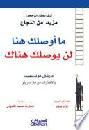
كيف يحقق الناجحون نجاحا أكبر : ما أوصلك هنا لن يوصلك هناك
يؤدي هذا الكتاب دور دليل مهم يساعدك على التخلص من عيوبك وتحقيق ما تصبو إليه سواء أكنت قاب قوسين أم أدنى من القمة أم كانت أمامك بضع محطات قبل بلوغ تلك القمة. ثناء على مارشال غولدسميث \"كانت أفكار مارشال القيمة عن تطوير القيادة والمسؤوليات المرتبطة بها من تدريب وتعليم فائقة الأهمية بالنسبة لضباطنا وزوجاتهم\"-الجنرال إيريك ك. شينسكي قائد أركان الجيش الأمريكي السابق \"مارشال قادر بأسلوبه الساحر على معالجة القضايا المزعجة بطريقة مريحة. وهذا لا يودي إلى تحسن القادة وحدهم بل إلى تحسن الفريق كله !\"-جورج بورست رئيس مجلس إدارة تويوتا فاينانشال سيرفسز. \"إن مارشال غولدسميث من أفضل المدربين في العالم وبوسعه تدريب رجال الأعمال أينما كانوا\".
Book
Soybean yield response to sulfur and nitrogen additions across diverse U.S. environments
As soybean [Glycine max (L.) Merr.] yields reach record highs, more nutrients are required to maintain these production levels. This study was conducted to evaluate the effect of S and N on soybean yield in diverse environments across the United States. Data were collected from a total of 52 sites in 10 states over 2 yr (2019 and 2020) for this study. A factorial arrangement of three S rates (11, 22, and 33 kg S ha−1) using two sources (ammonium sulfate [AMS] and calcium sulfate [CaSO4]) were broadcasted by hand at planting. Additionally, to examine the impact of N on soybean yield, urea was applied at 10, 20, and 29 kg N ha−1 to equal that supplied by AMS. A zero‐fertilizer control treatment was also included. Soil samples prior to fertilization as well as grain yield at R8 were collected and analyzed to understand what environmental conditions favor soybean response to S additions. Results indicated that soil and environmental factors are poor indicators of yield response to S and N additions. Yield responses to S and N additions were observed in yield environments averaging >3,643 kg ha−1, but S did not limit yield in most environments (n = 49). Partial profit analysis was conducted at two soybean grain prices (US $0.32 and $ 0.55 kg ha−1). Yield increases were only profitable at 2 site‐years at the tested soybean grain prices. Overall results suggest that use of N and S fertilizers are rarely justified across diverse growing environments. Core Ideas Sulfur additions rarely affected soybean yield. Sulfur additions are less likely to affect soybean yield in lower yielding environments. Soil and environmental factors may be indicators of yield response to sulfur. Nitrogen additions marginally increased yields. Most sulfur and nitrogen additions do not increase profits.
Journal Article

Optimizing Maize Agronomic Performance Through Adaptive Management Systems in the Mid-Atlantic United States
Maize (corn) (Zea mays L.) yield is influenced by complex factors, including abiotic and biotic stress and inconsistent nutrient use efficiency, which challenge optimal yield. Standard management recommendations often fall short, prompting interest in intensive management strategies within an Adaptive Maize Management System (ACMS). To investigate this, we employed an addition/omission technique within a randomized complete block design (RCBD) to compare standard maize management recommendations with an intensive management protocol aimed at identifying yield-limiting factors. Our intensive management approach combined early-season biostimulant applications with mid-season supplementation of phosphorus (P), potassium (K), and nitrogen (N) at the V7 stage, followed by foliar fungicides and additional foliar N at the R1 stage. Field trials spanned five Virginia locations over 2022 and 2023 under both irrigated and non-irrigated conditions, yielding ten site-years of data. Analysis via ANOVA in JMP® Version 18 with Dunnett’s test revealed that the intensive management approach significantly increased grain yield in 3 of 10 experiments. Under non-irrigated conditions, the intensive management practices averaged 5.9% higher yield than the standard management check. We observed a higher response to irrigation in standard management check (34%) than in intensive management check (8.9%). Site-specific irrigation impacts ranged from 14% to 61%. Results emphasize site-specific input recommendations for yield enhancement.
Journal Article
Edamame Yield and Quality Response to Nitrogen and Sulfur Fertilizers
As United States farmers adapt soybean (Glycine max) production methods from oilseed to vegetable (edamame), key management practices will need to be considered. The key objective of this study was to determine the optimal nitrogen (N) rate and N application timing for edamame in the mid-Atlantic coastal plain system. The study was conducted for three years in Painter, VA, USA on sandy loam soils. A factorial arrangement of four N rates was applied with two application timing strategies: at-planting, and split application. Leaf tissue samples were collected and analyzed at R1. At harvest, the Normalized Difference Vegetation Index (NDVI) was measured, whole pods were mechanically collected, and yield was recorded. Additionally, pod and bean physical and chemical quality were assessed. Nitrogen fertilization significantly increased pod yield in two out of three years. R1 leaf N and sulfur (S) concentrations correlated to the yield, and R1 leaf and R6 whole-plant N concentrations correlated to the total N uptake. None of the tested parameters indicated that N fertilizer decreased yield or quality. In conclusion, we found that N fertilizer applied at planting may aid edamame yield and profit for sandy loam soils in the mid-Atlantic, USA.
Journal Article