
Catalogue Search | MBRL


Are you sure you want to remove the book from the shelf?

{{itemTitle}}
112
result(s) for
"Resources for the Future"
Sort by:


U.S. Energy Policies (Routledge Revivals)
U.S. Energy Policies, first published in 1968, aims to assemble and describe within an overall framework the energy policy questions that RRF believed would profit from study and analysis. This study covers the past performance and trends in the energy industries, the nature of existing industries and of the government policies bearing on them, and the effects of those policies. This title also takes note of the prospective influence of economic and technological developments and evaluates the probable effects of selected alternatives to existing policies. This book will be of interest to students of environmental studies.
eBook
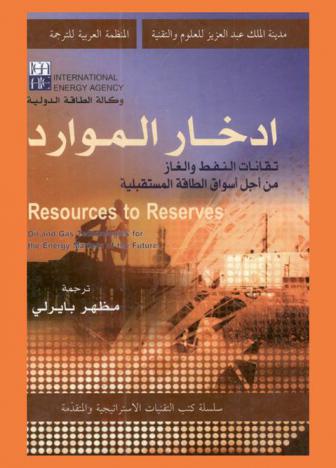
إدخار الموارد : تقانات النفط والغاز من أجل أسواق الطاقة المستقبلية
ينقسم هذا الكتاب إلي فصلين يتناول الفصل الأول وضع الإطار العام الطلب على النفط والغاز التوزیع الجغرافي نقل النفط والغاز بنیة صناعة النفط والغاز البحث والتطویر ودورة التقانة ويتناول الفصل الثاني النفط والغاز التقلیدیان منظمة أوبك في الشرق الأوسط المناطق الأخرى تقانات الحقول الذكیة أو الإلكترونیة اقتصادیات مقیاس الحقول الناضجة.
Book

Sustainability of temperate forests
RFF's Roger Sedjo and his colleagues discuss initiatives designed to promote and enhance sustainable forestry in temperate countries. While concerns about tropical deforestation are considerable, temperate forests account for the vast majority of the world's roundwood production and most global trade in wood and paper. Improving forest sustainability in such regions is imperative, economically and environmentally. This book illustrates how far nations have progressed, and how far they still need to go, in that effort.
The authors describe how temperate nations address forest sustainability, discussing recent developments affecting forestry and trade. Their compilation of international data on forest practices and regulation provides a useful comparative perspective. They analyze the effect of institutional changes (e.g., new laws) on land management. The volume assesses how national forestry industries are adapting to new laws and policies in the face of new realities in production and markets, particularly in the context of international trade and global competition.
Country profiles provide details on sustainability policy and performance in eight timber-exporting or major wood-using temperate nations: the United States, Canada, Finland, Sweden, Germany, France, New Zealand, and Chile. The authors also assess how each nation would be affected by the application of various criteria for sustainability.
eBook

Worst things first?: the debate over risk-based national environmental priorities
Summary of closing panel discussion / Adam M. Finkel, Dominic Golding -- Recurring themes and points of contention / Adam M. Finkel, Dominic Golding --Afterthoughts / Adam M. Finkel. Should we-and can we-reduce the worst risks first? / Adam M. Finkel -- Rationalism and redemocratization: time for a truce / Alice M. Rivlin -- EPA's vision for setting national environmental priorities / F. Henry Habicht II --An overview of risk-based priority setting at EPA / Charles W. Kent, Frederick W. Allen -- Integrating science, values, and democracy through comparative risk asessment / Jonathan Lash -- A proposal to address, rather than rank, environmental problems / Mary O'Brien. Current priority-setting methodology: too little rationality or too much? / Dale Hattis, Robert L. Goble --Quantitative risk ranking: more promise than the critics suggest / M. Granger Morgan -- Paradigms, process, and politics: risk and regulatory design / Donald T. Hornstein -- Is reducing risk the real objective of risk management? / Richard B. Belzer - State concerns in setting environmental priorities: is the risk-based paradigm the best we can do? / Victoria J. Tschinkel -- The states: the national laboratory for the risk-based paradigm? / G. Tracy Mehan III. Working group discussions / Adam M. Finkel, Dominic Golding -- Pollution prevention: putting comparative risk assessment in its place / Barry Commoner -- Hammers don't cut wood: why we need pollution prevention and comparative risk assessment / John D. Graham -- Unequal environmental protection: incorporating environmental justice in decision making / Robert D. Bullard -- Risk-based priorities and environmental justice / Albert L. Nichols -- An innovation-based strategy for the environment / Nicholas A. Ashford -- Promoting innovation \"the easy way\" / James D. Wilson
eBook

Policy Instruments for Environmental and Natural Resource Management
As Thomas Sterner points out, the economic 'toolkit' for dealing with environmental problems has become formidable. It includes taxes, charges, permits, deposit-refund systems, labeling, and other information disclosure mechanisms. Though not all these devices are widely used, empirical application has started within some sectors, and we are beginning to see the first systematic efforts at an advanced policy design that takes due account of market-based incentives. Sterner's book encourages more widespread and careful use of economic policy instruments. Intended primarily for application in developing and transitional countries, the book compares the accumulated experiences of the use of economic policy instruments in the U.S. and Europe, as well as in select rich and poor countries in Asia, Africa, and Latin America. Ambitious in scope, the book discusses the design of instruments that can be employed in a wide range of contexts, including transportation, industrial pollution, water pricing, waste, fisheries, forests, and agriculture. Policy Instruments for Environmental and Natural Resource Management is deeply rooted in economics but also informed by perspectives drawn from political, legal, ecological, and psychological research. Sterner notes that, in addition to meeting requirements for efficiency, the selection and design of policy instruments must satisfy criteria involving equity and political acceptability. He is careful to distinguish between the well-designed plans of policymakers and the resulting behavior of society. A copublication of Resources for the Future, the World Bank, and the Swedish International Development Cooperation Agency (Sida).
eBook

Pricing Irrigation Water
As globalization links economies, the value of a country's irrigation water becomes increasingly sensitive to competitive forces in world markets. Water policy at the national and regional levels will need to accommodate these forces or water is likely to become undervalued. The inefficient use of this resource will lessen a country's comparative advantage in world markets and slow its transition to higher incomes, particularly in rural households. While professionals widely agree on what constitutes sound water resource management, they have not yet reached a consensus on the best ways of implementing policies. Policymakers have considered pricing water - a debated intervention - in many variations. Setting the price 'right,' some say, may guide different types of users in efficient water use by sending a signal about the value of this resource. Aside from efficiency, itself an important policy objective, equity, accessibility, and implementation costs associated with the right pricing must be considered. Focusing on the examples of China, Mexico, Morocco, South Africa, and Turkey, Pricing Irrigation Water provides a clear methodology for studying farm-level demand for irrigation water. This book is the first to link the macroeconomics of policies affecting trade to the microeconomics of water demand for irrigation and, in the case of Morocco, to link these forces to the creation of a water user-rights market. This type of market reform, the contributors argue, will result in growing economic benefits to both rural and urban households.
eBook

Comparing environmental risks
The budgetary squeeze of the 1990s has made it obvious that the government cannot address every possible environmental problem. Comparative risk assessment (CRA) is increasingly advanced as the means for setting realistic priorities. RFF's Center for Risk Management commissioned background papers from leading experts on CRA for a meeting with federal regulatory officials. Comparing Environmental Risks presents the revised papers of this workshop. Representing the state of the art on programmatic CRA, its methodological analyses and practical recommendations will be invaluable to government officials, independent analysts, and anyone studying environmental policy.
eBook

Policy instruments for environmental and natural resource management
As Thomas Sterner points out, the economic 'toolkit' for dealing with environmental problems has become formidable. It includes taxes, charges, permits, deposit-refund systems, labeling, and other information disclosure mechanisms. Though not all these devices are widely used, empirical application has started within some sectors, and we are beginning to see the first systematic efforts at an advanced policy design that takes due account of market-based incentives. Sterner's book encourages more widespread and careful use of economic policy instruments. Intended primarily for application in developing and transitional countries, the book compares the accumulated experiences of the use of economic policy instruments in the U.S. and Europe, as well as in select rich and poor countries in Asia, Africa, and Latin America. Ambitious in scope, the book discusses the design of instruments that can be employed in a wide range of contexts, including transportation, industrial pollution, water pricing, waste, fisheries, forests, and agriculture. Policy Instruments for Environmental and Natural Resource Management is deeply rooted in economics but also informed by perspectives drawn from political, legal, ecological, and psychological research. Sterner notes that, in addition to meeting requirements for efficiency, the selection and design of policy instruments must satisfy criteria involving equity and political acceptability. He is careful to distinguish between the well-designed plans of policymakers and the resulting behavior of society. A copublication of Resources for the Future, the World Bank, and the Swedish International Development Cooperation Agency (Sida).
eBook

U. S. Energy Policies (Routledge Revivals)
U.S. Energy Policies, first published in 1968, aims to assemble and describe within an overall framework the energy policy questions that RRF believed would profit from study and analysis. This book will be of interest to students of environmental studies.
eBook