
Catalogue Search | MBRL


Are you sure you want to remove the book from the shelf?

{{itemTitle}}
7
result(s) for
"Restall, Matthew, 1964-"
Sort by:

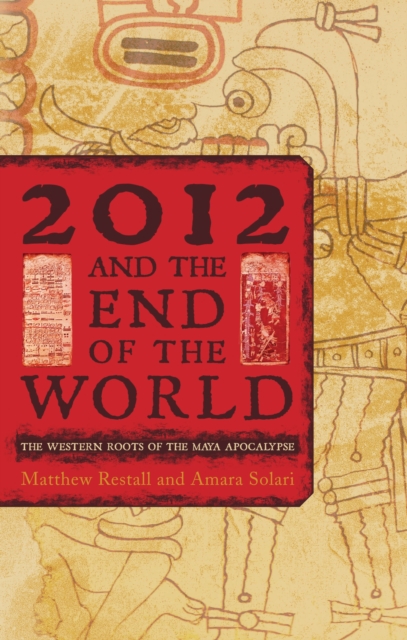
2012 and the end of the world
Did the Maya really predict that the world would end in December of 2012? If not, how and why has 2012 millenarianism gained such popular appeal? In this deeply knowledgeable book, two leading historians of the Maya answer these questions in a succinct, readable, and accessible style. Matthew Restall and Amara Solari introduce, explain, and ultimately demystify the 2012 phenomenon. They begin by briefly examining the evidence for the prediction of the world's end in ancient Maya texts and images, analyzing precisely what Maya priests did and did not prophesize. The authors then convincingly show how 2012 millenarianism has roots far in time and place from Maya cultural traditions, but in those of medieval and Early Modern Western Europe. Revelatory any myth-busting, while remaining firmly grounded in historical fact, this fascinating book will be essential reading as the countdown to December 21, 2012, begins.
eBook

The conquistadors : a very short introduction
With startling speed, Spanish conquistadors invaded hundreds of Native American kingdoms, took over the mighty empires of the Aztecs and Incas, and initiated an unprecedented redistribution of the world's resources and balance of power. They changed the course of history, but the myth they established was even stranger than their real achievements. This Very Short Introduction deploys the latest scholarship to shatter and replace the traditional narrative. Chapters explore New World civilizations prior to the invasions, the genesis of conquistador culture on both sides of the Atlantic, the roles black Africans and Native Americans played, and the consequences of the invasions.
Book

Seven myths of the Spanish conquest
Here is an intriguing exploration of the ways in which the history of the Spanish Conquest has been misread and passed down to become popular knowledge of these events. The book offers a fresh account of the activities of the best-known conquistadors and explorers, including Columbus, Cortés, and Pizarro. Using a wide array of sources, historian Matthew Restall highlights seven key myths, uncovering the source of the inaccuracies and exploding the fallacies and misconceptions behind each myth. This vividly written and authoritative book shows, for instance, that native Americans did not take the conquistadors for gods and that small numbers of vastly outnumbered Spaniards did not bring down great empires with stunning rapidity. We discover that Columbus was correctly seen in his lifetime--and for decades after--as a briefly fortunate but unexceptional participant in efforts involving many southern Europeans. It was only much later that Columbus was portrayed as a great man who fought against the ignorance of his age to discover the new world. Restall also shows that the Spanish Conquest relied heavily on black and native allies, who provided many thousands of fighters, vastly outnumbering the conquistadors. In fact, the native perception of the Conquest differed sharply from the Spanish version--they saw it as a native civil war in which the Spaniards played an important but secondary role. The Conquest, Restall shows, was more complex--and more fascinating--than conventional histories have portrayed it. Seven Myths of the Spanish Conquest offers a richer and more nuanced account of a key event in the history of the Americas.
eBook

Return to Ixil : Maya society in an eighteenth-century Yucatec town
\"An examination of 100+ previously unstudied colonial-era Maya wills from the Yucatec town of Ixil. These testaments--some of the only surviving documentation of colonial inhabitation--offer unprecedented depictions of material and spiritual life from 1738 to 1779 and are rare and rich resources of Maya language\"--Provided by publisher.
Book

