
Catalogue Search | MBRL


Are you sure you want to remove the book from the shelf?

{{itemTitle}}
16
result(s) for
"Reuster-Jahn"
Sort by:

\“Mr. President\”: Musical Open Letters as Political Commentary in Africa
In a number of African countries, the musical open letter has emerged as a new genre of popular music since 2000, in the context of democratization and a certain postdemocratization disillusionment. Through those letters, young urban musicians publicly and directly address political leaders, protesting against a lack of accountability, and demanding a fair dialogue about the representation of voters' interests. This explains why many musical open letters appear in the context of elections or their aftermath. In their open letters, rappers speak out in plain language and often defy etiquette rules, in contrast to more traditional, veiled forms of musically expressed criticism. The risk of repression is balanced against an increase in reputation with audiences. The article presents some twenty African musical open letters, focusing on case studies from Tanzania and Nigeria. It reveals that a central characteristic of the musical open letter is the parrhesiastic attitude of the musicians; however, we caution against essentializing the effects of the genre.
Journal Article

From slang to sleek: Changing language attitudes of urban youths in Tanzania
Urban language in Tanzania is based on Swahili. It is a complex linguistic phenomenon which, depending on contexts, can be used as a sociolect, a register, or a speech style. As its creators and users are predominantly male urban youths, it shares many features with other urban youth languages in Africa. This urban language, in Swahili called lugha ya mitaani, has been described linguistically by Reuster-Jahn and Kießling (2006), who focused on its creative strategies of manipulation as well as on its semantic domains characterised by overlexicalization. This article examines the interplay between youth culture, in particular music, and urban youth language in Tanzania. It argues that the rapid development of youth language after the socialist era in Tanzania, which ended in the late 1980s, was closely connected to the rise of Bongo Flava, a hip-hop movement in the country which spread lexical creations and imbued youth language with prestige. Moreover, the article suggests a correlation between the transformation of Bongo Flava into commercial pop music since approximately 2010 and the decreased prestige of youth language. It is based on a preliminary survey among Tanzanian youths in Dar es Salaam.
Journal Article

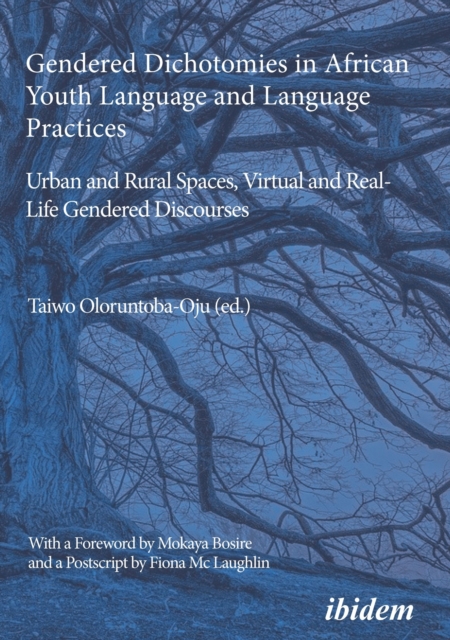
Gendered Dichotomies in African Youth Language and Language Practices: Urban and Rural Spaces, Virtual and Real-Life Gendered Discourses
Youth language data provides interesting perspectives on gender dynamics and gendered usage in society. However, the gender perspective has notreceived the deserved focus in youth language studies in Africa.This is partly due to the general perception that youth languages and classic youth language practices, such as slangand anti-language, are male-oriented. This collected volume focuses on gender dynamics and gendered usage in African youthlanguages and youth language practices, against the backdrop of urbanity as well as rurality. With representations from different parts of Africa, the volume examines sundry youth usage in different contexts and domains. While avoiding strict binarizations and potentially flawed dichotomies, the contributing scholars observe some of the motivationsfor different gender performatives and how these manifest in a variety of language forms and through predominated categories of use. Data samples were obtained through sociolinguistic and anthropological instruments, ranging from questionnaires and structured interviews to street-based observations and corpus analyses. On the whole, the volume engages the literature and debate on language, youth, and especially on gendering dynamics in African youth language practices.
eBook

Literary Code~Switching in Contemporary Swahili Popular Fiction in Tanzania
The strategic use of English-language 'translations' in Swahili novels is a major focus of interest in this essay on the Tanzanian popular writer Eric James Shigongo. Shigongo's literary code-switching between Swahili and English, which has become a hallmark of his highly popular novels, testifies to the continuing social prestige of English in Tanzania: while the country's official language policy successfully promoted Swahili for several decades, English is increasingly playing a pivotal role both among the political and economic elites who increasingly send their children to private English-medium schools and among the emergent, though sparse, middle class seeking access to English-language education. The success of Shigongo's novels is thus a clear indication that English in a contemporary Tanzania embracing neoliberalism is strongly associated with social achievement and success and is seen as a highly desirable commodity. Shigongo's - linguistically and stylistically often inappropriate - 'translations' from Swahili into English are not based on everyday speech situations but are the product of a specific literary form that allows readers to imaginatively participate in the (real or imagined) cosmopolitan lifestyle of Tanzania's social elite. The extensive use of English in his novels thus serves as a symbol of modernity, middle- or upper-class identity, and (alleged) 'worldliness'.
Journal Article
\Mr. President\: Musical Open Letters as Political Commentary in Africa
In a number of African countries, the musical open letter has emerged as a new genre of popular music since 2000, in the context of democratization and a certain postdemocratization disillusionment. Through those letters, young urban musicians publicly and directly address political leaders, protesting against a lack of accountability, and demanding a fair dialogue about the representation of voters' interests. This explains why many musical open letters appear in the context of elections or their aftermath. In their open letters, rappers speak out in plain language and often defy etiquette rules, in contrast to more traditional, veiled forms of musically expressed criticism. The risk of repression is balanced against an increase in reputation with audiences. The article presents some twenty African musical open letters, focusing on case studies from Tanzania and Nigeria. It reveals that a central characteristic of the musical open letter is the parrhesiastic attitude of the musicians; however, we caution against essentializing the effects of the genre. Adapted from the source document.
Journal Article

The Mwera Lamellophone \Luliimba\
The lamellophone of the Makonde/Mwera type from south-eastern Tanzania and north-eastern Mozambique is a particular member of the family of lamellophones in Africa. It has been described by Margot Dias (1982, 1986, 1988) and Gerhard Kubik (1996, 1998), but until recently had not been studied in a performance context. This type of lamellophone has drawn scholarly interest because of its uniqueness. Kubik assumes that it could be the remnant of a small cradle area of lamellophones with metal keys in the lower Rovuma valley, apart from the large metal-keyed lamellophones found in Zimbabwe and the lower Zambezi valley (Kubik 1998:24 f). Furthermore, Kubik et al. point to a similarity of shape between Indonesian metallophones of the saron type and the Makonde/Mwera type of lamellophone, in terms of the curved box resonator and the roof-like top of the instruments.
Journal Article

Motivforschung in Volkserzählungen der Kanuri (Tschadsee-Region)
Alle werden vorwiegend von jungen Männern erzählt, die in der Gesellschaft noch nicht fest etabliert sind. Das dritte Kapitel (162-244) dient einer Einführung in Sprache, Kultur und Oralliteratur der Kanuri sowie der Charakterisierung des Textkorpus, aus dem drei Erzählungen in Kanuri und Deutsch präsentiert werden, wobei auch Äußerungen eines Respondenten berücksichtigt werden. Die Befunde stützen die Hypothese vom ,Bambara-Nukleus' des enfant-terrible (Görög u. a.:
Journal Article