
Catalogue Search | MBRL


Are you sure you want to remove the book from the shelf?

{{itemTitle}}
3
result(s) for
"Reyfman, Irina, author"
Sort by:

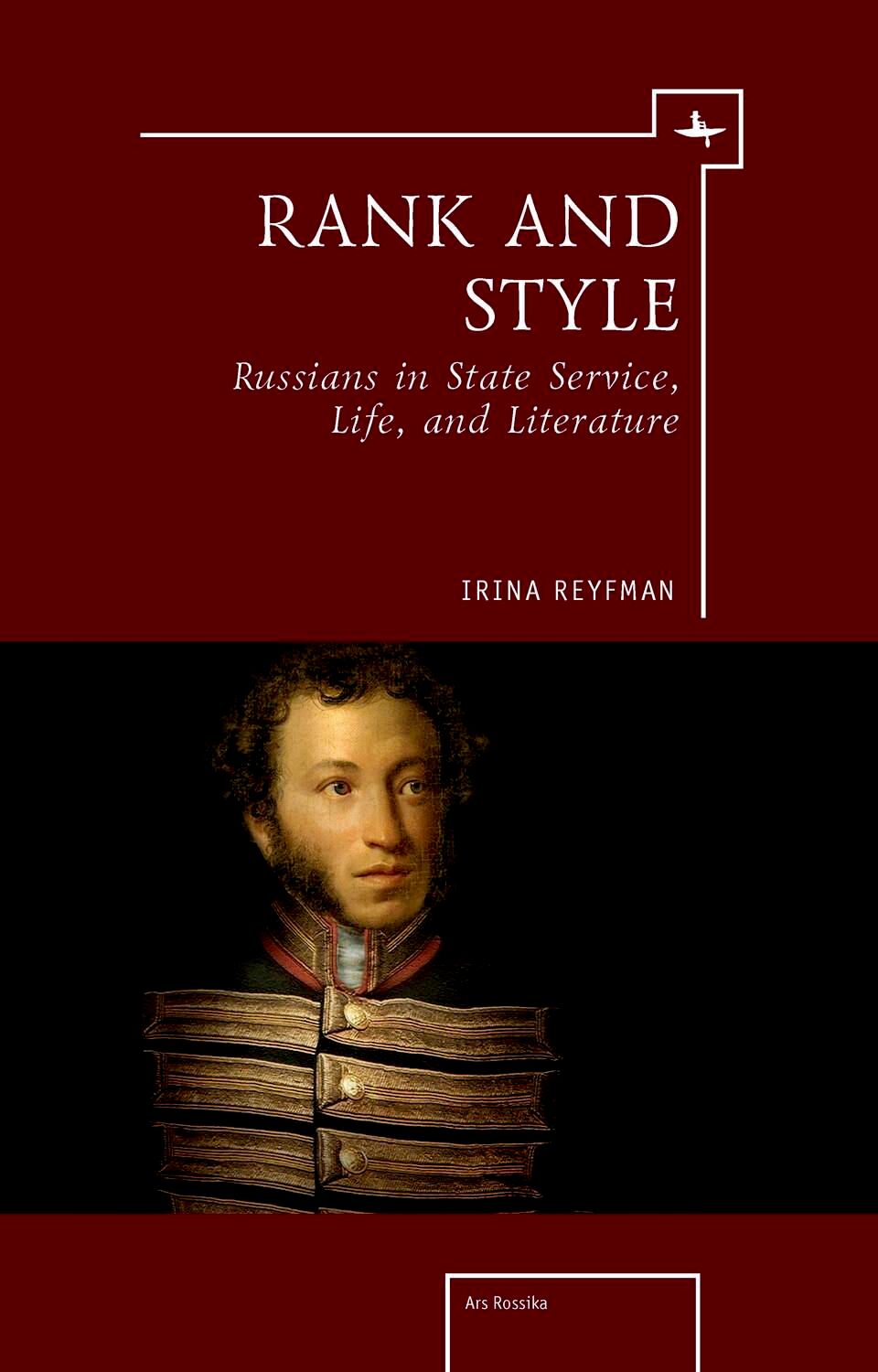
Rank and Style
A collection of essays by Irina Reyfman, a leading scholar of Russian literature and culture. Ranging from the eighteenth to the twentieth century, the essays focus on the interaction of life and literature. In the first part, Reyfman examines how obligatory state service and the Table of Ranks shaped Russian writers' view of themselves as professionals, raising questions about whether the existence of the rank system prompted the development of specifically Russian types of literary discourse. The sections that follow bring together articles on Pushkin, writer and man, as seen by himself and others, essays on Leo Tolstoy, and other aspects of Russian literary and cultural history. In addition to examining little-studied writers and works, Rank and Style offers new approaches to well-studied literary personalities and texts.
eBook
A history of Russian literature
The History of Russian Literature provides a comprehensive account of Russian writing from its earliest origins in the monastic works of Kiev up to the present day, still rife with the creative experiments of post-Soviet literary life. Five chronological parts by design unfold in diachronic histories; they can be read individually but are presented as inseparable across the span of a national literature. Throughout its course, this History follows literary processes as they worked in respective periods and places, whether in monasteries, at court, in publishing houses, in the literary marketplace, or the Writers’ Union. Evolving institutional practices used to organize literature are themselves a part of the story of literature told in poetry, drama, and prose including diaries and essays. Equally prominent is the idea of writers’ agency in responding to tradition and reacting to larger forces such as church and state that shape the literary field. Coverage strikes a balance between extensive overview and in-depth thematic discussion, addressing trans-historical questions through case studies detailing the importance of texts, figures, and notions. The book does not follow the decline model often used in accounts of the nineteenth century as a change-over between ages of prose and poetry. We trace in the evolution of literature two interrelated processes: changes in subjectivities and the construction of national narratives. It is through categories of nationhood, literary politics, and literary life, forms of selfhood, and forms of expression that the intense influence of literature on a culture as a whole occurs.
eBook