
Catalogue Search | MBRL


Are you sure you want to remove the book from the shelf?

{{itemTitle}}
1,283
result(s) for
"Rice, Thomas"
Sort by:
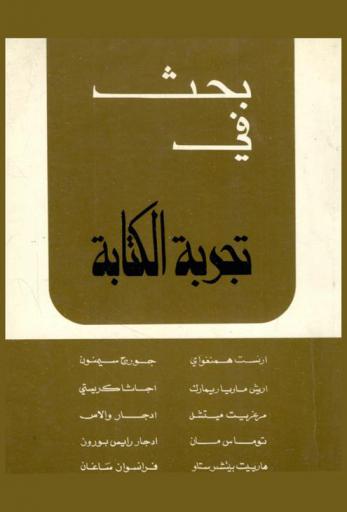
بحث في تجربة الكتابة
الكتاب عباره عن سلسلة مقالات كانت قد نشرت سابقا في صحيفة ألمانية من قبل كاتبها الصحافي (س. ر. مارتين) ما يميز هذه المقالات وفكرتها المتكرره عن تجربة الكتابة أنها قد كتبت على يد صحافي واسع الخبرة في مجال عمله وليس على يد جامع معلومات أو كاتب ومؤلف أنتج روايتين وبرق أسمه فلجئ لإنتاج مجموعة كتب تحت عناوين تجربة الكتاب وكيف تكتب.
Book


Cancer of the Esophagus and Esophagogastric Junction-Major Changes in the American Joint Committee on Cancer Eighth Edition Cancer Staging Manual
New to the eighth edition of the American Joint Committee on Cancer (AJCC) Cancer Staging Manual for epithelial cancers of the esophagus and esophagogastric junction are separate, temporally related cancer classifications: 1) before treatment decision (clinical); 2) after esophagectomy alone (pathologic); and 3) after preresection therapy followed by esophagectomy (postneoadjuvant pathologic). The addition of clinical and postneoadjuvant pathologic stage groupings was driven by a lack of correspondence of survival, and thus prognosis, between both clinical and postneoadjuvant pathologic cancer categories (facts about the cancer) and pathologic categories. This was revealed by a machine-learning analysis of 6-continent data from the Worldwide Esophageal Cancer Collaboration, with consensus of the AJCC Upper GI Expert Panel. Survival is markedly affected by histopathologic cell type (squamous cell carcinoma and adenocarcinoma) in clinically and pathologically staged patients, requiring separate stage grouping for each cell type. However, postneoadjuvant pathologic stage groups are identical. For the future, more refined and granular data are needed. This requires: 1) more accurate clinical staging; 2) innovative solutions to pathologic staging challenges in endoscopically resected cancers; 3) integration of genomics into staging; and 4) precision cancer care with targeted therapy. It is the responsibility of the oncology team to accurately determine and record registry data, which requires eliminating both common errors and those related to incompleteness and inconsistency. Despite the new complexity of eighth edition staging of cancers of the esophagus and esophagogastric junction, these key concepts and new directions will facilitate precision cancer care.
Journal Article

Update on Transplacental Transfer of IgG Subclasses: Impact of Maternal and Fetal Factors
Transplacental antibody transfer from mother to fetus provides protection from infection in the first weeks of life, and the four different subclasses of IgG (IgG1, IgG2, IgG3, and IgG4) have diverse roles in protection against infection. In this study, we evaluated concentrations and transplacental transfer ratios of the IgG subclasses in a healthy UK-based cohort of mother-cord pairs, and investigated associations with maternal, obstetric, and fetal factors. In agreement with previous studies, we found a strong association between maternal and cord IgG for all subclasses. We report a transfer efficiency hierarchy of IgG1>IgG3>IgG4=IgG2 in our study population, and our review of the literature demonstrates that there is no consensus in the hierarchy of subclass transfer, despite the commonly made statement that the order is IgG1>IgG4>IgG3>IgG2. We report additional data regarding negative associations between elevated maternal IgG concentrations and maternal/cord transfer ratios, finding an effect on IgG1, IgG2, and IgG3 subclasses. Levels of IgG subclasses were the same between venous and arterial blood samples from the umbilical cord, but there was a significantly higher level of total IgG in arterial blood. We found no correlation between placental FcRn protein levels and IgG transfer in our cohort, suggesting that IgG is the main determinant of observed differences in transplacental transfer ratios at term. Neonatal IgG1 and IgG4 levels were increased with later gestation at delivery, independent of any increase in transplacental transfer, indicating that the benefit of later gestation is through accumulation of these subclasses in the fetus. Neonatal IgG2 levels and transfer ratios were reduced in rhesus-negative pregnancies, suggesting that administered anti-D antibodies may compete for transplacental transfer of this subclass. Maternal influenza vaccination resulted in elevated maternal and neonatal levels of IgG4, whereas maternal Tdap vaccination had no impact on neonatal levels of the subclasses, nor transfer. However, within Tdap vaccinated pregnancies, later gestation at Tdap vaccination was associated with higher transplacental transfer. Our study provides information regarding levels and transfer of IgG subclasses in healthy term pregnancies and demonstrates the importance of recording detailed clinical information in studies of antibody transfer, including parity, ethnicity, and timing of maternal vaccine delivery.
Journal Article

I21: an advanced high‐resolution resonant inelastic X‐ray scattering beamline at Diamond Light Source
The I21 beamline at Diamond Light Source is dedicated to advanced resonant inelastic X‐ray scattering (RIXS) for probing charge, orbital, spin and lattice excitations in materials across condensed matter physics, applied sciences and chemistry. Both the beamline and the RIXS spectrometer employ divergent variable‐line‐spacing gratings covering a broad energy range of 280–3000 eV. A combined energy resolution of ∼35 meV (16 meV) is readily achieved at 930 eV (530 eV) owing to the optimized optics and the mechanics. Considerable efforts have been paid to the design of the entire beamline, particularly the implementation of the collection mirrors, to maximize the X‐ray photon throughput. The continuous rotation of the spectrometer over 150° under ultra high vacuum and a cryogenic manipulator with six degrees of freedom allow accurate mappings of low‐energy excitations from solid state materials in momentum space. Most importantly, the facility features a unique combination of the high energy resolution and the high photon throughput vital for advanced RIXS applications. Together with its stability and user friendliness, I21 has become one of the most sought after RIXS beamlines in the world. The design of the resonant inelastic X‐ray scattering beamline at Diamond Light Source, I21, is presented. X‐ray commissioning results are shown and compared with the optical simulations.
Journal Article

A cross-sectional study of travel patterns of older adults in the USA during 2015: implications for mobility and traffic safety
BackgroundWith an ever increasing population of older adults (65+ years) in the USA, a better understanding of this population’s travel patterns is needed to improve travel mobility and transportation safety.ObjectiveIn this study, we described the travel patterns of older adults in the USA during 2015.MethodsTravel patterns of older adults (65–74 and 75+ years) were compared with younger adults (25–64 years) by frequency and proportion of daily trips. The daily trips of various age groups were estimated using the 2015 American Time Use Survey.ResultsThe percentage of daily travellers was 88% for adults (25–64 years), 75% for adults (65–74 years) and 68% for adults (75+ years). While the percentage of privately owned vehicle (POV) drivers and average time of driving POVs decreased, the percentage of POV passengers increased as adults aged. Females were less likely to drive POVs and had decreased average daily driving time, but they were more likely to ride in POVs as passengers and had longer average daily riding times than their male counterparts across all age groups. Older adults were more likely to travel in the mornings and early afternoons (from 8:00 to 15:59) while younger adults were more likely to travel in the late afternoons and early evenings (from 16:00 to 19:59).ConclusionsPOV use is the predominant mode of transit in the USA. As adults age, the percentages of daily travellers and POV drivers decrease. This pattern is more apparent among females than males. This study delineated travel patterns of older adults using a 2015 national survey, and the findings facilitate traffic systems designers and policy-makers to develop and implement initiatives to accommodate older adults’ mobility needs and improve traffic safety.
Journal Article

Revisiting out-of-pocket requirements: trends in spending, financial access barriers, and policy in ten high-income countries
Background
Countries rely on out-of-pocket (OOP) spending to different degrees and employ varying techniques. The article examines trends in OOP spending in ten high-income countries since 2000, and analyzes their relationship to self-assessed barriers to accessing health care services. The countries are Australia, Canada, France, Germany, the Netherlands, New Zealand, Norway, Sweden, Switzerland, the United Kingdom, and the United States.
Methods
Data from three sources are employed: OECD statistics, the Commonwealth Fund survey of individuals in each of ten countries, and country-specific documents on health care policies. Based on trends in OOP spending, we divide the ten countries into three groups and analyze both trends and access barriers accordingly. As part of this effort, we propose a conceptual model for understanding the key components of OOP spending.
Results
There is a great deal of variation in aggregate OOP spending per capita spending but there has been convergence over time, with the lowest-spending countries continuing to show growth and the highest spending countries showing stability. Both the level of aggregate OOP spending and changes in spending affect perceived access barriers, although there is not a perfect correspondence between the two.
Conclusions
There is a need for better understanding the root causes of OOP spending. This will require data collection that is broken down into OOP resulting from cost sharing and OOP resulting from direct payments (due to underinsurance and lacking benefits). Moreover, data should be disaggregated by consumer groups (e.g. income-level or health status). Only then can we better link the data to specific policies and suggest effective solutions to policy makers.
Journal Article

Factors affecting antibody responses to immunizations in infants born to women immunized against pertussis in pregnancy and unimmunized women: Individual-Participant Data Meta-analysis
Exploring factors that affect immune responses to immunizations in infants born to women immunized with tetanus-diphtheria-acellular-pertussis (Tdap) in pregnancy compared with unimmunized women is important in designing immunization programs.
Individual-participant data meta-analysis of 8 studies reporting post-immunization immunoglobulin G (IgG) levels to vaccine antigens in infants born to either women immunized with Tdap in pregnancy or unimmunized women, using mixed-effects models.
In infants of Tdap-immunized women, two-fold higher levels of anti-pertussis toxin (PT) and anti-diphtheria-toxoid (DT) IgG pre-primary immunization were associated with 9% and 10% lower post-primary immunization levels, (geometric mean ratio [GMR], PT: 0.91; 95% CI, 0.88–0.95,n = 494, DT: 0.9; 0.87–0.93,n = 519). Timing of immunization in pregnancy did not affect post-primary immunization anti-Bordetella pertussis, anti-tetanus-toxoid (TT) and anti-DT IgG levels. Spacing of infant immunization did not affect post-primary immunization anti-B. pertussis and anti-DT levels. In infants of Tdap-immunized women, two-fold higher levels of anti-PT and anti-filamentous haemagglutinin (FHA) IgG pre-primary immunization were associated with lower post-booster immunization levels, (GMR, PT: 0.91; 0.85–0.97,n = 224, FHA: 0.92; 0.85–0.99,n = 232). Timing of immunization in pregnancy did not affect post-booster immunization anti-Bordetella pertussis, anti-tetanus-toxoid (TT) and anti-DT IgG levels. Spacing of infant immunization did not affect post-booster immunization anti-PT, anti-pertactin (PRN), anti-TT and anti-DT IgG levels.
In infants of unimmunized women, two-fold higher IgG levels of some vaccine antigens pre-primary immunization were associated with 8–17% lower post-primary immunization levels (GMR, PT 0.92, 95% CI:0.88–0.97, n = 373; FHA:0.88, 95% CI:0.85–0.92,n = 378; PRN:0.84, 95% CI:0.81–0.88, n = 367; TT:0.88, 95% CI:0.83–0.93, n = 241; DT: 0.83, 95% CI:0.79–0.87,n = 278). Two-fold higher levels of anti-FHA IgG pre-primary immunization were associated with 8% lower post-booster immunization levels (GMR, 0.92; 95% CI: 0.86–0.99,n = 138).
Increased IgG levels pre-primary immunization is associated with reduced post-primary and post-booster immunization levels for some antigens in infants of women immunized or unimmunized in pregnancy, but their clinical significance is uncertain.
Journal Article

The half-life of maternal transplacental antibodies against diphtheria, tetanus, and pertussis in infants: an individual participant data meta-analysis
There are few reliable estimates of the half-lives of maternal antibodies to the antigens found in the primary series vaccines. We aimed to calculate the half-lives of passively acquired diphtheria, tetanus and pertussis (DTP) antibodies in infants. We aimed to determine whether decay rates varied according to country, maternal age, gestational age, birthweight, World Bank income classifications, or vaccine received by the mother during pregnancy.
De-identified data from infants born to women taking part in 10 studies, in 9 countries (UK, Belgium, Thailand, Vietnam, Canada, Pakistan, USA, Guatemala and the Netherlands) were combined in an individual participant data meta-analysis. Blood samples were taken at two timepoints before any DTP-containing vaccines were received by the infant: at birth and at 2-months of age. Decay rates for each antigen were log2-transformed and a mixed effects model was applied. Half-lives were calculated by taking the reciprocal of the absolute value of the mean decay rates.
Data from 1426 mother-infant pairs were included in the analysis. The half-lives of the 6 antigen-specific maternal antibodies of interest were similar, with point estimates ranging from 28.7 (95% CI: 24.4 – 35) days for tetanus toxoid antibodies to 35.1 (95% CI: 30.7 – 41.1) days for pertactin antibodies. The decay of maternal antibodies did not significantly differ by maternal age, gestational age, birthweight, maternal vaccination status or type of vaccine administered.
Maternal antibodies decay at different rates for the different antigens; however, the magnitude of the difference is small. Decay rates are not modified by key demographic or vaccine characteristics.
Journal Article

Patterns of Hepatitis C Virus RNA Levels during Acute Infection: The InC3 Study
Understanding the patterns of HCV RNA levels during acute hepatitis C virus (HCV) infection provides insights into immunopathogenesis and is important for vaccine design. This study evaluated patterns of HCV RNA levels and associated factors among individuals with acute infection.
Data were from an international collaboration of nine prospective cohorts of acute HCV (InC3 Study). Participants with well-characterized acute HCV infection (detected within three months post-infection and interval between the peak and subsequent HCV RNA levels ≤ 120 days) were categorised by a priori-defined patterns of HCV RNA levels: i) spontaneous clearance, ii) partial viral control with persistence (≥ 1 log IU/mL decline in HCV RNA levels following peak) and iii) viral plateau with persistence (increase or <1 log IU/mL decline in HCV RNA levels following peak). Factors associated with HCV RNA patterns were assessed using multinomial logistic regression.
Among 643 individuals with acute HCV, 162 with well-characterized acute HCV were identified: spontaneous clearance (32%), partial viral control with persistence (27%), and viral plateau with persistence (41%). HCV RNA levels reached a high viraemic phase within two months following infection, with higher levels in the spontaneous clearance and partial viral control groups, compared to the viral plateau group (median: 6.0, 6.2, 5.3 log IU/mL, respectively; P = 0.018). In the two groups with persistence, Interferon lambda 3 (IFNL3) CC genotype was independently associated with partial viral control compared to viral plateau (adjusted odds ratio [AOR]: 2.75; 95%CI: 1.08, 7.02). In the two groups with viral control, female sex was independently associated with spontaneous clearance compared to partial viral control (AOR: 2.86; 95%CI: 1.04, 7.83).
Among individuals with acute HCV, a spectrum of HCV RNA patterns is evident. IFNL3 CC genotype is associated with initial viral control, while female sex is associated with ultimate spontaneous clearance.
Journal Article