
Catalogue Search | MBRL


Are you sure you want to remove the book from the shelf?

{{itemTitle}}
640
result(s) for
"Richards, Michael P."
Sort by:
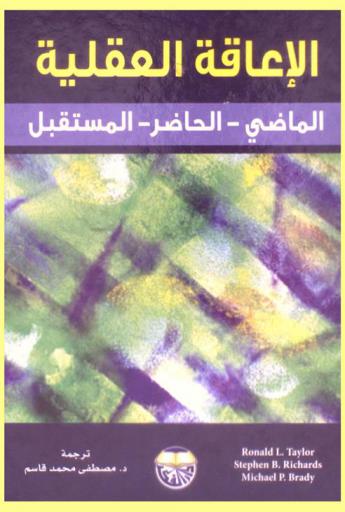
الإعاقة العقلية : الماضي-الحاضر-المستقبل
ينقسم الكتاب إلى خمسة أجزاء، ويتناول الجزء الأول \"مقدمة الى الإعاقة العقلية\" يضم هذا الجزء مفاهيم ومنظورات تاريخية، وتعريف وتصنيف الإعاقة العقلية والتقييم بغرض التعريف ويتناول الجزء الثاني \"أساب الإعاقة العقلية\" ويضم العوامل الجينية والكروموسومية، الأسباب البيئية والنفسية والاجتماعية بينما الجزء الثالث يتناول \"خصائص الإعاقة العقلية\"الذي يضم الخصائص المعرفية والتعلمية، الخصائص التعليمية والنفسية والسلوكية، الخصائص المجتمعية والاسرية والعابرة للثقافات ثم يتناول الجزء الرابع \"الاعتبارات التعليمية\" ويشمل هذا الجزء التقييم التعليمي، والمحتوى التعليمي، والإجراءات التدريسية، والأماكن التعليمية وأخيرا الجزء الخامس \"مستقبل الإعاقة العقلية\" الذي يتناول المنظورات المستقبلية.
Book

Isotopic evidence for the diets of European Neanderthals and early modern humans
We report here on the direct isotopic evidence for Neanderthal and early modern human diets in Europe. Isotopic methods indicate the sources of dietary protein over many years of life, and show that Neanderthals had a similar diet through time ([almost equal to]120,000 to [almost equal to]37,000 cal BP) and in different regions of Europe. The isotopic evidence indicates that in all cases Neanderthals were top-level carnivores and obtained all, or most, of their dietary protein from large herbivores. In contrast, early modern humans ([almost equal to]40,000 to [almost equal to]27,000 cal BP) exhibited a wider range of isotopic values, and a number of individuals had evidence for the consumption of aquatic (marine and freshwater) resources. This pattern includes Oase 1, the oldest directly dated modern human in Europe ([almost equal to]40,000 cal BP) with the highest nitrogen isotope value of all of the humans studied, likely because of freshwater fish consumption. As Oase 1 was close in time to the last Neanderthals, these data may indicate a significant dietary shift associated with the changing population dynamics of modern human emergence in Europe.
Journal Article

Zinc Isotope Ratios as Indicators of Diet and Trophic Level in Arctic Marine Mammals
Carbon and nitrogen stable isotope ratios of bone collagen are an established method for dietary reconstruction, but this method is limited by the protein preservation. Zinc (Zn) is found in bioapatite and the isotopic compositions of this element constitute a very promising dietary indicator. The extent of fractionation of Zn isotopes in marine environments, however, remains unknown. We report here on the measurement of zinc, carbon and nitrogen isotopes in 47 marine mammals from the archaeological site of Arvik in the Canadian Arctic. We undertook this study to test and demonstrate the utility of Zn isotopes in recent mammal bone minerals as a dietary indicator by comparing them to other isotopic dietary tracers. We found a correlation between δ66Zn values and trophic level for most species, with the exception of walruses, which may be caused by their large seasonal movements. δ6Zn values can therefore be used as a dietary indicator in marine ecosystems for both modern and recent mammals.
Journal Article
Correction: Back to the future: The advantage of studying key events in human evolution using a new high resolution radiocarbon method
[This corrects the article DOI: 10.1371/journal.pone.0280598.].
Journal Article

Tooth enamel oxygen “isoscapes” show a high degree of human mobility in prehistoric Britain
A geostatistical model to predict human skeletal oxygen isotope values (
δ
18
O
p
) in Britain is presented here based on a new dataset of Chalcolithic and Early Bronze Age human teeth. The spatial statistics which underpin this model allow the identification of individuals interpreted as ‘non-local’ to the areas where they were buried (spatial outliers). A marked variation in
δ
18
O
p
is observed in several areas, including the Stonehenge region, the Peak District, and the Yorkshire Wolds, suggesting a high degree of human mobility. These areas, rich in funerary and ceremonial monuments, may have formed focal points for people, some of whom would have travelled long distances, ultimately being buried there. The dataset and model represent a baseline for future archaeological studies, avoiding the complex conversions from skeletal to water
δ
18
O values–a process known to be problematic.
Journal Article
High-resolution isotope dietary analysis of Mesolithic and Neolithic humans from Franchthi Cave, Greece
Franchthi Cave, in the Greek Peloponnese, is a well-known Paleolithic, Mesolithic and Neolithic site, with several human burials. In many parts of Europe there is clear evidence from archaeological and isotopic studies for a diet change between the Mesolithic and Neolithic periods. This is especially the case in coastal contexts where there is often a shift from predominantly marine food diets in the Mesolithic to terrestrial (presumably domesticated) foods in the Neolithic. However, at Franchthi Cave previous isotope research did not show changes in diets between these two periods, and also showed relatively little input from marine foods in diets in either time period, despite the coastal location of the site and the presence of marine shellfish and fish, including tuna. High-resolution compound specific amino acid isotope analysis reported here from humans from the Lower Mesolithic and Middle Neolithic periods confirms the previous bulk isotope results in showing little or no consumption of marine foods in either time period. However, it is important to note that our isotopic sample does not come from episodes when tuna is abundant and therefore do not cover the whole range of known diets from the site. Conversely, in our sample there is some evidence of marine food consumption (likely seaweed) by sheep in the Neolithic period. We also report here five direct AMS radiocarbon dates for the five analyzed humans from the site.
Journal Article
Back to the future: The advantage of studying key events in human evolution using a new high resolution radiocarbon method
Radiocarbon dating is the most widely applied dating method in archaeology, especially in human evolution studies, where it is used to determine the chronology of key events, such as the replacement of Neanderthals by modern humans in Europe. However, the method does not always provide precise and accurate enough ages to understand the important processes of human evolution. Here we review the newest method developments in radiocarbon dating (‘Radiocarbon 3.0’), which can lead us to much better chronologies and understanding of the major events in recent human evolution. As an example, we apply these new methods to discuss the dating of the important Palaeolithic site of Bacho Kiro (Bulgaria).
Journal Article

Exceptionally high δ15N values in collagen single amino acids confirm Neandertals as high-trophic level carnivores
Isotope and archeological analyses of Paleolithic food webs have suggested that Neandertal subsistence relied mainly on the consumption of large herbivores. This conclusion was primarily based on elevated nitrogen isotope ratios in Neandertal bone collagen and has been significantly debated. This discussion relies on the observation that similar high nitrogen isotopes values could also be the result of the consumption of mammoths, young animals, putrid meat, cooked food, freshwater fish, carnivores, or mushrooms. Recently, compound-specific C and N isotope analyses of bone collagen amino acids have been demonstrated to add significantly more information about trophic levels and aquatic food consumption. We undertook single amino acid C and N isotope analysis on two Neandertals, which were characterized by exceptionally high N isotope ratios in their bulk bone or tooth collagen. We report here both C and N isotope ratios on single amino acids of collagen samples for these two Neandertals and associated fauna. The samples come from two sites dating to the Middle to Upper Paleolithic transition period (Les Cottés and Grotte du Renne, France). Our results reinforce the interpretation of Neandertal dietary adaptations as successful top-level carnivores, even after the arrival of modern humans in Europe. They also demonstrate that high δ15N values of bone collagen can solely be explained by mammal meat consumption, as supported by archeological and zooarcheological evidence, without necessarily invoking explanations including the processing of food (cooking, fermenting), the consumption of mammoths or young mammals, or additional (freshwater fish, mushrooms) dietary protein sources.
Journal Article
Stable isotope and dental caries data reveal abrupt changes in subsistence economy in ancient China in response to global climate change
Prior to the introduction of wheat and barley from Central Asia during the Neolithic period, northern Chinese agricultural groups subsisted heavily on millet. Despite being the focus of many decades of intensive interest and research, the exact route(s), date(s), and mechanisms of the spread and adoption of wheat and barley into the existing well-established millet-based diet in northern China are still debated. As the majority of the important introduced crops are C3 plants, while the indigenous millet is C4, archaeologists can effectively identify the consumption of any introduced crops using stable carbon isotope analysis. Here we examine published stable isotope and dental caries data of human skeletal remains from 77 archaeological sites across northern and northwestern China. These sites date between 9000 to 1750 BP, encompassing the period from the beginning of agriculture to wheat's emergence as a staple crop in northern China. The aim of this study is to evaluate the implications of the spread and adoption of these crops in ancient China. Detailed analysis of human bone collagen δ13C values reveals an almost concurrent shift from a C4-based to a mixed C3/ C4- based subsistence economy across all regions at around 4500-4000 BP. This coincided with a global climatic event, Holocene Event 3 at 4200 BP, suggesting that the sudden change in subsistence economy across northern and northwestern China was likely related to climate change. Moreover, the substantially increased prevalence of dental caries from pre-to post-4000 BP indicates an increase in the consumption of cariogenic cereals during the later period. The results from this study have significant implications for understanding how the adoption of a staple crop can be indicative of large-scale environmental and socio-political changes in a region.
Journal Article
Correction: Strontium isotope evidence for Neanderthal and modern human mobility at the upper and middle palaeolithic site of Fumane Cave (Italy)
[This corrects the article DOI: 10.1371/journal.pone.0254848.].
Journal Article