
Catalogue Search | MBRL


Are you sure you want to remove the book from the shelf?

{{itemTitle}}
507
result(s) for
"Riddle, John"
Sort by:

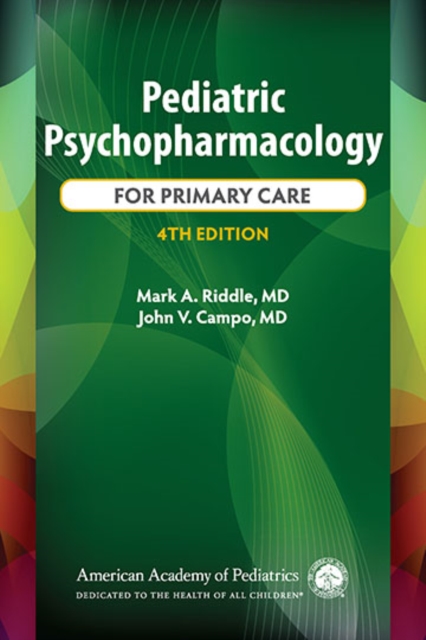
Pediatric Psychopharmacology for Primary Care
Completely updated and revised, the fourth edition provides practice-tested, condition-specific treatment recommendations for various childhood mental disorders. Obtain clear evidence-based guidance on dosing, monitoring, and potential adverse reactions of psychotropic medications for treatment of common psychiatric disorders and mental health or behavioral problems in children and adolescents. The book is designed not only for the pediatric primary care clinician but also for specialists such as developmental-behavioral pediatricians, psychiatric nurse practitioners, and allied mental health professionals among others.
eBook


Multivariate interpolation with increasingly flat radial basis functions of finite smoothness
In this paper, we consider multivariate interpolation with radial basis functions of finite smoothness. In particular, we show that interpolants by radial basis functions in ℝd with finite smoothness of even order converge to a polyharmonic spline interpolant as the scale parameter of the radial basis functions goes to zero, i.e., the radial basis functions become increasingly flat.
Journal Article


Computer assisted decision making in anesthesia practice
This study examined whether or not CRNAs use PDA based programs in their practice and whether or not these programs help in faster more accurate decisions for improved patient care. This study also examined the reasons that CRNAs do not use PDA based decision making aides in their practice. A questionnaire was sent to 250 SRNAs and 250 CRNAs and to obtain their opinions on anesthesia based programs, use of the Personal Digital Assistant (PDA) and the effect of this on their decision making in practice. These results have been compiled and the two groups have been compared and contrasted and compared and their answers evaluated. Fifty-two percent of respondents reported having a smartphone while and 48% said no. Twenty percent of those that have smartphone reported that they used an anesthesia based program in their practice 80% do not use anesthesia program. Thirty percent reported that the PDA and smartphone anesthesia software aided in their practice while 70% answered no. Eighteen percent felt it improved patient outcomes, 14% more accurate information, 9.9% speeds and improves decision making. The respondents who reported that they did not use a an anesthesia program, 2.3% stated the information was unreliable or inaccurate, 0.6% use continuing education materials, 94% stated they did not care for these devices. The mean age was 54 years old and mean years of practice 14 years.
Dissertation