
Catalogue Search | MBRL


Are you sure you want to remove the book from the shelf?

{{itemTitle}}
879
result(s) for
"Robbins, Keith"
Sort by:

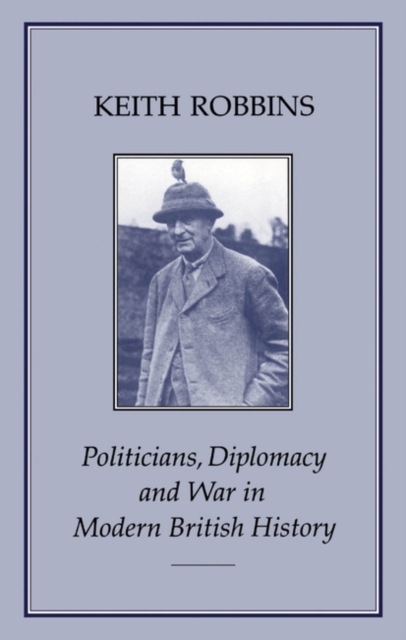
Politicians, diplomacy, and war in modern British history
The aspirations of democracy and the requirements of diplomacy have always coexisted uneasily. The politicians discussed in this book, in particular the appreciation of the careers of John Bright and James Bryce, reflect obliquely or directly on the problems of politicians who seek the 'high moral ground' either in domestic or international politics. There is also a discussion of the relationship between politicians and the press, as well as of the difficult link between cultural and political assumptions on the one hand and the facts of economic performance on the other.
eBook

Turnaround: Retrenchment and recovery
Empirical research was conducted to investigate retrenchment as an integral component of the overall turnaround process. An industry study provided an anchored operational definition of a turnaround situation, indications of its internal and external causes, and an application of an absolute measure of its severity. The research further produced an empirical discrimination between retrenchment as a stand-alone response to financial decline and retrenchment as an initial phase of a turnaround strategy, and an identification of activities that can be used to classify entrepreneurial vs. efficiency emphases in a turnaround firm's recovery response.
Journal Article
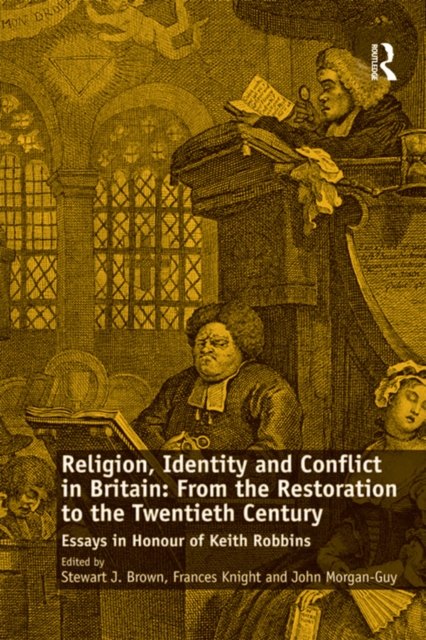
Religion, Identity and Conflict in Britain: From the Restoration to the Twentieth Century
The British state between the mid-seventeenth century to the early twentieth century was essentially a Christian state. Christianity permeated society, defining the rites of passage - baptism, first communion, marriage and burial - that shaped individual lives, providing a sense of continuity between past, present and future generations, and informing social institutions and voluntary associations. Yet this religious conception of state and society was also the source of conflict. The Restoration of the monarchy in 1660 brought limited toleration for Protestant Dissenters, who felt unable to worship in the established Church, and there were challenges to faith raised by biblical and historical scholarship, science, moral questioning and social dislocations and unrest. This book brings together a distinguished team of authors who explore the interactions of religion, politics and culture that shaped and defined modern Britain. They consider expressions of civic consciousness in the expanding towns and cities, the growth of Welsh national identity, movements for popular education and temperance reform, and the influence of organised sport, popular journalism, and historical writing in defining national life. Most importantly, the contributors highlight the vital role of religious faith and religious institutions in the understanding of the modern British state.
eBook

Harriet Goodwill Spalding
Robbins asserts that the rise of women in leadership roles is one of the more inspiring stories in contemporary Major League Baseball. This paper focuses on the first of such women, baseball's pioneer leading lady, Harriet Irene Spalding. Her efforts were focused on fostering the rise of professional, organized baseball and the creation of the first national sporting goods firm, both officially beginning in 1876. Much of Harriet's story can be found in her self- published memoir of 1910, Reminiscences: An Autobiography of Harriet Irene Spalding. As Queen Victoria guided the realm of the British Empire, in the former colonies' realm of baseball, widowed Harriet Goodwill Spalding was its matriarch. As a Victorian age woman Harriet successfully negotiated many of the issues facing modern single mothers. Her devotion and exemplary leadership are recorded in the Spalding Memorial Genealogy of 1897 which states: widowed mother with constant devotion, wonderful strength of character and inspiring heroism filled the place of both father and mother to the little children left to her care.
Journal Article


Exploring EO strategic performance measures: value-added versus efficiency outcomes
PurposeResearch on entrepreneurial orientation (EO) seeks to understand the EO–performance relationship. However, at a strategic level, performance relates to a competitive advantage and comprises both value-added and efficiency measures. Following arguments that performance is context and strategy dependent, the paper argues that EO research needs to clarify and specify the type of performance relationship measured.Design/methodology/approachTo explore the EO–performance relationship, the research considers the agricultural sector where policy has traditionally encouraged the maximisation of efficiency in production and has only recently promoted entrepreneurship, providing fertile ground to explore different approaches to measuring performance. A survey collected detailed accounting records and context specific EO for 282 commercial farms. The authors estimate two models (Heckman selection regression and stochastic production frontier) that examine the relationships between EO and value-added/efficiency performance outcomes.FindingsThe analysis confirms the EO–value-added performance relationship, with significant positive relationships for the EO components proactiveness and innovativeness and a negative relationship for risk. No EO–efficiency performance relationship was found, despite a robust analysis of technical efficiency using detailed accounting data.Originality/valueThe paper contributes to EO theory by problematizing performance and highlighting the importance of the type of performance measured. This paper contributes empirically with findings relating to a mature industry contributes to entrepreneurship methodology by outlining how EO–performance relationships can be measured in terms of productivity and technical efficiency.
Journal Article