
Catalogue Search | MBRL


Are you sure you want to remove the book from the shelf?

{{itemTitle}}
210
result(s) for
"Roberts, Albert R."
Sort by:

Handbook of forensic mental health with victims and offenders
Designated a Doody's Core Title!Together for the first time; all your forensic social work best practice needs in one volume!\"...a vitally important addition to this emerging and essential body of knowledge.
eBook

Crisis intervention and time-limited cognitive treatment
Offering the latest information on crisis intervention and time-limited treatment strategies, this practical sourcebook will equip practitioners with the knowledge to respond and deal effectively with individuals in crisis. Each chapter presents state-of-the-art information about high-risk crisis intervention, and includes detailed case illustrations and brief treatment techniques. Based on the seven-stage intervention model, these guidelines thoroughly address the specifics of work with sexual assault survivors, adolescents who attempt suicide, family members in crisis, people with AIDS and their families, alcoholics, unemployed people, stalking victims, and disaster and terrorist survivors. The book concludes with explora.
eBook

Battered Women and Their Families
With a foreword by Barbara W. White, PhD, University of Texas at Austin The definitive work on battered women is now in a timely third edition. Considered the complete, in-depth guide to effective interventions for this pervasive social disease, Battered Women and Their Families has been updated to include new case studies, cultural perspectives, and assessment protocols. In an area of counseling that cannot receive enough attention, Dr. Robert's work stands out as an essential treatment tool for all clinical social workers, nurses, physicians, and graduate students who work with battered women on a daily basis. New chapters on same-sex violence, working with children in shelters, immigrant women affected by domestic violence, and elder mistreatment round out this unbiased, multicultural look at treatment programs for battered women.
eBook
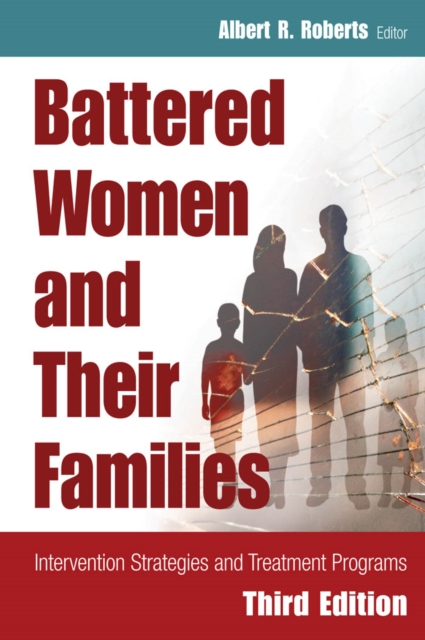
Battered women and their families : intervention strategies and treatment programs
With a foreword by Barbara W. White, PhD, University of Texas at Austin The definitive work on battered women is now in a timely third edition. Considered the complete, in-depth guide to effective interventions for this pervasive social disease, Battered Women and Their Families has been updated to include new case studies, cultural perspectives, and assessment protocols. In an area of counseling that cannot receive enough attention, Dr. Robert's work stands out as an essential treatment tool for all clinical social workers, nurses, physicians, and graduate students who work with battered women on a daily basis. New chapters on same-sex violence, working with children in shelters, immigrant women affected by domestic violence, and elder mistreatment round out this unbiased, multicultural look at treatment programs for battered women.
eBook
Social Workers' Desk Reference
In the first and second editions of the Social Workers' Desk Reference, the changes that were occurring in social work practice, education, and research were highlighted and focused upon. This third edition continues in the same tradition and continues to respond to the changes occurring in society and how they are impacting the education, research, and practice of social work as a whole.
eBook

Battered women and their families
With a foreword by Barbara W.White, PhD, University of Texas at Austin The definitive work on battered women is now in a timely third edition.Considered the complete, in-depth guide to effective interventions for this pervasive social disease, Battered Women and Their Families has been updated to include new case studies, cultural perspectives.
eBook
Crisis Intervention Handbook
Expanded and fully updated, the Crisis Intervention Handbook: Assessment, Treatment, and Research, Fourth Edition focuses on crisis intervention services for persons who are victims of natural disasters, school-based and home-based violence, violent crimes, and personal or family crises. It applies a unifying model of crisis intervention, making it appropriate for front-line crisis workers-clinical psychologists, social workers, psychiatric-mental health nurses, and graduate students who need to know the latest steps and methods for intervening effectively with persons in acute crisis.
eBook


Classification Typology and Assessment of Five Levels of Woman Battering
Family violence is a prevalent, dangerous, and often life-threatening social and public health problem. It is an indiscriminating crime that knows few boundaries, as recent annual estimates indicate that over 8.7 million women are battered by husbands, boyfriends, and other intimate partners [Roberts, 2002; Roberts & Roberts, 2005]. This article examines a new five-level classificatory schema or typology detailing the duration and severity of woman battering. Five hundred and one battered women completed in-depth interviews which formed the basis for a new classification typology ranging from short-term to chronic to homicidal levels. The current research on different types of battering relationships provides clinicians and forensic specialists with psychosocial indicators that can be utilized as a basis for early intervention and prevention of lethal consequences. The concept of the unknown prevalence of women abuse, or the \"dark figure,\" is also addressed in this article. Additionally, practical suggestions are made for implementing crisis intervention protocols. Adapted from the source document.
Journal Article