
Catalogue Search | MBRL


Are you sure you want to remove the book from the shelf?

{{itemTitle}}
275
result(s) for
"Roberts, Laura Weiss"
Sort by:

Crisis Integration With Acceptance and Commitment Therapy
Frightening and destabilizing as they may be, personal crises can also provide meaningful opportunities for learning and growth. For individuals struggling with mental disorders, however, mitigating the former and fostering the latter can be challenging, particularly in the context of what are often time-limited conversations or a limited number of visits. In Crisis Integration With Acceptance and Commitment Therapy: Theory and Practice, health care professionals will find a practical guide, informed by both theory and evidence, to the psychological skills patients need to deal with and grow through crises. Enlivened by detailed and engaging clinical dialogues—all based on real-world clinical practice—this book introduces the acceptance and commitment therapy (ACT) model, demonstrating how it applies to findings from crisis studies and can be integrated into clinical practice. It then delves into the three core processes of ACT: • Mindfulness, as understood in terms of predictive coding as well as non-systematic interoceptive exposure, and its effectiveness in both acute and chronic crises• Self-compassion and how the action of bringing affection and kindness to oneself during intense torment can be crucial to acceptance• Engagement with life and the importance of controlling one's own behavior in the midst of otherwise uncontrollable crisis-provoking events Although crises come in a variety of forms, Crisis Integration With Acceptance and Commitment Therapy: Theory and Practice argues that the core processes that underpin the generation and maintenance of a crisis response are essentially the same and helps to simplify the conceptualization of complex clinical presentations. By accessibly and deftly melding crisis science, evolutionary psychology, neuroscience, behavioral psychology, and the practice of mindfulness, this volume offers readers—be they psychiatrists, psychiatric residents, psychologists, psychotherapists, or other health care professionals—an approach that is easy to learn, simple to remember, and applicable to any crisis situation that their patients may be confronting.
eBook

Professionalism and Ethics
Like its pioneering predecessor, this new edition of Professionalism and Ethics: Q & A Self-Study Guide for Mental Health Professionals offers an interactive, case-oriented approach to mental health ethics. Organized around scenarios that pose important—sometimes thorny—ethical questions, the book draws on the diverse clinical and research experience of its contributors, who have backgrounds in medicine, ethics, psychology, law, medical education, religious studies, public health, and related fields. The editor, an internationally recognized scholar in bioethics, psychiatry, and medical education, oversaw a rigorous review process, ensuring that the content meets the highest standard, as befits a text on ethics and professionalism. The book begins with an overview of the role of ethics in caring for people with mental illness, concepts and models of professionalism, and ethics education, followed by a chapter examining ethics in the mental health professions, with emphasis on learning and applying essential skills. Questions and annotated answers follow, and the brief case descriptions that frame each question, presented in single-answer, multiple-choice format, echo the real-life complexities of clinical practice. Psychiatry has evolved significantly since the last edition, and the new edition's plentiful revisions and fresh material reflect these changes: • Assisted suicide and euthanasia, which pose controversial and difficult ethical questions, are explored in-depth, with attention accorded religious views, the complexity of informed consent, and the concern that some who choose euthanasia may be clinically depressed.• Navigating social media, experiencing the loss of anonymity, and engaging in self-disclosure of all kinds presents new challenges for practitioners; the pitfalls, both ethical and psychological, are thoroughly discussed. • The digital age poses many ethical dilemmas regarding patient privacy. Is it acceptable for clinicians to \"Google\" their patients, or is it merely voyeurism? What about consent? • Burnout among mental health practitioners is growing, and professional well-being is an emergent topic. The book examines the increased expectations of physicians and what setting reasonable limits in an era of the electronic health record might look like.• Over the past few decades, neuroscience has been accepted as the conceptual basis for understanding and treating mental illness, and neuroethics have achieved an attendant importance. Human subjects research and the active question of public trust in science, as well as emerging domains, including neurotechnologies, neurolaw, and philosophy of cognition, are carefully examined. Eloquent, instructive, and pragmatic, Professionalism and Ethics: Q & A Self-Study Guide for Mental Health Professionals offers critical learning to prepare professionals for ethical challenges in care and research and is an essential reference and tool for an increasingly complex world.
eBook
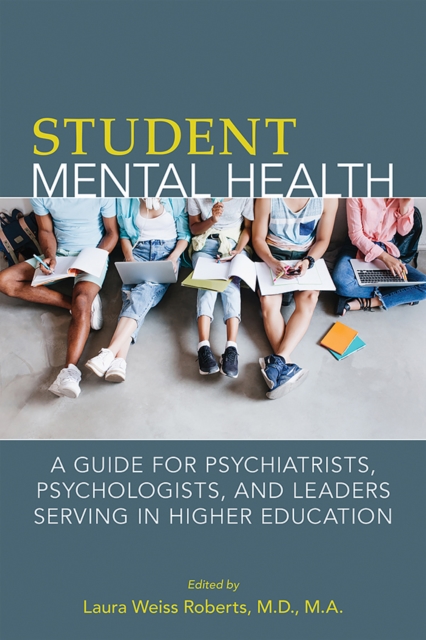
Student mental health : a guide for psychiatrists, psychologists, and leaders serving in higher education
Student Mental Health: A Guide for Psychiatrists, Psychologists, and Leaders Serving in Higher Education is the result of a sustained and multidisciplinary collaboration of scholars, leaders, clinicians, and educators who are deeply committed to student health and well-being. The needs of young people today are quite different from those of even 5 years ago, and this book pays great attention to the specific issues encountered in caring for today's students who experience distress or develop significant mental health conditions. Such issues, including suicidality, newly emergent psychosis, problems associated with substance misuse, the health risks of eating disorders, and the devastation of sexual assault, can challenge even the most experienced clinician. These topics and others related to safety, respect, conflict, and connection on campus, as well as students' evolving relationships with family, friends, and romantic partners, are covered with sensitivity and skill. The book offers many features that deepen awareness and enhance learning: • Chapters offer student case examples that illustrate the concepts and strategies discussed in the text, allowing readers to readily apply their newly acquired knowledge to real-life scenarios.• The experiences, mental health, and well-being of distinct, vitally important, and often overlooked student populations, such as student athletes, graduate students, students of color, LGBTQ students, students who are the first in their families to attend college, students who are veterans or active military, and medical students, are addressed.• Positive self-care -- for both students and the clinicians who work with them -- is emphasized. For example, activities and habits related to sleep, nutrition, and exercise are outlined in hopes they will become lifelong self-management strategies for students, while effective measures to prevent emotional exhaustion in clinicians are also highlighted in the text. • Chapters incorporate features designed to promote learning: Key points offer quick summaries of chapter content; recommendations serve as reminders for best practices; and discussion questions provide thought-provoking approaches to the material for the reader's further reflection, development, and improvement. At a time when students -- whether in college, graduate school, or professional training -- are experiencing unprecedented levels of stress and distress, the need for guidance that is comprehensive, compassionate, constructive, and culturally sensitive has never been greater. Student Mental Health brings understanding and clinical acumen to bear on the complex problems of this vulnerable group.
eBook
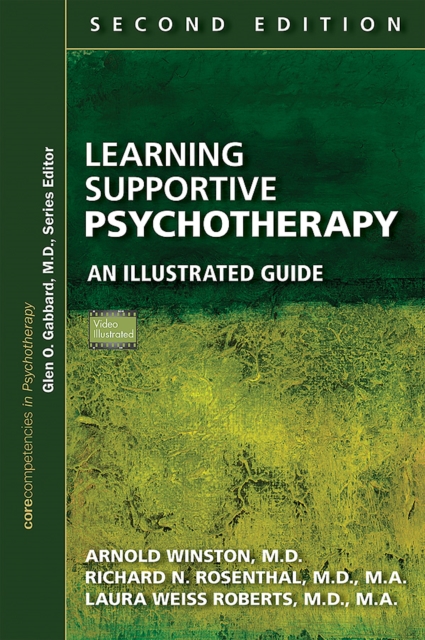
Learning Supportive Psychotherapy
The domain of supportive psychotherapy has expanded in recent years, reflecting changes in how psychotherapy is conducted and the role psychotherapy plays in caring for individuals facing difficult life experiences or living with diverse mental and physical disorders. This new, thoroughly revised and up-to-date edition of Learning Supportive Psychotherapy: An Illustrated Guide (first published as Introduction to Supportive Psychotherapy) instructs beginning psychotherapists in the fundamentals of this treatment modality, which focuses on patients' overall health and well-being and their ability to adapt constructively to their life circumstances. The linchpin of supportive psychotherapy -- and, indeed, all psychotherapy -- is the establishment of a true therapeutic alliance. Accordingly, the authors provide readers with skills aimed at instilling trust and establishing a productive therapeutic relationship, including techniques for alliance building, enhancing ego functioning, and reducing and preventing anxiety. In addition, the authors explore the general framework of supportive psychotherapy, including indications, phases of treatment, initiation and termination of sessions, and professional boundaries; explain how to perform a thorough patient evaluation and case formulation; and describe the process of setting realistic goals with the patient. The following features and areas of focus enhance the book's utility: • Integral to the text's practical approach are the video case vignettes that accompany several of the chapters. These videos model effective psychotherapeutic techniques and strategies, which readers can incorporate into their skill sets.• The chapter on crisis intervention has been thoroughly revised to integrate recent research findings on posttraumatic stress disorder, suicide, and critical incident stress management, and the illustrative multipart case vignette provides a therapeutic narrative that is compelling, relatable, and instructive.• The material on the therapeutic alliance focuses on skill building, including how to anticipate and avoid disruption in treatment, how to discuss the therapeutic relationship with the patient, how to modify distorted perceptions using clarification and confrontation, how to deal with negative transference and therapeutic impasses, and how to reframe statements in a supportive manner.• Outcome research receives its own chapter, in which the authors review the robust evidence base for the efficacy of supportive psychotherapy, including a number of outcome trials, bolstering the necessity of learning the techniques outlined in the book.• The book concludes with 75 questions and answers to test the reader's comprehension and identify areas for further study. This new edition of Learning Supportive Psychotherapy: An Illustrated Guide builds on the well-earned reputation of previous editions. Beginning clinicians first learning the techniques of psychotherapy and veterans who must assess competence in the psychiatry residents they supervise will find the help they need in this down-to-earth, clinically rich guide.
eBook
A Clinical Guide to Psychiatric Ethics
With engaging insight, the author deftly reviews the nuances of ethics fundamentals. She then discusses with guest contributors ethical dilemmas and approaches to clinical work with children and youth, veterans, patients from culturally distinct backgrounds, HIV/AIDS patients, those at the end of life, patients living with addictions, and more.
eBook
Competency in Combining Pharmacotherapy and Psychotherapy
The rapid transformation of clinical care models in new health systems means that competence in integrated and split/collaborative care is vital for both long-established clinicians and psychiatric professionals in the early stages of their careers.
eBook

Clinical manual for assessment and treatment of suicidal patients
Since the first edition of Clinical Manual for Assessment and Treatment of Suicidal Patients was published in 2005, advances have been made that increase our understanding of suicidal and self-destructive behavior. Although clinicians cannot unerringly predict which patients will die by suicide, they can focus more successfully on early identification of suicidal behavior and effective intervention, and this new edition of the clinical manual thoroughly explores not only assessment of suicidality but what comes after an at-risk patient has been identified. The authors argue that treating specific psychiatric disorders is not enough to prevent suicide, and they offer clinicians the necessary information and strategies to bridge that gap. The authors' main premise is that suicide is a dangerous and short-term problem-solving behavior designed to regulate or eliminate intense emotional pain -- a quick fix where a long-term effective solution is needed -- and this understanding is the underpinning of the assessment and treatment strategies the authors recommend. The content of this new edition has been thoroughly reviewed and revised, and substantive changes have been made to specific chapters to ensure that the book represents the most current thinking and research, while retaining the strengths of the previous edition. • The chapter on assessment has been revised to put the fundamental components of effective treatment in a clinical, case-oriented context and includes an easy-to-use assessment protocol that allows clinicians to determine where individual patients stand on seven dimensions (cognitive rigidity, problem-solving deficits, heightened mental pain, emotionally avoidant coping style, interpersonal deficits, self-control deficits, and environmental stress and social support deficits).• The many issues involved in the use of psychotropic medications in suicidal patients are addressed in a new chapter, which includes information on the relevant classes of drugs (such as antidepressants and antianxiety agents) and the issues that may arise with their use, including side effects, degree of lethality, and tendency to aggravate suicidality on introduction and withdrawal of the medication. • The chapter on special populations has been expanded to include adolescents, elders, and patients with co-occurring substance abuse or psychosis. Because of additional vulnerabilities, treating these groups may call for the use of added or special techniques to ensure the best therapeutic outcomes.• Primary care physicians are the first point of contact for many patients, and they may require additional preparation in order to assess and respond to those experiencing suicidal thoughts. The chapter \"Suicidal Patients in Primary Care\" explores strategies for screening, recognizing, and assessing risk; treating the initial crisis; and developing a crisis management plan.• \"Tips for Success\" appear at intervals, and \"The Essentials\" are included at the end of each chapter, highlighting the most important concepts. In addition, there are scores of helpful charts and exercises. Practical, accessible, and reader-friendly, the Clinical Manual for Assessment and Treatment of Suicidal Patients is not an academic book but rather is one designed to become an indispensable part of clinicians' working libraries.
eBook
International Medical Graduate Physicians
Many thousands of international graduate physicians from diverse medical specialties serve the health care needs of the United States, and one-in-four psychiatry residents are international medical graduates.
eBook
Handbook of Career Development in Academic Psychiatry and Behavioral Sciences
Working in academic psychiatry is fulfilling, replete with extraordinary colleagues and inspiring opportunities for meaningful work and professional growth. Even so, getting started in an academic career can be a bit unsettling. After years of education, a new faculty member may feel unprepared for the everyday duties associated with a different academic role -- negotiating with the chair, writing letters of recommendation for students, participating on committees with colleagues, and balancing personal and professional life. The Handbook of Career Development in Academic Psychiatry and Behavioral Sciences, Second Edition, provides real-world advice with compassion. Readers will find just what they need when they need it: step-by-step guidance to approaching the tasks and challenges that face them, questions to discuss with mentors and colleagues, and professionally vetted online career development resources. Readers will also hear the voice of sympathetic, experienced academic clinicians who share how best to navigate challenging situations encountered in academic settings. Each chapter features: • Smart Strategies: A list of specific actions readers can take to reach their professional goals• Questions to Discuss with a Mentor or a Colleague: A list of questions that simplifies and normalizes the process of soliciting career advice and assistance• Additional Resources: A collection of the most recent and innovative websites, books, and articles that will assist readers on their career path, even after they've finished reading the book Readers who seek out the advice in this book will find that they are better equipped to forge their academic careers -- and flourish.
eBook

A Review of Multidisciplinary Clinical Practice Guidelines in Suicide Prevention: Toward an Emerging Standard in Suicide Risk Assessment and Management, Training and Practice
Objective
The current paper aims to: (1) examine clinical practice guidelines in suicide prevention across fields, organizations, and clinical specialties and (2) inform emerging standards in clinical practice, research, and training.
Methods
The authors conducted a systematic literature review to identify clinical practice guidelines and resource documents in suicide prevention and risk management. The authors used PubMed, Google Scholar, and Google Search, and keywords included:
clinical practice guideline
,
practice guideline
,
practice parameters
,
suicide
,
suicidality
,
suicidal behaviors
,
assessment
, and
management
. To assess for commonalities, the authors reviewed guidelines and resource documents across 13 key content categories and assessed whether each document suggested validated assessment measures.
Results
The search generated 101 source documents, which included
N
= 10 clinical practice guidelines and
N
= 12 additional resource documents (e.g., non-formalized guidelines, tool-kits). All guidelines (100 %) provided detailed recommendations for the use of evidence-based risk factors and protective factors, 80 % provided brief (but not detailed) recommendations for the assessment of suicidal intent, and 70 % recommended risk management strategies. By comparison, only 30 % discussed standardization of risk-level categorizations and other content areas considered central to best practices in suicide prevention (e.g., restricting access to means, ethical considerations, confidentiality/legal issues, training, and postvention practices). Resource documents were largely consistent with these findings.
Conclusions
Current guidelines address similar aspects of suicide risk assessment and management, but significant discrepancies exist. A lack of consensus was evident in recommendations across core competencies, which may be improved by increased standardization in practice and training. Additional resources appear useful for supplemental use.
Journal Article