
Catalogue Search | MBRL


Are you sure you want to remove the book from the shelf?

{{itemTitle}}
824
result(s) for
"Roberts, Richard L."
Sort by:

Differential G Protein-Coupled Cannabinoid Receptor Signaling by Anandamide Directs Blastocyst Activation for Implantation
Mammalian fertility absolutely depends on synchronized development of the blastocyst to the stage when it is competent to implant, and the uterus to the stage when it is receptive to implantation. However, the molecular basis for the reciprocal interaction between the embryo and the uterus remains largely unexplored. One potentially important mechanism involves signaling between an evolutionarily conserved G protein-coupled protein cannabinoid receptor, CB1, that is expressed at high levels on the surface of the trophectoderm and anandamide (N-arachidonoylethanolamine), an endocannabinoid ligand found to be produced at higher levels by the uterus before implantation and then down-regulated at the time of implantation. Using genetic, pharmacological, and physiological approaches, we show here that anandamide within a very narrow range regulates blastocyst function and implantation by differentially modulating mitogen-activated protein kinase signaling and Ca2+channel activity via CB1 receptors. Anandamide at a low concentration (7 nM) induces extracellular regulated kinase phosphorylation and nuclear translocation in trophectoderm cells without influencing Ca2+channels, and renders the blastocyst competent for implantation in the receptive uterus. In contrast, anandamide at a higher concentration (28 nM) inhibits Ca2+channel activity and blastocyst competency for implantation without influencing mitogen-activated protein kinase signaling. Besides uncovering a potentially important regulatory mechanism for synchronizing blastocyst and uterine competency to implantation, this observation has high clinical relevance, because elevated levels of anandamide induce spontaneous pregnancy loss in women.
Journal Article

Domestic violence and the law in colonial and postcolonial Africa
Domestic Violence and the Law in Colonial and Postcolonial Africa reveals the ways in which domestic space and domestic relationships take on different meanings in African contexts that extend the boundaries of family obligation, kinship, and dependency. The term domestic violence encompasses kin-based violence, marriage-based violence, gender-based violence, as well as violence between patrons and clients who shared the same domestic space. As a lived experience and as a social and historical unit of analysis, domestic violence in colonial and postcolonial Africa is complex.
Using evidence drawn from Sub-saharan Africa, the chapters explore the range of domestic violence in Africa's colonial past and its present, including taxation and the insertion of the household into the broader structure of colonial domination.
African histories of domestic violence demand that scholars and activists refine the terms and analyses and pay attention to the historical legacies of contemporary problems. This collection brings into conversation historical, anthropological, legal, and activist perspectives on domestic violence in Africa and fosters a deeper understanding of the problem of domestic violence, the limits of international human rights conventions, and local and regional efforts to address the issue.
eBook

Domestic Violence and the Law in Colonial and Postcolonial
Domestic Violence and the Law in Colonial and Postcolonial Africa reveals the ways in which domestic space and domestic relationships take on different meanings in African contexts that extend the boundaries of family obligation, kinship, and dependency. The term domestic violence encompasses kin-based violence, marriage-based violence, gender-based violence, as well as violence between patrons and clients who shared the same domestic space. As a lived experience and as a social and historical unit of analysis, domestic violence in colonial and postcolonial Africa is complex. Using evidence drawn from Subsaharan Africa, the chapters explore the range of domestic violence in Africa’s colonial past and its present, including taxation and the insertion of the household into the broader structure of colonial domination. African histories of domestic violence demand that scholars and activists refine the terms and analyses and pay attention to the historical legacies of contemporary problems. This collection brings into conversation historical, anthropological, legal, and activist perspectives on domestic violence in Africa and fosters a deeper understanding of the problem of domestic violence, the limits of international human rights conventions, and local and regional efforts to address the issue.
eBook

Attitudes and Satisfaction with a Hybrid Model of Counseling Supervision
The authors investigated the relationship between type of group supervision (hybrid model vs. face-to-face) and attitudes toward technology, toward use of technology in professional practice, and toward quality of supervision among a sample of school counseling interns. Participants (N = 76) experienced one of two types of internship supervision: a hybrid model (N= 41) or face-to-face (N= 35). Data analyses indicated that the hybrid model of group supervision was positively related to attitudes toward technology in counselor education, future professional practice, and the overall supervisory experience. Further, differences between the approaches in delivery of supervision showed no effect on perceptions of quality of supervision. Implications for extending the use of technology-mediated supervision to practicing professionals are presented.
Journal Article
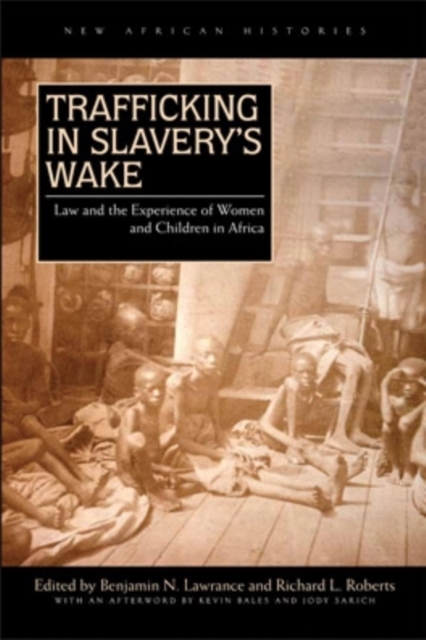
Trafficking in Slavery's Wake
Women and children have been bartered, pawned, bought, and sold within and beyond Africa for longer than records have existed. This important collection examines the ways trafficking in women and children has changed from the aftermath of the \"end of slavery\" in Africa from the late nineteenth century to the present.
The formal abolition of the slave trade and slavery did not end the demand for servile women and children. Contemporary forms of human trafficking are deeply interwoven with their historical precursors, and scholars and activists need to be informed about the long history of trafficking in order to better assess and confront its contemporary forms. This book brings together the perspectives of leading scholars, activists, and other experts, creating a conversation that is essential for understanding the complexity of human trafficking in Africa.
Human trafficking is rapidly emerging as a core human rights issue for the twenty-first century. Trafficking in Slavery's Wake is excellent reading for the researching, combating, and prosecuting of trafficking in women and children.
Contributors: Margaret Akullo, Jean Allain, Kevin Bales, Liza Stuart Buchbinder, Bernard K. Freamon, Susan Kreston, Benjamin N. Lawrance, Elisabeth McMahon, Carina Ray, Richard L. Roberts, Marie Rodet, Jody Sarich, and Jelmer Vos.
eBook

Muslim family law in Sub-Saharan Africa
Muslim Family Law in Sub-Saharan Africa: Colonial Legacies and Post-Colonial Challenges offers comparative historical, anthropological and legal perspectives on the ways in which French and British colonial administrations interacted with the diversity of Islamic legal schools, scholars, and practices in Africa. The authors examine how the colonial impress marks Islamic legal practices in Africa and its impact on the post-colonial and contemporary periods. Several chapters document the experiences of Muslim citizens in some African states in their bid to have Islamic law, particularly family law, recognized. A substantial introduction sets the individual essays in a comparative framework of Islamic legal scholarship in an era of colonialism by contrasting and comparing vital questions as they occur in the African context.
eBook

A novel angiotensin II type 2 receptor signaling pathway: possible role in cardiac hypertrophy
We describe a novel signaling mechanism mediated by the G‐protein‐coupled receptor (GPCR) angiotensin II (Ang II) type 2 receptor (AT
2
). Yeast two‐hybrid studies and affinity column binding assay show that the isolated AT
2
C‐terminus binds to the transcription factor promyelocytic zinc finger protein (PLZF). Cellular studies employing confocal microscopy show that Ang II stimulation induces cytosolic PLZF to co‐localize with AT
2
at the plasma membrane, then drives AT
2
and PLZF to internalize. PLZF slowly emerges in the nucleus whereas AT
2
accumulates in the perinuclear region. Nuclear PLZF binds to a consensus sequence of the phosphatidylinositol‐3 kinase p85α subunit (p85α PI3K) gene. AT
2
enhances expression of p85α PI3K followed by enhanced p70
S6
kinase, essential to protein synthesis. An inactive mutant of PLZF abolishes this effect. PLZF is expressed robustly in the heart in contrast to many other tissues. This cardiac selective pathway involving AT
2
, PLZF and p85α PI3K may explain the absence of a cardiac hypertrophic response in AT
2
gene‐deleted mice.
Journal Article


Evidence for Phosphatidylinositol 3-Kinase as a Regulator of Endocytosis Via Activation of Rab5
Phosphatidylinositol (PI) 3-kinases have been implicated in several aspects of intracellular membrane trafficking, although a detailed mechanism is yet to be established. In this study we demonstrated that wortmannin, a specific inhibitor of PI 3-kinases, inhibited constitutive endocytosis of horseradish peroxidase and transferrin in BHK-21 and TRVb-1 cells. The IC50was ≈40 ng/ml (93 nM). In addition, wortmannin blocked the stimulation of horseradish peroxidase uptake by the small GTPase Rab5 but not the stimulation by the GTPase-defective, constitutively activated Rab5 Gln79→ Leu mutant (Rab5:Q79L), providing further evidence that PI 3-kinase activity is essential for the early endocytic process. To further investigate the mechanism, we examined the effect of wortmannin on early endosome fusion in vitro. Wortmannin decreased endosome fusion by 80% with an IC50value similar to that in intact cells. Addition of Rab5:Q79L but not wild-type Rab5 reversed the inhibitory effect of wortmannin. Furthermore, addition of a constitutively activated PI 3-kinase but not its inactive counterpart stimulated early endosome fusion in vitro. These results strongly indicate that PI 3-kinase plays an important role in regulation of early endosome fusion, probably via activation of Rab5.
Journal Article