
Catalogue Search | MBRL


Are you sure you want to remove the book from the shelf?

{{itemTitle}}
928
result(s) for
"Robertson, Craig"
Sort by:

The passport in America : the history of a document
\"In today's world of constant identification checks, it's difficult to recall that there was ever a time when \"proof of identity\" was not a part of everyday life. And as anyone knows who has ever lost a passport, or let one expire on the eve of international travel, the passport has become an indispensable document. But how and why did this form of identification take on such a crucial role? In the first history of the passport in the United States, Craig Robertson offers an illuminating account of how this document, above all others, came to be considered a reliable answer to the question: who are you? Historically, the passport originated as an official letter of introduction addressed to foreign governments on behalf of American travelers, but as Robertson shows, it became entangled in contemporary negotiations over citizenship and other forms of identity documentation. Prior to World War I, passports were not required to cross American borders, and while some people struggled to understand how a passport could accurately identify a person, others took advantage of this new document to advance claims for citizenship. From the strategic use of passport applications by freed slaves and a campaign to allow married women to get passports in their maiden names, to the \"passport nuisance\" of the 1920s and the contested addition of photographs and other identification technologies on the passport, Robertson sheds new light on issues of individual and national identity in modern U.S. history. In this age of heightened security, especially at international borders, Robertson's The Passport in America provides anyone interested in questions of identification and surveillance with a richly detailed, and often surprising, history of this uniquely important document\"--Provided by publisher.
Book

Music, Selves and Societies: Respondent Paper
Researchers working within the field of music and society often comment that they wish to use their research for the betterment of society and individuals, wherever possible. In many cases, this process of betterment requires some sort of behavioral change—whether this is changing poor habits to promote healthy living and thinking or changing destructive behavior in order to lead more productive and connected lives. It can increasingly be seen in the world today that social behavior has a complex array of influences and motivations and rarely is empirical evidence one of them. No amount of thoroughly researched evidence or logically developed arguments influences this behavior. Brexit and the Trump administration are two examples of this phenomenon. What seems to influence this seemingly bizarre social behavior is a collective belief in a narrative. The narrative needs to speak to common emotions, senses of identities and memories, but it does not need to necessarily be supported by empirical evidence to be effective. There is a need to understand this power of narrative in the public discourse if we are to truly influence how public policy engages with music.
Journal Article
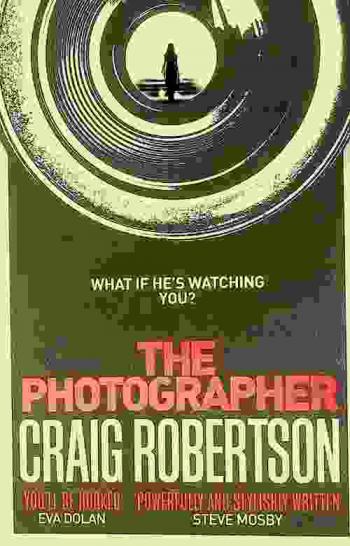
The photographer
The sergeant took some from each box and spread them around the floor so they could all see. Dozens upon dozens of them. DI Rachel Narey's guess was that there were a few hundred in all. Photographs. Many of them were in crowd scenes, some just sitting on a park bench or walking a dog or waiting for a bus or working in shops. They seemed to have no idea they'd been photographed. All women. All attractive. All between their late teens and early thirties. Hundreds of them. A dawn raid on the home of a suspected rapist leads to a chilling discovery, a disturbing collection hidden under floorboards. Narey is terrified at the potential scale of what they've found and of what brutalities it may signal. When the photographs are ruled inadmissible as evidence and the man walks free from court, Narey knows she's let down the victim she'd promised to protect and a monster is back on the streets.

Magelonidae Cunningham & Ramage, 1888 (Annelida, Polychaeta)—Worldwide Identification Keys and the Re-Establishment of Maea Johnston, 1865
Shovel head worms (Annelida: Magelonidae) have long presented challenges to polychaete systematists due to their unique morphology and relative uniformity. This has been compounded by a lack of taxonomic work across key biogeographic regions. However, over the past few decades, a series of studies has progressively addressed these issues, refining our understanding of magelonid taxonomy and making taxonomic revisions of several regions. Whilst a standardised framework for morphological characters across the family has been produced, a worldwide review of taxonomic knowledge has been warranted. The information is herein presented alongside the first worldwide identification key in over 50 years. The much-needed key is presented in two formats: a dichotomous key divided by marine realms, and a pictorial key based on putative morphological groups. The key is additionally supplemented by the provision of an interactive map providing type locality data and links to taxonomic works. The pictorial key provides additional support for the unique terminology historically applied to the group. The genus Maea Johnston, 1865 is herein re-established for fifteen species possessing long rounded prostomia without horns, but possessing mucronate chaetae of the ninth chaetiger, and lateral abdominal pouches.
Journal Article


Towards Greater Standardisation in Benthic Trait Research to Support Application to Environmental Management
Functional trait‐based approaches have enriched our understanding of key ecological processes such as species assembly and biodiversity loss. This focus on traits, rather than taxonomy, promotes comparability across spatial and organisational scales, further enabling the application of trait‐based methodologies to systems where species identity is difficult to recognise. Among other issues, however, the lack of standardisation is preventing trait‐based approaches from unlocking their true potential. Here, 407 published articles (peer‐reviewed and grey literature) are reviewed alongside the Biological Traits Information Catalogue (BIOTIC) to document inconsistencies in the understanding and use of trait terminology in the context of marine benthic ecosystems. Firstly, discrepancies in the operationalisation of key concepts are noted, each associated with six to ten separate definitions. Secondly, three distinct trait classification frameworks are identified, of which one presents considerable internal variation; within‐framework trait classification also emerges as inconsistent. Lastly, a total of 290 synonyms and associated modalities are noted with respect to 18 traits commonly implemented in benthic research, amounting to an average of 16 synonyms per trait. Researchers should be aware of such inconsistencies; to overcome them, we propose a set of guidelines aimed at standardising the reporting and classification of traits in benthic research for policy and management applications. As other standards may exist, we further present a ‘translation’ table intended for use by trait ecologists when reviewing existing literature that adheres to different trait classification frameworks than the ones we recommend. Standardising the reporting and storage of trait data will help align our understanding of the function of benthic assemblages, their role in delivering ecosystem services, and the impact of human activities on ecosystem function. Here, 407 published articles (peer‐reviewed and grey literature) are reviewed alongside the Biological Traits Information Catalogue (BIOTIC) to document inconsistencies in the understanding and use of trait terminology in the context of marine benthic ecosystems. Firstly, discrepancies in the operationalisation of key concepts are noted, each associated with six to ten separate definitions. Secondly, three distinct trait classification frameworks are identified, of which one presents considerable internal variation; within‐framework trait classification also emerges as inconsistent. Lastly, a total of 289 synonyms and associated modalities are noted with respect to 18 traits commonly implemented in benthic research, amounting to an average of 16 synonyms per trait.
Journal Article

Conan : the jewels of Gwahlur and other stories
As Conan seeks the prized Teeth of Gwahlur, he discovers that a former dancing girl is being compelled to posing as a long-dead oracle. Can he use this knowledge to outfox his opponents on the hunt for the jewels? Plus, in more action-packed tales, a king's daughter is kidnapped by a sorcerer - and only Conan and the girl's sister can save her! And, intrigued by a leader known as the \"Mad King of Gaul,\" Conan joins his army - but when tragedy strikes, will Conan be worthy to wear the crown?
Book

Stereoselective Asymmetric Syntheses of Molecules with a 4,5-Dihydro-1H-1,2,4-Triazoline Core Possessing an Acetylated Carbohydrate Appendage: Crystal Structure, Spectroscopy, and Pharmacology
A new series of chiral 4,5-dihydro-1H-[1,2,4]-triazoline molecules, featuring a β-ᴅ-glucopyranoside appendage, were synthesized via a 1,3-dipolar cycloaddition reaction between various hydrazonyl chlorides and carbohydrate Schiff bases. The isolated enantiopure triazolines (8a–j) were identified through high-resolution mass spectrometry (HRMS) and vibrational spectroscopy. Subsequently, their solution structures were elucidated through NMR spectroscopic techniques. Single-crystal X-ray analysis of derivative 8b provided definitive evidence for the 3-D structure of this compound and revealed important intermolecular forces in the crystal lattice. Moreover, it confirmed the (S)-configuration at the newly generated stereo-center. Selected target compounds were investigated for anti-tumor activity in 60 cancer cell lines, with derivative 8c showing the highest potency, particularly against leukemia. Additionally, substituent-dependent anti-fungal and anti-bacterial behavior was observed.
Journal Article

Beam dynamic study of a Ka-band microwave undulator and its potential drive sources
Microwave undulators (MUs) have great potential to be an alternative solution to permanent magnet undulators in a free electron laser (FEL) when shorter undulator periods are required. In this paper, the factors that affect the choice of the high-power drive sources were studied via a Ka-band cavity-type MU with a corrugated waveguide proposed for the CompactLight X-ray FEL. They include the technology of the high-power vacuum electronic devices, the quality factor of the MU cavity that was demonstrated by prototyping a short section of the MU structure, and the beam dynamic study of the electrons’ trajectories inside the MU. It showed that at high beam energy, a high-power oscillator is feasible to be used as the drive source. At low beam energy, the maximum transverse drift distance becomes larger therefore an amplifier has to be used to minimize the drift distance of the electrons by controlling the injection phase.
Journal Article
