
Catalogue Search | MBRL


Are you sure you want to remove the book from the shelf?

{{itemTitle}}
58
result(s) for
"Robidoux, Michael A"
Sort by:

On-the-ground realities of health program delivery in addressing community needs: a community-based participatory research approach in the moose Cree First Nation
Background
It has been well documented that Indigenous people in northern remote communities in Canada continue to experience a disproportionate burden of health disparities due to complex interactions of multiple determinants of health, including food insecurity, colonialism, barriers in accessing primary healthcare, and disrupted socioeconomic and political structures. Health promotion programs are essential in building preventive measures and empowering communities to take control over their health by helping them make informed health choices. This study described Indigenous-led nutrition-related health programs, the Healthy Babies, Healthy Children Program (HBHCP) and the Diabetes Prevention Program (DPP), which respond to food insecurity drivers and support community needs in Moose Cree First Nation (MCFN). It also documented the on-the-ground realities of program delivery and highlighted community-informed priorities for improved programming.
Methods
Grounded in community-based participatory research (CBPR) principles, our approach emphasized the importance of community engagement in supporting the healing process within this cultural context. Data collection included first-hand participation in program delivery alongside program coordinators, participant feedback, and semi-structured interviews from community members (
n
= 6) and Health Center staff (
n
= 3). Thematic analysis was used to identify themes across interview data, field notes, and community feedback.
Results
High food costs, limited access and availability, and poor food quality remain the primary food-related challenges experienced in the community. Health programs serve as frontline responders to community needs and address these challenges through culturally grounded and family-oriented nutrition education activities. Community members valued the programs’ knowledge-sharing approaches, tangible support, and social connections. However, systemic barriers significantly constrain program delivery, including inadequate funding, limited resources, staffing shortages, and the impact of COVID-19. These barriers limited the programs’ capacity to reach their full potential, despite strong community resilience.
Conclusion
Indigenous-led nutrition programs are vital in addressing food insecurity and promoting health in northern communities. The findings underscore the need for sustainable funding and stronger policy support that reflects the true cost of service delivery in remote Indigenous communities. The findings emphasize the need for policy changes that move beyond top-down approaches toward community-informed policies and Indigenous-led health programming.
Journal Article

Elevated Contaminants Contrasted with Potential Benefits of ω-3 Fatty Acids in Wild Food Consumers of Two Remote First Nations Communities in Northern Ontario, Canada
Indigenous communities in Boreal environments rely on locally-harvested wild foods for sustenance. These foods provide many nutritional benefits including higher levels of polyunsaturated fatty acids (PUFAs; such as ω-3) than what is commonly found in store-bought foods. However, wild foods can be a route of exposure to dietary mercury and persistent organic pollutants (POPs) such as polychlorinated biphenyls (PCBs). Here, we show a strong association between the frequency of wild food consumption in adults (N=72) from two remote First Nations communities of Northern Ontario and environmental contaminants in blood (POPs) and hair (mercury). We observed that POPs and mercury were on average 3.5 times higher among those consuming wild foods more often, with many frequent wild food consumers exceeding Canadian and international health guidelines for PCB and mercury exposures. Contaminants in locally-harvested fish and game from these communities were sufficiently high that many participants exceeded the monthly consumption limits for methylmercury and PCBs. Those consuming more wild foods also had higher proportions of potentially beneficial ω-3 fatty acids including eicosapentaenoic acid (EPA) and docosahexaenoic acid (DHA). These results show that the benefits of traditional dietary choices in Boreal regions of Canada must be weighed against the inherent risks of contaminant exposure from these foods.
Journal Article
Dysregulation of Cytokine Response in Canadian First Nations Communities: Is There an Association with Persistent Organic Pollutant Levels?
In vitro and animal studies report that some persistent organic pollutants (POPs) trigger the secretion of proinflammatory cytokines. Whether POP exposure is associated with a dysregulation of cytokine response remains to be investigated in humans. We studied the strength of association between plasma POP levels and circulating cytokines as immune activation markers. Plasma levels of fourteen POPs and thirteen cytokines were measured in 39 Caucasians from a comparator sample in Québec City (Canada) and 72 First Nations individuals from two northern communities of Ontario (Canada). Caucasians showed significantly higher levels of organochlorine insecticides (β-HCH, p,p'-DDE and HCB) compared to First Nations. Conversely, First Nations showed higher levels of Mirex, Aroclor 1260, PCB 153, PCB 170, PCB 180 and PCB 187 compared to Caucasians. While there was no difference in cytokine levels of IL-4, IL-6, IL-10 and IL-22 between groups, First Nations had significantly greater average levels of IFNγ, IL-1β, IL-2, IL-5, IL-8, IL-12p70, IL-17A, TNFα and TNFβ levels compared to Caucasians. Among candidate predictor variables (age, body mass index, insulin resistance and POP levels), high levels of PCBs were the only predictor accounting for a small but significant effect of observed variance (∼7%) in cytokine levels. Overall, a weak but significant association is detected between persistent organochlorine pollutant exposure and elevated cytokine levels. This finding augments the already existing information that environmental pollution is related to inflammation, a common feature of several metabolic disorders that are known to be especially prevalent in Canada's remote First Nations communities.
Journal Article
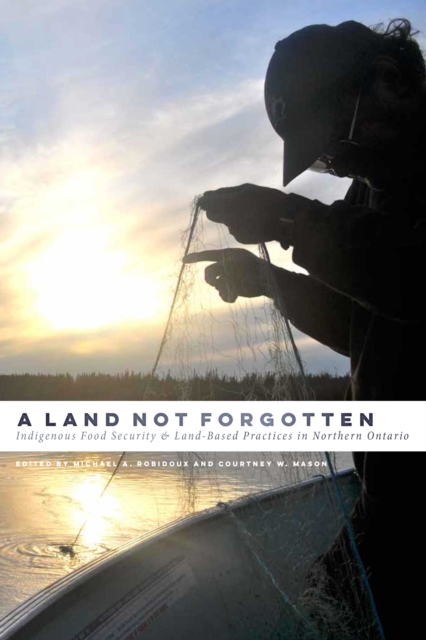
A Land Not Forgotten
Food insecurity takes a disproportionate toll on the health of Canada's Indigenous people. A Land Not Forgotten examines the disruptions in local food practices as a result of colonization and the cultural, educational, and health consequences of those disruptions.
eBook

Exposure to brain trauma in six age divisions of minor ice hockey
Acute and chronic neurological risks associated with brain trauma sustained in professional ice hockey has generated concern for youth participants. Minor hockey is a different game when compared to elite players presenting distinctive risk factors for each age division. Objective measures of brain trauma exposure were documented for six divisions in minor ice hockey; U7, U9, U11, U13, U15, U18. Game video analysis, physical reconstruction and computational modelling was employed to capture the event conditions, frequency of impacts, frequency of high strain magnitude (>0.17) impacts, and cumulative trauma. The results showed proportional differences in the event conditions; event type, closing velocity, and head impact location, informing the improvement of age appropriate protection, testing protocols, and safety standards. Frequency of events were highest for U7 when players were learning to skate, and again in U18 as game physicality increases. No significant difference was observed in frequency of high magnitude impacts across age divisions. A peak in high magnitude impacts was empirically observed at both U7 and U15 where skill development in skating and body checking, respectively, were most prominent. Finally, a cumulative trauma metric incorporating frequency and magnitude of impacts provided a detailed analysis of trauma exposure provides for a targeted approach to managing injury risk specific to age division. Objective measures of brain trauma exposure identified in the current study are important to inform strategy, guide legislation and initiate policy for safe play in minor ice hockey.
Journal Article

Wapekeka’s COVID-19 Response: A Local Response to a Global Pandemic
Two years after the onset of the COVID-19 pandemic, many nations and communities continue to grapple with waves of infection and social fallout from pandemic fatigue and frustration. While we are still years away from realizing the full impacts of COVID-19, reflecting on our collective responses has offered some insights into the impact that various public health policies and decisions had on nations’ abilities to weather the multifaceted impacts of the pandemic. Widely believed to have the potential to be devastated by COVID-19, many Indigenous communities in Canada were extremely successful in managing outbreaks. This paper outlines one such example, Wapekeka First Nation, and the community’s formidable response to the pandemic with a specific focus on food mobilization efforts. Built on over a decade of community-based participatory action research and informed by six interviews with key pandemic leaders in the community, this paper, co-led by two community hunters and band council members, emphasizes the various decisions and initiatives that led to Wapekeka’s successful pandemic response. Proactive leadership, along with strong traditional harvesting and processing efforts, helped to take care of the community while they remained strictly isolated from virus exposure.
Journal Article

Hoop House Gardening in the Wapekeka First Nation as an Extension of Land-Based Food Practices
Rural Indigenous communities in Canada's North face many challenges getting regular access to nutritious foods, primarily because of the high cost of market food, restricted availability of nutritious foods, and lack of government support for nutritious food programs. The consequences of food insecurity in this context are expressed in high rates of diabetes, heart disease, and childhood obesity. Many Indigenous communities are responding to issues related to healthy food access by attempting to rebuild local food capacity in their specific regions. Important first steps have been taken in developing local food initiatives, yet whether these initiatives are improving northern food security remains to be seen. We explore this question by working with the Oji-Cree First Nation in the community of Wapekeka, northern Ontario, to construct a hoop house and develop a school-based community gardening program. Using a community-based participatory approach, we determined that hoop house and gardening initiatives in rural, northern settings have the potential to build up local food production, develop the skills and knowledge of community members, engage youth in growing local food, and align with land-based food teachings. We show that despite widespread and multidimensional community hardships, there was considerable community buy-in and support for the project, which gives hope for future development and provides important insight for those seeking to initiate similar gardening, hoop house, or greenhouse initiatives in northern Indigenous communities.
Les collectivités autochtones du Canada en milieu rural nordique ont de nombreux défis à relever pour avoir régulièrement accès à de la nourriture nutritive, principalement en raison du coût élevé des denrées alimentaires du marché, de la disponibilité restreinte d'aliments nutritifs et du manque de soutien gouvernemental pour l'adoption de programmes de provisions alimentaires nutritives. Dans ce contexte, les conséquences de l'insécurité alimentaire s'expriment par des taux élevés de diabète, de maladies du coeur et d'obésité infantile. De nombreuses collectivités autochtones relèvent les défis d'accès à des denrées saines en tentant de renforcer la capacité alimentaire locale de leurs propres régions. Ils ont déjà pris d'importantes mesures pour aboutir à des initiatives alimentaires locales, mais il reste à voir si ces initiatives permettent d'améliorer la sécurité alimentaire dans le Nord. Nous nous penchons sur cette question de concert avec la Première Nation oji-cri dans la collectivité de Wapekeka, dans le nord de l'Ontario, en construisant plus précisément une serre à arceaux et en aménageant un programme de jardinage scolaire. Grâce à notre approche participative et communautaire, nous avons déterminé que la serre à arceaux et les initiatives de jardinage en milieu rural nordique ont la possibilité de se traduire par l'accumulation d'aliments produits à l'échelle locale, de favoriser l'acquisition de compétences et de connaissances, d'inciter les jeunes à cultiver des aliments localement et de mettre en valeur les enseignements relatifs à la nourriture provenant de la terre. Nous montrons que malgré les difficultés multidimensionnelles répandues dans la collectivité, ce projet a suscité un appui considérable de la part des gens, ce qui donne de l'espoir en vue de développements futurs et permet aux personnes désirant mettre en œuvre des initiatives semblables de jardinage, de serres à arceaux et de serres ordinaires dans les collectivités autochtones nordiques d'acquérir d'importantes connaissances.
Journal Article

Men at Play
Players dedicate their lives to the goal of playing professional hockey and teams demand total commitment from their players, giving them complete control over almost all aspects of the players' lives. With the enormous labour turnover in the AHL and the surplus labour pool, players are extremely vulnerable: they must perform well or be replaced by the scores of other men willing to do the same job. With limited education and limited life skills, players seldom meet people who are not connected to the game and, when they do, they do so with trepidation. The constructed universe of the game consumes the players so that, in spite of any wealth they may accumulate, they often know nothing other than the game and have invested everything in an occupation where their services quickly become obsolete.
eBook

Community collaboration in the face of the COVID-19 Pandemic: Examples of How Remote First Nations in Northern Ontario Managed the Pandemic
At the outset of the COVID-19 pandemic, it was believed that Indigenous peoples in Canada would be disproportionately affected due to inequities across social determinants of health as a result of the ongoing processes of colonization. High levels of overcrowding, higher burden of chronic disease, reduced access to clean drinking water, healthcare, and food security in many rural and remote First Nations across northern Canada increased vulnerability to COVID-19. In the Nishnawbe Aski Region of northern Ontario, data from the Sioux Lookout First Nations Health Authority indicates that First Nations communities were able to limit COVID -19 infection and had an overall fatality rate that was lower than the general Canadian population. The focus of this research was to analyze public health data, media reports, and research to determine how the pandemic impacted First Nations throughout northern Ontario. The research highlights that as a direct result of rapid and strength-based responses, First Nations in Northern Ontario have managed the pandemic with limited serious illness, hospitalizations, and fatalities.
Journal Article

Increased proliferative effect of organochlorine compounds on human preadipocytes
Chlorinated persistent organic pollutants, commonly referred to as organochlorine compounds (OCs), are chemicals of environmental concern that were mostly used historically as pesticides, solvents, flame retardants, and other applications, though some still continue to be produced. OCs accumulate in adipose tissue because of their hydrophobicity. Evidence suggests that OCs modulate adipose tissue metabolism and could affect its development. At the cellular level, the development of adipose tissue is partly controlled by replication of preadipocytes, which may in turn be modulated by contaminants. The aim of this study was to determine whether exposure to specific OCs and to different concentrations, some mimecting those achieved in human tissues that are exposed to chemicals from the environment, affects human preadipocyte proliferation capacity. Human preadipocytes were exposed to various concentrations (3–500 μM) of highly prevalent OCs (PCBs 77, 153 and DDE) for 48 h. At the end of the exposure period, quantification of cell density was assessed by a cell proliferation ELISA assay. Preadipocyte proliferation significantly increased (~28–72%) in response to most of the concentrations of PCB 153 and DDE as compared to the control. These findings suggest that exposure to some OCs and concentrations increase the proliferative capacity of human preadipocytes.
Journal Article