
Catalogue Search | MBRL


Are you sure you want to remove the book from the shelf?

{{itemTitle}}
10,605
result(s) for
"Robinson, Michael"
Sort by:

The lost white tribe : explorers, scientists, and the theory that changed a continent
\"In 1876, in a mountainous region to the west of Lake Victoria, Africa--what is today Ruwenzori Mountains National Park in Uganda--the famed explorer Henry Morton Stanley encountered Africans with what he was convinced were light complexions and European features. Stanley's discovery of this African 'white tribe' haunted him and seemed to substantiate the so-called Hamitic Hypothesis: the theory that the descendants of Ham--the son of Noah--had populated Africa and other remote places, proving that the source and spread of human races around the world could be traced to and explained by a Biblical story. In [this book], Michael Robinson traces the rise and fall of the Hamitic Hypothesis\"--Amazon.com.
Book

Lens-specific βA3/A1-conditional knockout mice: Phenotypic characteristics and calpain activation causing protein degradation and insolubilization
βA3/A1-crystallin is a lens structural protein that plays an important role in maintaining lens transparency via interactions with other crystallins. While the function of βA3/A1-crystallin in the retina is well studied, its functions in the lens, other than as a structural protein, remain unclear. In the current study, we generated the lens-specific βA3/A1-crystallin conditional knockout mouse (named βA3/A1ckO) and explored phenotypic changes and the function of the crystallin in the lens. The βA3/A1ckO mice showed congenital cataract at birth and exhibited truncation of lens proteins. Several truncated protein fragments were recovered as a pellet during a low-speed centrifugation (800 rpm, 70 x g) followed by a relatively higher speed centrifugation (5000 rpm, 2744 x g). Mass spectrometric analysis of pellets recovered following the two centrifugations showed that among the fragments with M r < 20 kDa, the majority of these were from β-tubulin, and some from phakinin, αA-crystallin, and calpain-3. Further, we observed that in vitro activation of calpain-3 by calcium treatment of the wild-type-lens homogenate resulted in the degradation of calpain-3, αA-crystallin and β-tubulin and insolubilization of these proteins. Based on these results, it was concluded that the activation of calpain 3 resulted in proteolysis of β-tubulin, which disrupted cellular microtubular structure, and caused proteolysis of other lens proteins (αA-crystallin and phakinin). These proteolyzed protein fragments become insoluble, and together with the disruption of microtubular structure, and could be the causative factors in the development of congenital nuclear cataract in βA3/A1cKO mice.
Journal Article

Transcriptomic analysis of human skin wound healing and rejuvenation following ablative fractional laser treatment
Ablative fractional laser treatment is considered the gold standard for skin rejuvenation. In order to understand how fractional laser works to rejuvenate skin, we performed microarray profiling on skin biopsies to identify temporal and dose-response changes in gene expression following fractional laser treatment. The backs of 14 women were treated with ablative fractional laser (Fraxel®) and 4 mm punch biopsies were collected from an untreated site and at the treated sites 1, 3, 7, 14, 21 and 28 days after the single treatment. In addition, in order to understand the effect that multiple fractional laser treatments have on skin rejuvenation, several sites were treated sequentially with either 1, 2, 3, or 4 treatments (with 28 days between treatments) followed by the collection of 4 mm punch biopsies. RNA was extracted from the biopsies, analyzed using Affymetrix U219 chips and gene expression was compared between untreated and treated sites. We observed dramatic changes in gene expression as early as 1 day after fractional laser treatment with changes remaining elevated even after 1 month. Analysis of individual genes demonstrated significant and time related changes in inflammatory, epidermal, and dermal genes, with dermal genes linked to extracellular matrix formation changing at later time points following fractional laser treatment. When comparing the age-related changes in skin gene expression to those induced by fractional laser, it was observed that fractional laser treatment reverses many of the changes in the aging gene expression. Finally, multiple fractional laser treatments, which cover different regions of a treatment area, resulted in a sustained or increased dermal remodeling response, with many genes either differentially regulated or continuously upregulated, supporting previous observations that maximal skin rejuvenation requires multiple fractional laser treatments. In conclusion, fractional laser treatment of human skin activates a number of biological processes involved in wound healing and tissue regeneration.
Journal Article

Beyond home plate : Jackie Robinson on life after baseball
An anthology of Jackie Robinson's columns in the New York Post and the New York Amsterdam News newspapers.
Book


Radial flow turbocompressors : design, analysis, and applications
\"An introduction to the theory and engineering practice that underpins the component design and analysis of radial flow turbocompressors. Drawing upon an extensive theoretical background and years of practical experience the authors provide: Descriptions of applications, concepts, component design, analysis tools, performance maps, flow stability, and structural integrity, with numerous illustrative examples. Wide coverage of all types of radial compressor over a range of applications unified by the consistent use of dimensional analysis. The methods needed to analyse the performance, flow and mechanical integrity that underpin the design of efficient centrifugal compressors with good flow range and stability. Explanation of the design of all radial compressor components, including inlet guide vanes, impellers, diffusers, volutes, return channels, de-swirl vanes and side-streams. Suitable as a reference for advanced students of turbomachinery, and a perfect tool for practising mechanical and aerospace engineers already within the field as well as those just entering it\"-- Provided by publisher.
Book
Hand size estimates of fibromyalgia patients are associated with clinical and experimental pain
Simply inspecting one's own body can reduce clinical pain and magnification of body parts can increase analgesia. Thus, body perceptions seem to play an important role for analgesia. Conversely, pain may also affect bodily perceptions. Therefore, we evaluated the effects of clinical and/or experimental pain on perceived hand size in fibromyalgia patients (FM) and healthy controls (HC). To investigate the effects of chronic and/or acute pain on size perception we compared hand size estimates of 35 HC and 32 FM patients at baseline and during tonic mechanical pain stimuli applied to one ear lobe. Mechanical stimuli were adjusted for each individual pain sensitivity to achieve a rating of 4 ± 1 VAS (0-10) units. Photographs of each subject's hands were digitally manipulated to produce a monotonic series of 5 images larger and 6 smaller than actual size which were then presented to the participants in ascending and descending order (total number of images: 12). FM and HC participants' clinical pain ratings at baseline were 3.3 (3.1) and .3 (.8) VAS units, respectively. At baseline, FM participants selected significantly smaller hand images than HC as representative of their actual size (p < .02). During application of tonic experimental pain, the image size chosen to represent their actual hand size decreased significantly in FM participants and HC (p .05). Hand size estimates of FM participants correlated negatively with their clinical pain ratings (p < .04). The decreased hand size perception of FM patients and HC was associated with their clinical and/or experimental pain, supporting the hypothesis that pain can result in visual body distortions.
Journal Article
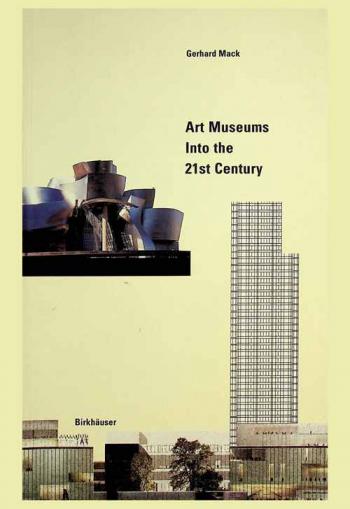
Art museums into the 21st century
Item consists mainly of interviews with architects of recent (1990s) museum buildings: Frank O. Gehry (Guggenheim Museum Bilbao), Jacques Herzog (Museum of Modern Art, New York and Tate Gallery of Modern Art), Richard Meier (Getty Center, Los Angeles), Rafael Moneo (Moderna and Arkitektur Museet, Stockholm), Jean Nouvel (Culture and Congress Centre Lucerne), Renzo Piano (Museum for the Fondation Beyeler, Basel) and Peter Zumthor (Kunsthaus Bregenz)
Book

Working with emotions: emotional intelligence, performance and creativity in the knowledge-intensive workforce
Purpose
This paper aims to examine whether work-related emotional intelligence (W-EI) benefits job performance among knowledge-intensive workers.
Design/methodology/approach
Postdoctoral researchers (Study 1) and industry researchers (Study 2) were recruited (total N = 304). These knowledge workers completed an ability-based emotional intelligence (EI) test and characterized their work-related performance. Potential moderators were also assessed.
Findings
There were positive relations between W-EI scores and both task performance and creative performance. In addition, these relationships were stronger in the context of higher levels of job negative affect and/or role overload.
Originality/value
To the best of the authors’ knowledge, these findings are among the first to demonstrate the value of the EI construct within a knowledge-intensive workforce.
Journal Article