
Catalogue Search | MBRL


Are you sure you want to remove the book from the shelf?

{{itemTitle}}
1,991
result(s) for
"Roman, Thomas"
Sort by:


Ferroptosis response segregates small cell lung cancer (SCLC) neuroendocrine subtypes
Loss of
TP53
and
RB1
in treatment-naïve small cell lung cancer (SCLC) suggests selective pressure to inactivate cell death pathways prior to therapy. Yet, which of these pathways remain available in treatment-naïve SCLC is unknown. Here, through systemic analysis of cell death pathway availability in treatment-naïve SCLC, we identify non-neuroendocrine (NE) SCLC to be vulnerable to ferroptosis through subtype-specific lipidome remodeling. While NE SCLC is ferroptosis resistant, it acquires selective addiction to the TRX anti-oxidant pathway. In experimental settings of non-NE/NE intratumoral heterogeneity, non-NE or NE populations are selectively depleted by ferroptosis or TRX pathway inhibition, respectively. Preventing subtype plasticity observed under single pathway targeting, combined treatment kills established non-NE and NE tumors in xenografts, genetically engineered mouse models of SCLC and patient-derived cells, and identifies a patient subset with drastically improved overall survival. These findings reveal cell death pathway mining as a means to identify rational combination therapies for SCLC.
The high degree of subtype plasticity in small cell lung cancer (SCLC) poses a therapeutic challenge. Here, the authors show that the non-neuroendocrine (non-NE) subtype of SCLC is sensitive to ferroptosis while the neuroendocrine (NE) subtype is vulnerable to TRX anti-oxidant pathway inhibition, and the combination of these two treatments in SCLC circumvents non-NE/NE subtype plasticity.
Journal Article
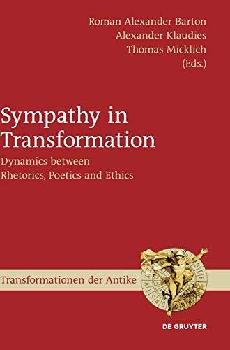
Sympathy in transformation : dynamics between rhetorics, poetics and ethics
\"There is little doubt that sympathy plays a pivotal role in aesthetic as well as moral experience, yet also little agreement on how to describe this connection and its long history. This volume investigates the changes in the concept of sympathy as well as its rhetorical, poetical and ethical functions from antiquity to the threshold of Romanticism. The focus is on sympathy's development from a cosmological principle expressing the coherence, correspondence, and unity of all things into a theoretical key concept of intersubjectivity informing moral philosophy, criticism and literature. Thus, Sympathy in Transformation offers important insights into the many ways in which, when sympathy migrates into diverse discourses in Early Modernity, its ancient origins dwindle out of sight, while some of its central elements re-emerge in a surprising manner.\"--Back cover.
Book

Molecular subtypes of small cell lung cancer: a synthesis of human and mouse model data
Small cell lung cancer (SCLC) is an exceptionally lethal malignancy for which more effective therapies are urgently needed. Several lines of evidence, from SCLC primary human tumours, patient-derived xenografts, cancer cell lines and genetically engineered mouse models, appear to be converging on a new model of SCLC subtypes defined by differential expression of four key transcription regulators: achaete-scute homologue 1 (ASCL1; also known as ASH1), neurogenic differentiation factor 1 (NeuroD1), yes-associated protein 1 (YAP1) and POU class 2 homeobox 3 (POU2F3). In this Perspectives article, we review and synthesize these recent lines of evidence and propose a working nomenclature for SCLC subtypes defined by relative expression of these four factors. Defining the unique therapeutic vulnerabilities of these subtypes of SCLC should help to focus and accelerate therapeutic research, leading to rationally targeted approaches that may ultimately improve clinical outcomes for patients with this disease.This Opinion, written by many leading experts in small cell lung cancer (SCLC) research, proposes a new model of SCLC subtypes defined by differential expression of four key transcription regulators. Such classification should help to focus and accelerate therapeutic research.
Journal Article


CD47-blocking immunotherapies stimulate macrophage-mediated destruction of small-cell lung cancer
Small-cell lung cancer (SCLC) is a highly aggressive subtype of lung cancer with limited treatment options. CD47 is a cell-surface molecule that promotes immune evasion by engaging signal-regulatory protein alpha (SIRPα), which serves as an inhibitory receptor on macrophages. Here, we found that CD47 is highly expressed on the surface of human SCLC cells; therefore, we investigated CD47-blocking immunotherapies as a potential approach for SCLC treatment. Disruption of the interaction of CD47 with SIRPα using anti-CD47 antibodies induced macrophage-mediated phagocytosis of human SCLC patient cells in culture. In a murine model, administration of CD47-blocking antibodies or targeted inactivation of the Cd47 gene markedly inhibited SCLC tumor growth. Furthermore, using comprehensive antibody arrays, we identified several possible therapeutic targets on the surface of SCLC cells. Antibodies to these targets, including CD56/neural cell adhesion molecule (NCAM), promoted phagocytosis in human SCLC cell lines that was enhanced when combined with CD47-blocking therapies. In light of recent clinical trials for CD47-blocking therapies in cancer treatment, these findings identify disruption of the CD47/SIRPα axis as a potential immunotherapeutic strategy for SCLC. This approach could enable personalized immunotherapeutic regimens in patients with SCLC and other cancers.
Journal Article

الآثم المقدس : رواية
تحاول الرواية إيصال القارئ إلى المنطقة التي تختلط فيها مفاهيم القداسة والبراءة من خلال سلسلة من المفاجآت لا تكاد تنقطع حتى نهاية الرواية إذ عمد الروائي إلى نسج حبكات متواصلة ما إن تنتهي واحدة حتى تبدأ الأخرى. يلعب توماس مان في هذه الجوهرة السردية لعبته الخطرة والمستحيلة، وهو يجعل المفاجآت تتوالى دون أن يفقد القارئ دهشته !. ستشعر أيها القارئ أنك الهدف، والمرتجى المخبوء بين السطور سيحدث ذلك حينما تضيع بين مفردات \"الألم\" و\"اللذة\" و\"الهاوية\" و\"الطمأنينة\". هذه رحلة لا تمل أبدا في الاتجاهات كلها معا في آن واحد، وإلى الأبد، وما وراءه قليلا.
BOOK

Pan-cancer analysis of somatic copy-number alterations implicates IRS4 and IGF2 in enhancer hijacking
Hanno Glimm, Jan Korbel and colleagues present a computational framework called
cis
expression structural alteration mapping (CESAM), which they use to identify somatic copy-number alterations affecting
cis
-regulatory elements in cancer. They find that enhancer hijacking leads to overexpression of
IRS4
and
IGF2
in cancer.
Extensive prior research focused on somatic copy-number alterations (SCNAs) affecting cancer genes, yet the extent to which recurrent SCNAs exert their influence through rearrangement of
cis
-regulatory elements (CREs) remains unclear. Here we present a framework for inferring cancer-related gene overexpression resulting from CRE reorganization (e.g., enhancer hijacking) by integrating SCNAs, gene expression data and information on topologically associating domains (TADs). Analysis of 7,416 cancer genomes uncovered several pan-cancer candidate genes, including
IRS4
,
SMARCA1
and
TERT.
We demonstrate that
IRS4
overexpression in lung cancer is associated with recurrent deletions in
cis
, and we present evidence supporting a tumor-promoting role. We additionally pursued cancer-type-specific analyses and uncovered
IGF2
as a target for enhancer hijacking in colorectal cancer. Recurrent tandem duplications intersecting with a TAD boundary mediate
de novo
formation of a 3D contact domain comprising
IGF2
and a lineage-specific super-enhancer, resulting in high-level gene activation. Our framework enables systematic inference of CRE rearrangements mediating dysregulation in cancer.
Journal Article


Benchmarking of Mutation Diagnostics in Clinical Lung Cancer Specimens
Treatment of EGFR-mutant non-small cell lung cancer patients with the tyrosine kinase inhibitors erlotinib or gefitinib results in high response rates and prolonged progression-free survival. Despite the development of sensitive mutation detection approaches, a thorough validation of these in a clinical setting has so far been lacking. We performed, in a clinical setting, a systematic validation of dideoxy 'Sanger' sequencing and pyrosequencing against massively parallel sequencing as one of the most sensitive mutation detection technologies available. Mutational annotation of clinical lung tumor samples revealed that of all patients with a confirmed response to EGFR inhibition, only massively parallel sequencing detected all relevant mutations. By contrast, dideoxy sequencing missed four responders and pyrosequencing missed two responders, indicating a dramatic lack of sensitivity of dideoxy sequencing, which is widely applied for this purpose. Furthermore, precise quantification of mutant alleles revealed a low correlation (r(2) = 0.27) of histopathological estimates of tumor content and frequency of mutant alleles, thereby questioning the use of histopathology for stratification of specimens for individual analytical procedures. Our results suggest that enhanced analytical sensitivity is critically required to correctly identify patients responding to EGFR inhibition. More broadly, our results emphasize the need for thorough evaluation of all mutation detection approaches against massively parallel sequencing as a prerequisite for any clinical implementation.
Journal Article