
Catalogue Search | MBRL


Are you sure you want to remove the book from the shelf?

{{itemTitle}}
231
result(s) for
"Rose, F. author"
Sort by:

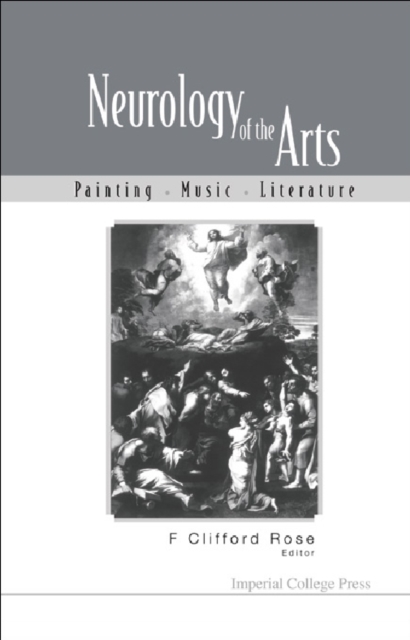
Neurology of the arts
This book is the first attempt to provide a basis for the interaction of the brain and nervous system with painting, music and literature. The introduction deals with the problems of creativity and which parts of the brain are involved. Then an overview of art presents the multiple facets, such as anatomy, and the myths appearing in ancient descriptions of conditions such as polio and migraine. The neurological basis of painters like Goya and van Gogh is analysed. Other chapters in the section on art cover da Vinci's mechanics and the portrayal of epilepsy. The section on music concerns the parts of the brain linked to perception and memory, as well as people who cannot appreciate music, and the effect of music on intelligence and learning (the Mozart effect). The section on literature relates to Shakespeare, Dostoyevsky, Conan Doyle, James Joyce and the poetry of one of England's most famous neurologists, Henry Head.
eBook

No right to be idle : the invention of disability, 1840s-1930s
\"In the late nineteenth and early twentieth centuries, a major transformation was occurring in many spheres of society: people with every sort of disability were increasingly being marginalized, excluded, and incarcerated. Disabled but still productive factory workers were being fired, and developmentally disabled individuals who had previously contributed domestic or agricultural labor in homes or on farms were being sent to institutions and poorhouses. [The author] pinpoints the origins and ramifications of this sea-change in American society, exploring the ways that public policy removed the disabled from the category of \"deserving\" recipients of public assistance, transforming them into a group requiring rehabilitation in order to achieve \"self-care\" and \"self-support.\" By tracing the experiences of advocates, program innovators, and disabled people caught up in this epochal transition, Rose ... integrates disability history and labor history to show how disabled people and their families were relegated to poverty and second-class economic and social citizenship, with vast consequences for debates about disability, poverty, and welfare in the century to come\"-- Provided by publisher
Book


WILLING TO DIE
THE funeral was over; but the old house of Dorracleugh was not quiet again till the night fell, and the last tenant had swallowed his last draught of beer, and mounted and rode away, through the mist, to his distant farm over the fells.
Publication Article
WILLING TO DIE
TWO or three notices, which, Mr. Jarlcot said, would not cost five pounds, were served on behalf of Mr. Marston, and, with these, the faint echo of his thunders subsided. There was, in fact, no material for litigation.
Publication Article
WILLING TO DIE
TWO or three notices, which, Mr. Jarlcot said, would not cost five pounds, were served on behalf of Mr. Marston, and, with these, the faint echo of his thunders subsided. There was, in fact, no material for litigation.
Publication Article
WILLING TO DIE
THE funeral was over; but the old house of Dorracleugh was not quiet again till the night fell, and the last tenant had swallowed his last draught of beer, and mounted and rode away, through the mist, to his distant farm over the fells.
Publication Article