
Catalogue Search | MBRL


Are you sure you want to remove the book from the shelf?

{{itemTitle}}
749
result(s) for
"Roud, Richard"
Sort by:

Godard
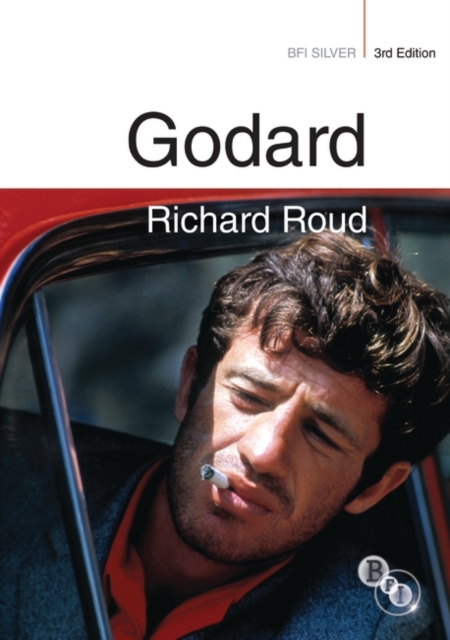
Richard Roud's Godard, first published in 1967 as 'Number One' in the seminal Cinema One series, was the first monograph on the great film-maker to be published in English, and one that reveals a unique intimacy between the author and his subject. Roud's provocative and far-reaching analysis shows an intuitive understanding of the aesthetic, intellectual and political context in which Godard worked, paying particular attention to his 'political' cinema, including the ferocious masterpiece Weekend (1967).In his foreword to this reissue, Michael Temple provides an overview of film criticism on Godard, arguing that, more than forty years since its publication, Roud's book remains at the forefront of writings on the director. Temple pinpoints how Roud was uniquely placed as a contemporary of Godard's to follow the film-maker's career from one explosive film to the next, charting the course of the Godardian star even as Roud's own career as a critic and festival programmer was unfolding. He contends that Roud's study was 'a pure product - and a faithful reflection - of a certain tendency in British film culture at the end of the 1960s: cinéphile, progressive, European, intellectual, metropolitan.' For Temple, Roud's work remains a lucid summary of what Godard had already achieved by the end of the 1960s, and provides a suggestive model of cultural criticism with which to approach subsequent aspects of Godard's multimedia artistic adventure.
eBook


Jean-Luc Godard
Richard Roud's Godard, first published in 1967 as ‘Number One’ in the seminal Cinema One series, was the first monograph on the great film-maker to be published in English, and one that reveals a unique intimacy between the author and his subject. Roud's provocative and far-reaching analysis shows an intuitive understanding of the aesthetic, intellectual and political context in which Godard worked, paying particular attention to his ‘political’ cinema, including the ferocious masterpiece Weekend (1967). In his foreword to this reissue, Michael Temple provides an overview of film criticism on Godard, arguing that, more than forty years since its publication, Roud's book remains at the forefront of writings on the director. Temple pinpoints how Roud was uniquely placed as a contemporary of Godard's to follow the film-maker's career from one explosive film to the next, charting the course of the Godardian star even as Roud's own career as a critic and festival programmer was unfolding. He contends that Roud's study was ‘a pure product – and a faithful reflection – of a certain tendency in British film culture at the end of the 1960s: cinéphile, progressive, European, intellectual, metropolitan.’ For Temple, Roud's work remains a lucid summary of what Godard had already achieved by the end of the 1960s, and provides a suggestive model of cultural criticism with which to approach subsequent aspects of Godard's multimedia artistic adventure.
eBook
Jean-Luc Godard
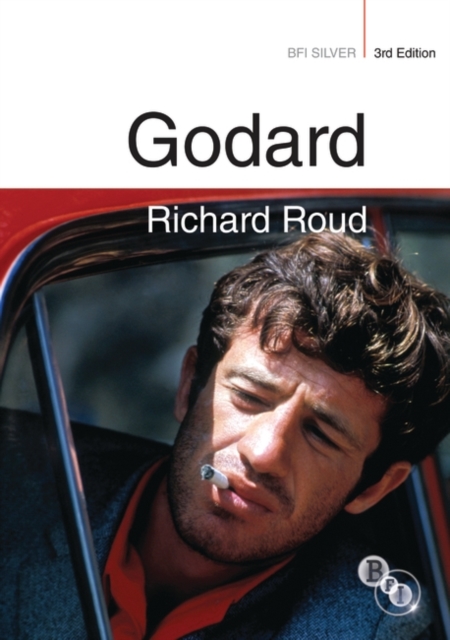
Richard Roud's Godard, first published in 1967 as 'Number One' in the seminal Cinema One series, was the first monograph on the great film-maker to be published in English, and one that reveals a unique intimacy between the author and his subject. Roud's provocative and far-reaching analysis shows an intuitive understanding of the aesthetic, intellectual and political context in which Godard worked, paying particular attention to his 'political' cinema, including the ferocious masterpiece Weekend (1967).In his foreword to this reissue, Michael Temple provides an overview of film criticism on Godard, arguing that, more than forty years since its publication, Roud's book remains at the forefront of writings on the director. Temple pinpoints how Roud was uniquely placed as a contemporary of Godard's to follow the film-maker's career from one explosive film to the next, charting the course of the Godardian star even as Roud's own career as a critic and festival programmer was unfolding. He contends that Roud's study was 'a pure product - and a faithful reflection - of a certain tendency in British film culture at the end of the 1960s: cinéphile, progressive, European, intellectual, metropolitan.' For Temple, Roud's work remains a lucid summary of what Godard had already achieved by the end of the 1960s, and provides a suggestive model of cultural criticism with which to approach subsequent aspects of Godard's multimedia artistic adventure.
eBook

Godard
Richard Roud's Godard, first published in 1967 as 'Number One' in the seminal Cinema One series, was the first monograph on the great film-maker to be published in English, and one that reveals a unique intimacy between the author and his subject.
eBook