
Catalogue Search | MBRL


Are you sure you want to remove the book from the shelf?

{{itemTitle}}
2
result(s) for
"Rowbotham, Judith, editor"
Sort by:

Monarchies and the great war
This volume challenges the traditional view that the First World War represents a pivotal turning point in the long history of monarchy, suggesting the picture is significantly more complex. Using a comparative approach, it explores the diverse roles played by monarchs during the Great War, and how these met the expectations of the monarchic institution in different states at a time of such crisis. Its contributors not only explore less familiar narratives, including the experiences of monarchs in Belgium and Italy, as well as the Austro-Hungarian, Japanese and Ottoman Empires, but also cast fresh light on more familiar accounts. In doing so, this book moves away from the conventional view that monarchy showed itself irrelevant in the Great War, by drawing on new approaches to diplomatic and international history - ones informed by cultural contextualization for instance - while grounding the research behind each chapter in a wide range of contemporary sources.
Book
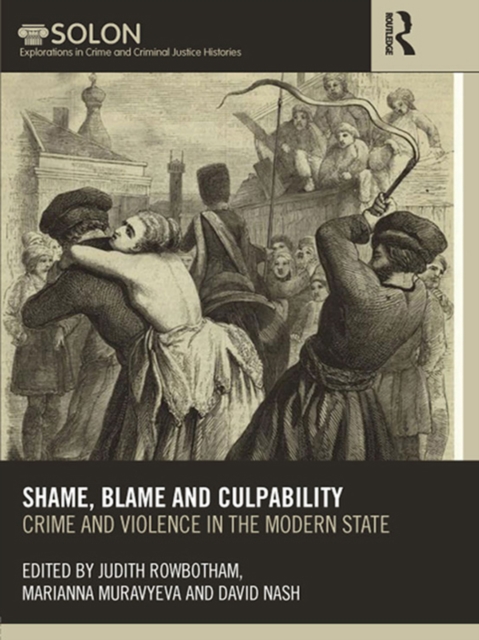
Shame, Blame and Culpability
This ground-breaking collection of research-based chapters addresses the themes of shame, blame and culpability in their historical perspective in the broad area of crime, violence and the modern state, drawing on less familiar territories such as Russia and Greece, not just on material from familiar locations in western Europe. Ranging from the early modern to the late twentieth century, the collection has implications for how we understand punishments imposed by states or the community today.
Shame, blame and culpability is divided into three sections, with a crucial case study part complementing two theoretical parts on shame, and on blame and culpability; exploring the continuance of shaming strategies and examining their interaction with and challenge to 'modern' state-sponsored blaming mechanisms, including allocations of culpability. The collection includes chapters on the deviant body, capital punishment and, of particular interest, Russian case studies, which demonstrate the extent to which the Russian, like the Greek, experience need to be seen as part of a wider European whole when examining ideas and themes.
The volume challenges ideas that shame strategies were largely eradicated in post-Enlightenment western states and societies; showing their survival into the twentieth century as a challenge to state dominance over identification of what constituted 'crime' and also over punishment practices. Shame, blame and culpability will be a key text for students and academics in the fields of criminology and crime, gender or European history.
eBook