
Catalogue Search | MBRL


Are you sure you want to remove the book from the shelf?

{{itemTitle}}
218
result(s) for
"Rowe, Peter G"
Sort by:


Metabolism and Urban Design: Insights from the Champs–Elysées, Paris
The urban metabolism concept is crucial for understanding city–environment interactions. Yet, its use in urban design is limited, and the examination of diverse design hypotheses with the potential to influence metabolic activities is seldom undertaken. This research addresses this gap and aims to analyze how the concept of metabolism (1) Can be leveraged by professionals for making urban design hypotheses, and (2) allows for the assessment of each of these hypotheses to reduce adverse environmental impacts and inform urban design decisions. Focusing on Paris’ Champs–Elysées redesign, in collaboration with PCA-STREAM, an urban design and architecture firm, this research employs fieldwork observations, tenant/store owner interviews, and specific metabolic models for water, energy, and materials. The results demonstrate that while redesigning the avenue’s public space potentially impacts the whole Champs–Elysées metabolism, this impact remains relatively limited. Intervening on objects with higher metabolic activities and using more efficient technologies might be more fruitful in terms of adverse environmental impact reduction, at least in this context.
Journal Article

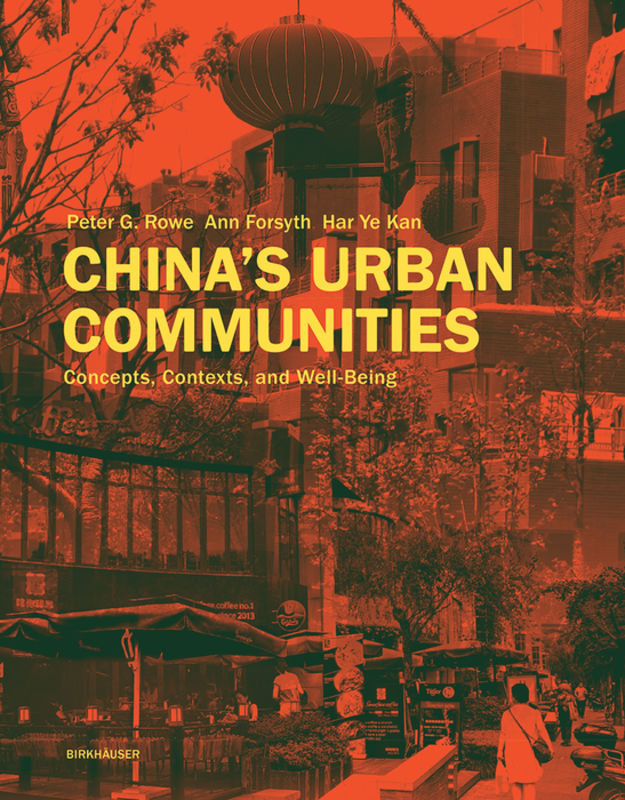
China's Urban Communities
Mit ihrem schnellen Wachstum unterliegen die Städte Chinas einem hohen Entwicklungsdruck. Sie müssen sich anpassen und verwandeln, doch auf welchen Grundlagen und mit welchen Zielen? Das Buch zeichnet die Transformationsprozesse nach, die seit drei Jahrzehnten in etwa 25 Nachbarschaften der Großstädte Beijing, Shanghai, Shenzhen und Suzhou ablaufen. Die Beispiele reichen von zentralen Wohnvierteln bis hin zu städtischen Randlagen, und ihre Darstellung erstreckt sich von der städtebaulichen Planung bis hin zu Untersuchungen der Bewohnerzufriedenheit. Diese vertiefte Analyse urbaner Umgebungen schließt an das frühere Buch von Peter Rowe an, der mit Emergent Architectural Territories in East Asian Cities seinem Ruf als einem der weltbesten Kenner der Städte in Fernost gerecht wurde.
Cities in China are extremely dynamic and experience high pressure to grow, transform and adapt. But in what directions, on what basis and to which goals? The authors and their team have researched the intensive transformation processes of about twenty-five neighborhood communities that were created in Beijing, Shanghai, Shenzhen, and Suzhou in the last 30 years, ranging from inner-city to peripheral areas, starting from planning and leading up to user satisfaction studies. This in-depth overview on neighborhood typology and development in China follows the book Emergent Architectural Territories in East Asian Cities by Peter Rowe, who is among the world’s best scholars on urban transformation in East Asia, together with his colleagues Ann Forsyth and Har Ye Kan.
eBook

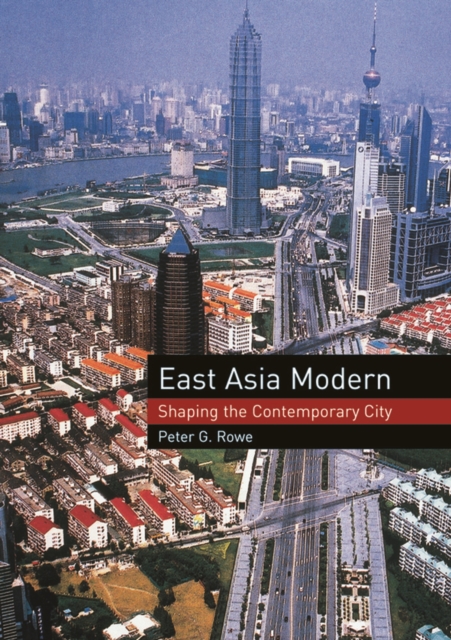
East Asia modern
Peter G. Rowe's East Asia Modern is a timely comparative analysis of urban growth in this rapidly evolving part of the globe.
eBook

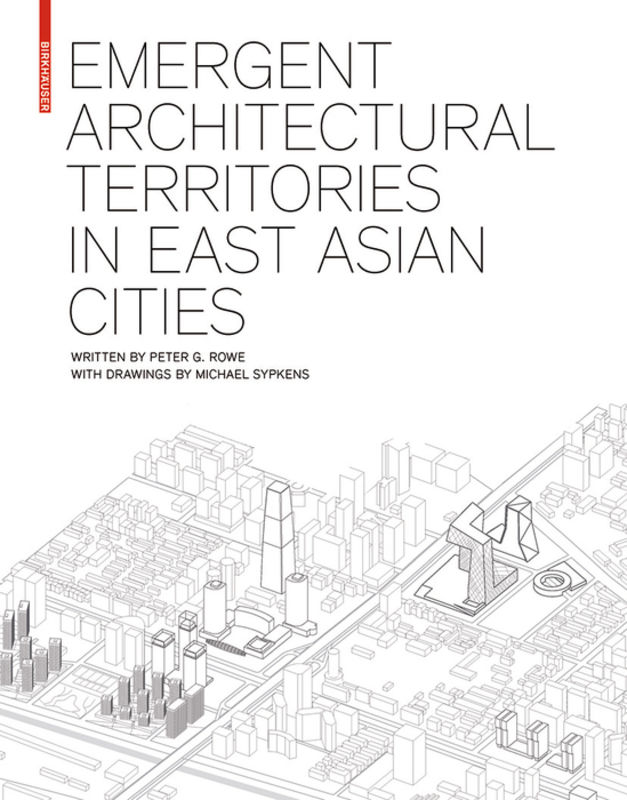
Emergent Architectural Territories in East Asian Cities
This book presents current developments in city planning and architecture in East Asia. It describes the many neighborhoods in which the region's large cities are modernizing or expanding with innovative structures and advanced construction projects. It combines a typology of public structures with an analysis of the compositional principles of urban environments. Thus, it finally connects new developments in city planning with new developments in architecture, and considers examples such as CCTV, Lujiazui, Kansai Airport, Xinyi, Taipei 101, Chek Lap Kok, Cheonggyecheon, Roppongi Hills, Da Shanzi, Shahe, Omotesando, and Marina Bay from a new perspective.And the new perspectives presented here are not just theoretical: some forty full-page bird's eye views prepared especially for this volume show these future urban settings in highly detailed images of breathtaking beauty. The result is a rich portrait of the coming together of global and local influences in non-Western countries. With its systematic approach, this presentation by one of the leading international experts in the field is a reference work on a topic of central importance to the world of construction today.
eBook
