
Catalogue Search | MBRL


Are you sure you want to remove the book from the shelf?

{{itemTitle}}
2,617
result(s) for
"Rowland, Christopher"
Sort by:

Radical prophet : the mystics, subversives and visionaries who strove for heaven on Earth
\"Christianity began with the conviction that the old order was finished. The mysterious, elusive and charismatic figure of Jesus proclaimed that a new era, the Kingdom of God, was dawning. Yet despite its success, and the conversion of the empire which had executed its founder, the religion he inspired was soon domesticated, its counter-cultural radicalism tamed, as the Church attempted to control both its doctrines and its followers. Christopher Rowland here shows that this was never the whole story. At the margins, around the edges, sometimes off the religious map, the apocalyptic flame of the New Testament continued to burn. In 1649 the Diggers occupied St George's Hill to put the egalitarianism of Christ into practice. 'You must break these men or they will break you', Oliver Cromwell declared of the 'lunaticks'. This book argues that such revolutionaries had divined the true intent of the enigma who threw over the tables of the money-changers: to summon a new epoch - strange, iconoclastic, uncomfortable and otherworldly. It gives full weight to a remarkable strain of radical religion that simply refuses to die.\"--Jacket flap.
Book

Chondrogenesis of Adult Stem Cells from Adipose Tissue and Bone Marrow: Induction by Growth Factors and Cartilage-Derived Matrix
Objectives:
Adipose-derived stem cells (ASCs) and bone marrow–derived mesenchymal stem cells (MSCs) are multipotent adult stem cells with potential for use in cartilage tissue engineering. We hypothesized that these cells show distinct responses to different chondrogenic culture conditions and extracellular matrices, illustrating important differences between cell types.
Methods:
Human ASCs and MSCs were chondrogenically differentiated in alginate beads or a novel scaffold of reconstituted native cartilage–derived matrix with a range of growth factors, including dexamethasone, transforming growth factor β3, and bone morphogenetic protein 6. Constructs were analyzed for gene expression and matrix synthesis.
Results:
Chondrogenic growth factors induced a chondrocytic phenotype in both ASCs and MSCs in alginate beads or cartilage-derived matrix. MSCs demonstrated enhanced type II collagen gene expression and matrix synthesis as well as a greater propensity for the hypertrophic chondrocyte phenotype. ASCs had higher upregulation of aggrecan gene expression in response to bone morphogenetic protein 6 (857-fold), while MSCs responded more favorably to transforming growth factor β3 (573-fold increase).
Conclusions:
ASCs and MSCs are distinct cell types as illustrated by their unique responses to growth factor–based chondrogenic induction. This chondrogenic induction is affected by the composition of the scaffold and the presence of serum.
Journal Article

Urban allies : ten brand-new collaborative stories
These collaborative stories unite two beloved characters from two different urban fantasy series in each of ten electrifying new stories.
Book

Meniscus-Derived Matrix Scaffolds Promote the Integrative Repair of Meniscal Defects
Meniscal tears have a poor healing capacity, and damage to the meniscus is associated with significant pain, disability, and progressive degenerative changes in the knee joint that lead to osteoarthritis. Therefore, strategies to promote meniscus repair and improve meniscus function are needed. The objective of this study was to generate porcine meniscus-derived matrix (MDM) scaffolds and test their effectiveness in promoting meniscus repair via migration of endogenous meniscus cells from the surrounding meniscus or exogenously seeded human bone marrow-derived mesenchymal stem cells (MSCs). Both endogenous meniscal cells and MSCs infiltrated the MDM scaffolds. In the absence of exogenous cells, the 8% MDM scaffolds promoted the integrative repair of an
in vitro
meniscal defect. Dehydrothermal crosslinking and concentration of the MDM influenced the biochemical content and shear strength of repair, demonstrating that the MDM can be tailored to promote tissue repair. These findings indicate that native meniscus cells can enhance meniscus healing if a scaffold is provided that promotes cellular infiltration and tissue growth. The high affinity of cells for the MDM and the ability to remodel the scaffold reveals the potential of MDM to integrate with native meniscal tissue to promote long-term repair without necessarily requiring exogenous cells.
Journal Article

Benefits of testing for nontested information: Retrieval-induced facilitation of episodically bound material
Testing is a powerful means to boost the retention of information. The extent to which the benefits of testing generalize to nontested information, however, is not clear. In three experiments, we found that completing cued-recall tests for a subset of studied materials enhanced retention for the specific information tested, as well as for associated, nontested information during later free-recall testing. In Experiment
1
, this generalized benefit was revealed for lists of category–exemplar pairs. Experiment
2
extended the effect to unrelated words, suggesting that retrieval can enhance later free recall of nontested information that is bound solely through episodic context. In Experiment
3
, we manipulated the format of the final test and found facilitation in free-recall, but not in cued-recall, testing. The results suggest that testing may facilitate later free recall in part by enhancing access to information that is present during a prior temporal or list context. More generally, these findings suggest that retrieval-induced facilitation extends to a broader range of conditions than has previously been suggested, and they further motivate the adoption of testing as a practical and effective learning tool.
Journal Article

Triple Synchronous Primary Melanomas in a 77-Year-Old Sea Captain: Importance of Total Skin Examination
When it comes to skin diseases, melanomas are considered the most lethal. Triple synchronous primary melanomas (SPMs) are rare. Here we have reported a case of a 77-year-old white male with three SPMs. The patient presented with a nodular melanoma in the upper left back; total skin examination (TSE) revealed additional melanomas in the right retroauricular region and on the left arm. The patient was unaware of these two additional melanomas that were only found because of the routine TSE, and the index lesion focused examination would have missed both. We advocate that TSE should be practised routinely by all dermatologists for all new patients, and also, from time to time in patients attending long-term follow-up appointments. Early diagnosis means simpler treatments and more favourable outcomes.
Journal Article
Paired Ear Creases of the Helix (PECH): A Possible Physical Sign
Diagonal ear lobe creases, often known as Frank's sign, are a folding in the skin of the ear lobe. Many studies have found an association between diagonal ear lobe creases and coronary artery disease. To our knowledge, this is the first report of paired ear creases of the helix. They may have similar relevance to cardiovascular disease as the diagonal ear lobe creases. We report the case of a 68-year-old South Asian man with coronary artery disease and a diagonal ear lobe crease. On closer inspection of the auricle, he also had ear creases on the helix on the same side. We postulate that diagonal ear lobe creases and paired ear creases of the helix are formed due to pressure during sleep on a hard surface. The pathophysiological association of these creases to coronary artery disease and metabolic syndrome are not well understood. We report a new possible sign: paired ear creases of the helix which may have similar clinical significance as the diagonal ear lobe crease with respect to cardiovascular disease.
Journal Article

Testing effects in mixed- versus pure-list designs
In the present study, we investigated the role of list composition in the testing effect. Across three experiments, participants learned items through study and initial testing or study and restudy. List composition was manipulated, such that tested and restudied items appeared either intermixed in the same lists (
mixed
lists) or in separate lists (
pure
lists). In Experiment 1, half of the participants received mixed lists and half received pure lists. In Experiment 2, all participants were given both mixed and pure lists. Experiment 3 followed Erlebacher’s (
Psychological Bulletin
,
84
, 212–219,
1977
) method, such that mixed lists, pure tested lists, and pure restudied lists were given to independent groups. Across all three experiments, the final recall results revealed significant testing effects for both mixed and pure lists, with no reliable difference in the magnitude of the testing advantage across list designs. This finding suggests that the testing effect is not subject to a key boundary condition—list design—that impacts other memory phenomena, including the generation effect.
Journal Article
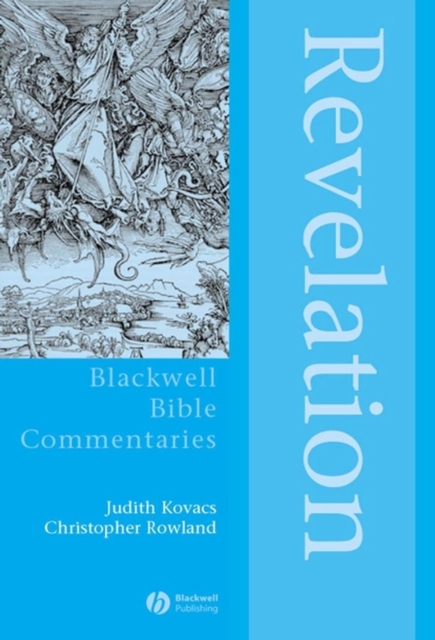
Revelation
This ground-breaking commentary on The Revelation to John (the Apocalypse) reveals its far-reaching influence on society and culture, and its impact on the church through the ages. - Explores the far-reaching influence of the Apocalypse on society and culture. - Shows the book's impact on the Christian church through the ages. - Looks at interpretations of the Apocalypse by theologians, ranging from Augustine to late twentieth century liberation theologians. - Considers the book's effects on writers, artists, musicians, political figures, visionaries, and others, including Dante, Hildegard of Bingen, Milton, Newton, the English Civil war radicals, Turner, Blake, Handel, and Franz Schmidt. - Provides access to material not readily available elsewhere. - Will appeal to students and scholars across a wide range of disciplines, as well as to general readers.
eBook

The Blackwell Companion to the Bible in English Literature
This Companion explores the Bible's role and influence on individual writers, whilst tracing the key developments of Biblical themes and literary theory through the ages.An ambitious overview of the Bible's impact on English literature - as arguably the most powerful work of literature in history - from the medieval period through.
eBook