
Catalogue Search | MBRL


Are you sure you want to remove the book from the shelf?

{{itemTitle}}
6
result(s) for
"Roy, H. K., author"
Sort by:

American spy : wry reflections on my life in the CIA
\"In a series of lively vignettes, a former CIA operations officer reflects on his life as a spy, covert ops, war zones, and the importance of intelligence for national security\"-- Provided by publisher.
Book
Applied Christian ethics
Applied Christian Ethics addresses selected themes in Christian social ethics.The book is divided in three parts.In the first section, \"Foundation,\" several contributors reveal their Christian realist roots and discuss the prophetic origins and multifarious agenda of social ethics.
eBook

Kirkpatrick's four levels of training evaluation
Don Kirkpatrick's groundbreaking Four Levels of Training Evaluation is the most widely used training evaluation model in the world. Ask any group of trainers whether they rely on the model's four levels Reaction, Learning, Behavior, and Results in their practice, and you'll get an enthusiastic affirmation. But how many variations of Kirkpatrick are in use today? And what number of misassumptions and faulty practices have crept in over 60 years? The reality is: Quite a few. James and Wendy Kirkpatrick have written Kirkpatrick's Four Levels of Training Evaluation to set the record straight. Delve into James and Wendy's new findings that, together with Don Kirkpatrick's work, create the New World Kirkpatrick Model, a powerful training evaluation methodology that melds people with metrics. In Kirkpatrick's Four Levels of Training Evaluation, discover a comprehensive blueprint for implementing the model in a way that truly maximizes your business's results. Using these innovative concepts, principles, techniques, and case studies, you can better train people, improve the way you work, and, ultimately, help your organization meet its most crucial goals. (Verlag).
eBook

Air Pollution and Health
This 10th volume in the Issues in Environmental Science and Technology series provides a comprehensive review of air pollution and health that complements the 9th volume covering air quality management. Dealing with the common gaseous and particulate air pollutants, including chemical carcinogens, this volume reviews the epidemiological and exposure chamber study research and considers mechanistic studies in the case of particulate matter.
eBook

Environmental Impact of Power Generation
In today's automated world, the need for economic generation of power is of vital importance. However, the industry is commonly perceived as being responsible for pollution of the atmosphere and contamination of land and water. Encompassing areas as diverse as current performance standards, the use of nuclear fuel and a historical overview of electricity supply, this 11th volume of Issues in Environmental Science and Technology aims to contribute to the public understanding of science in this important area. The emotive issues of air pollution and the ecological effects of overhead power lines are tackled, along with energy efficiency and conservation.
eBook
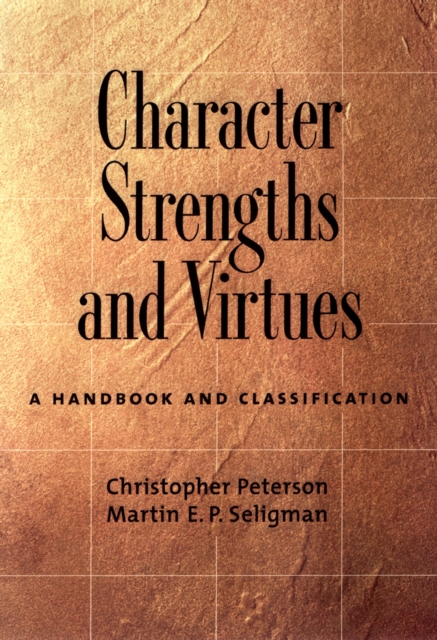
Character strengths and virtues : a handbook and classification
This groundbreaking handbook of human strengths and virtues is the first progress report from a prestigious group of researchers in the Values in Action Classification Project, which has undertaken a systematic classification and measurement of universal strengths and virtues. This landmark work makes possible for the first time a science of human strengths that goes beyond armchair philosophy and political science. The handbook begins with the background of the VIA classification scheme and defines terms before describing in thorough detail the current state of knowledge with respect to each of the 24 character strengths in the classification. Addressing issues of assessment and measurement, practical applications, and directions for future research, this work will demand the attention of any psychologist who is interested in positive psychology and its relevance to clinical, personality, and social psychology.
eBook