
Catalogue Search | MBRL


Are you sure you want to remove the book from the shelf?

{{itemTitle}}
369
result(s) for
"Rubenstein, Joshua"
Sort by:

The last days of Stalin
\"Joshua Rubenstein's riveting account takes us back to the second half of 1952 when no one could foresee an end to Joseph Stalin's murderous regime. He was poised to challenge the newly elected U.S. President Dwight Eisenhower with armed force, and was also broadening a vicious campaign against Soviet Jews. Stalin's sudden collapse and death in March 1953 was as dramatic and mysterious as his life. It is no overstatement to say that his passing marked a major turning point in the twentieth century. The Last Days of Stalin is an engaging, briskly told account of the dictator's final active months, the vigil at his deathbed, and the unfolding of Soviet and international events in the months after his death. Rubenstein throws fresh light on: the devious plotting of Beria, Malenkov, Khrushchev, and other 'comrades in arms' who well understood the significance of the dictator's impending death; the witness-documented events of his death as compared to official published versions; Stalin's rumored plans to forcibly exile Soviet Jews; the responses of Eisenhower and Secretary of State Dulles to the Kremlin's conciliatory gestures after Stalin's death; and the momentous repercussions when Stalin's regime of terror was cut short\"-- Provided by publisher.
BOOK

Protecting the right of privacy
Abstract
The backdrop to encroachments on privacy is the end of secrecy from taxing authorities, combating financial crimes, concerted tax enforcement efforts and the 2008 world-wide financial crisis. In response to the financial crisis, governments have enacted information exchange agreements, FATCA and CRS. While CRS may prove the most obvious threats to privacy, other equally real threats to privacy are encroachments on attorney–client privilege, the irresponsible use of “sham” trusts, governmental efforts at trust registration, and the internet itself. There are, however, deeply imbedded in our legal systems, many protections of privacy, such as: taxpayer secrecy by taxing authorities, the ability to seal court proceedings, causes of action for invasions of privacy, protection of patents, copyrights, trademarks and trade secrets, and the right of publicity, particularly after death.
Journal Article
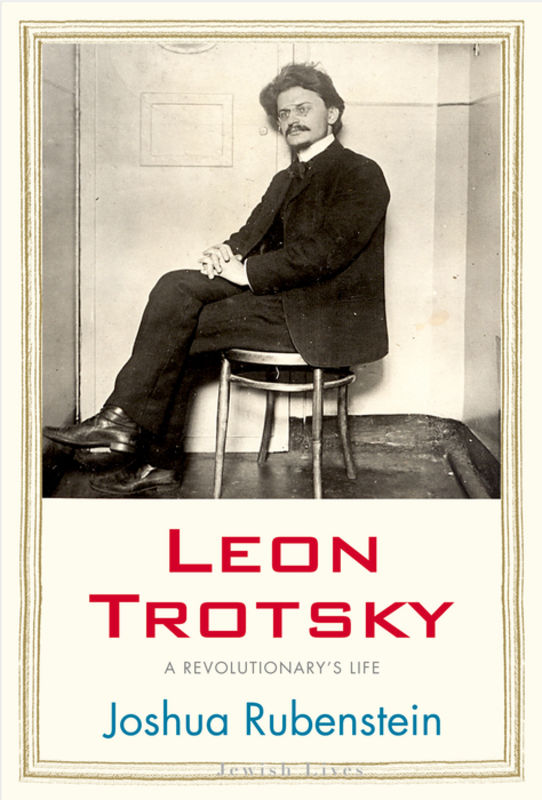
Leon Trotsky
Born Lev Davidovich Bronstein in southern Ukraine, Trotsky was both a world-class intellectual and a man capable of the most narrow-minded ideological dogmatism. He was an effective military strategist and an adept diplomat, who staked the fate of the Bolshevik revolution on the meager foundation of a Europe-wide Communist upheaval. He was a master politician who played his cards badly in the momentous struggle for power against Stalin in the 1920s. And he was an assimilated, indifferent Jew who was among the first to foresee that Hitler's triumph would mean disaster for his fellow European Jews, and that Stalin would attempt to forge an alliance with Hitler if Soviet overtures to the Western democracies failed.Here, Trotsky emerges as a brilliant and brilliantly flawed man. Rubenstein offers us a Trotsky who is mentally acute and impatient with others, one of the finest students of contemporary politics who refused to engage in the nitty-gritty of party organization in the 1920s, when Stalin was maneuvering, inexorably, toward Trotsky's own political oblivion.As Joshua Rubenstein writes in his preface, \"Leon Trotsky haunts our historical memory. A preeminent revolutionary figure and a masterful writer, Trotsky led an upheaval that helped to define the contours of twentieth-century politics.\" In this lucid and judicious evocation of Trotsky's life, Joshua Rubenstein gives us an interpretation for the twenty-first century.
eBook
Planning for life after death: laws of succession v the new biology
Abstract
Most of us are accustomed to having a relatively broad ability to control the disposition of our property following our deaths. It comes as a surprise to know how little ability we have to control the disposition of ourselves, and the uses to which we can be put, following our deaths. This article examines the ability to control burial and the disposition of body parts, the posthumous use of our genetic material, inheritance by posthumously procreated individuals, and exhumation for the purpose of genetic testing. It will also offer practical suggestions concerning what can be done to address the fact that medical science now permits the class of one’s children not to be closed by one’s death. This article is based on an abridged version of the presentation given by Joshua Rubenstein at the TIAETL conference in Sydney, Australia, in May 2016.
Journal Article


The KGB File of Andrei Sakharov
Andrei Sakharov (1921-1989), a brilliant physicist and the principal designer of the Soviet hydrogen bomb, later became a human rights activist and-as a result-a source of profound irritation to the Kremlin. This book publishes for the first time ever KGB files on Sakharov that became available during Boris Yeltsin's presidency. The documents reveal the untold story of KGB surveillance of Sakharov from 1968 until his death in 1989 and of the regime's efforts to intimidate and silence him. The disturbing archival materials show the KGB to have had a profound lack of understanding of the spiritual and moral nature of the human rights movement and of Sakharov's role as one of its leading figures.
eBook

Memoir of a Gulag Actress
In an abridged translation that retains the grace and passion of the original, Klots and Ufberg present the stunning memoir of a young woman who became an actress in the Gulag. Tamara Petkevich had a relatively privileged childhood in the beautiful, impoverished Petrograd of the Soviet regime's early years, but when her father—a fervent believer in the Communist ideal—was arrested, 17-year-old Tamara was branded a \"daughter of the enemy of the people.\" She kept up a search for her father while struggling to support her mother and two sisters, finish school, and enter university. Shortly before the Russian outbreak of World War II, Petkevich was forced to quit school and, against her better judgment, she married an exiled man whom she had met in the lines at the information bureau of the NKVD (People's Commissariat of Internal Affairs). Her mother and one sister perished in the Nazi siege of Leningrad, and Petkevich was herself arrested. With cinematic detail, Petkevich relates her attempts to defend herself against absurd charges of having a connection to the Leningrad terrorist center, counter-revolutionary propaganda, and anti-Semitism that resulted in a sentence of seven years' hard labor in the Gulag. While Petkevich became a professional actress in her own right years after her release from the Gulag, she learned her craft on the stages of the camps scattered across the northern Komi Republic. The existence of prisoner theaters and troupes of political prisoners such as the one Petkevich joined is a little-known fact of Gulag life. Petkevich's depiction not only provides a unique firsthand account of this world within a world but also testifies to the power of art to literally save lives. As Petkevich moves from one form of hardship to another she retains her desire to live and her ability to love. More than a firsthand record of atrocities committed in Stalinist Russia, Memoir of a Gulag Actress is an invaluable source of information on the daily life and culture of the Soviet Union at the time. Russian literature about the Gulag remains vastly underepresented in the United States, and Petkevich's unforgettable memoir will go a long way toward filling this gap. Supplemented with photographs from the author's personal archive, Petkevich's story will be of great interest to general readers, while providing an important resource for historians, political scientists, and students of Russian culture and history.
eBook