
Catalogue Search | MBRL


Are you sure you want to remove the book from the shelf?

{{itemTitle}}
5
result(s) for
"Russell, Anna, author"
Sort by:

What if?
\"Josh Baker isn't sure why his brain tells him to do things that other people don't need to do: checking his locker again and again, counting cracks in ceilings, and always needing to finish a song, for starters. He is a talented drummer, a math genius, and he knows everything about rock and roll. Yet, he knows his problems have the power to hurt his family and make him fail at school. When Josh is diagnosed with OCD, it's a blessing and a curse. Can he overcome his thoughts, or will they break him?\"--Back cover.
Book

Films on Ice
The first book to address the vast diversity of Northern circumpolar cinemas from a transnational perspective, Films on Ice: Cinemas of the Arctic presents the region as one of great and previously overlooked cinematic diversity.
eBook


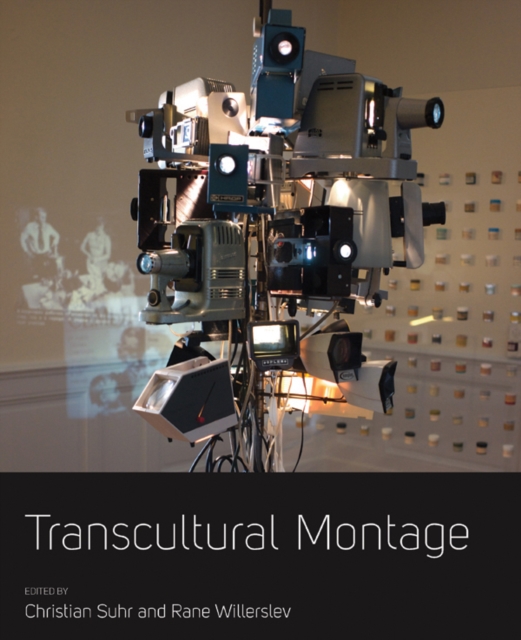
Transcultural montage
The disruptive power of montage has often been regarded as a threat to scholarly representations of the social world. This volume asserts the opposite: that the destabilization of commonsense perception is the very precondition for transcending social and cultural categories. The contributors-anthropologists, filmmakers, photographers, and curators-explore the use of montage as a heuristic tool for comparative analysis in anthropological writing, film, and exhibition making. Exploring phenomena such as human perception, memory, visuality, ritual, time, and globalization, they apply montage to restructure our basic understanding of social reality. Furthermore, as George E. Marcus suggests in the afterword, the power of montage that this volume exposes lies in its ability to open the very \"combustion chamber\" of social theory by juxtaposing one's claims to knowledge with the path undertaken to arrive at those claims.
eBook