
Catalogue Search | MBRL


Are you sure you want to remove the book from the shelf?

{{itemTitle}}
22,428
result(s) for
"Russell, M."
Sort by:

The joy of search : a Google insider's guide to going beyond the basics
This title explores how to be a great online searcher, demonstrated with step-by-step searches for answers to a series of intriguing questions (for example, 'Is that plant poisonous?'). We all know how to look up something online by typing words into a search engine. We do this so often that we have made the most famous search engine a verb: we Google it - 'Japan population' or 'Nobel Peace Prize' or 'poison ivy' or whatever we want to know. But knowing how to Google something doesn't make us search experts; there's much more we can do to access the massive collective knowledge available online. In 'The Joy of Search', Daniel Russell shows us how to be great online researchers. We don't have to be computer geeks or a scholar searching out obscure facts; we just need to know some basic methods.
Book

Effects of screentime on the health and well-being of children and adolescents: a systematic review of reviews
ObjectivesTo systematically examine the evidence of harms and benefits relating to time spent on screens for children and young people’s (CYP) health and well-being, to inform policy.MethodsSystematic review of reviews undertaken to answer the question ‘What is the evidence for health and well-being effects of screentime in children and adolescents (CYP)?’ Electronic databases were searched for systematic reviews in February 2018. Eligible reviews reported associations between time on screens (screentime; any type) and any health/well-being outcome in CYP. Quality of reviews was assessed and strength of evidence across reviews evaluated.Results13 reviews were identified (1 high quality, 9 medium and 3 low quality). 6 addressed body composition; 3 diet/energy intake; 7 mental health; 4 cardiovascular risk; 4 for fitness; 3 for sleep; 1 pain; 1 asthma. We found moderately strong evidence for associations between screentime and greater obesity/adiposity and higher depressive symptoms; moderate evidence for an association between screentime and higher energy intake, less healthy diet quality and poorer quality of life. There was weak evidence for associations of screentime with behaviour problems, anxiety, hyperactivity and inattention, poorer self-esteem, poorer well-being and poorer psychosocial health, metabolic syndrome, poorer cardiorespiratory fitness, poorer cognitive development and lower educational attainments and poor sleep outcomes. There was no or insufficient evidence for an association of screentime with eating disorders or suicidal ideation, individual cardiovascular risk factors, asthma prevalence or pain. Evidence for threshold effects was weak. We found weak evidence that small amounts of daily screen use is not harmful and may have some benefits.ConclusionsThere is evidence that higher levels of screentime is associated with a variety of health harms for CYP, with evidence strongest for adiposity, unhealthy diet, depressive symptoms and quality of life. Evidence to guide policy on safe CYP screentime exposure is limited.PROSPERO registration numberCRD42018089483.
Journal Article


Oil palm in the 2020s and beyond: challenges and solutions
Background
Oil palm,
Elaeis guineensis
, is by far the most important global oil crop, supplying about 40% of all traded vegetable oil. Palm oils are key dietary components consumed daily by over three billion people, mostly in Asia, and also have a wide range of important non-food uses including in cleansing and sanitizing products.
Main body
Oil palm is a perennial crop with a > 25-year life cycle and an exceptionally low land footprint compared to annual oilseed crops. Oil palm crops globally produce an annual 81 million tonnes (Mt) of oil from about 19 million hectares (Mha). In contrast, the second and third largest vegetable oil crops, soybean and rapeseed, yield a combined 84 Mt oil but occupy over 163 Mha of increasingly scarce arable land. The oil palm crop system faces many challenges in the 2020s. These include increasing incidence of new and existing pests/diseases and a general lack of climatic resilience, especially relating to elevated temperatures and increasingly erratic rainfall patterns, plus downstream issues relating to supply chains and consumer sentiment. This review surveys the oil palm sector in the 2020s and beyond, its major challenges and options for future progress.
Conclusions
Oil palm crop production faces many future challenges, including emerging threats from climate change and pests and diseases. The inevitability of climate change requires more effective international collaboration for its reduction. New breeding and management approaches are providing the promise of improvements, such as much higher yielding varieties, improved oil profiles, enhanced disease resistance, and greater climatic resilience.
Journal Article

Dear Helen : wartime letters from a Londoner to her American pen pal
\"In letters written between 1937 and 1950 to her American pen pal, a working-class Londoner offers accounts of the Blitz and of wartime deprivations and postwar austerity, interweaving descriptions of terror with talk about theater, clothes, and family outings, providing a unique view of daily life during World War II\"--Provided by publisher.
Book

Reconfigurable system for automated optimization of diverse chemical reactions
Chemists spend a great deal of time tweaking the conditions of known reactions. Small changes to temperature and concentration can have a big influence over product yield. Bédard et al. present a flow-based reaction platform that carries out this laborious task automatically. By using feedback from integrated analytics, the system converges on optimal conditions that can then be applied with high precision afterward. A series of modules with heating, cooling, mixing, and photochemical capabilities could be configured for a broad range of reactions. These include homogeneous and heterogeneous palladium-catalyzed cross-coupling, reductive amination, and the generation of sensitive intermediates under an inert atmosphere. Science , this issue p. 1220 A modular flow-based system uses real-time feedback to optimize conditions for reactions widely used in organic chemistry. Chemical synthesis generally requires labor-intensive, sometimes tedious trial-and-error optimization of reaction conditions. Here, we describe a plug-and-play, continuous-flow chemical synthesis system that mitigates this challenge with an integrated combination of hardware, software, and analytics. The system software controls the user-selected reagents and unit operations (reactors and separators), processes reaction analytics (high-performance liquid chromatography, mass spectrometry, vibrational spectroscopy), and conducts automated optimizations. The capabilities of this system are demonstrated in high-yielding implementations of C-C and C-N cross-coupling, olefination, reductive amination, nucleophilic aromatic substitution (S N Ar), photoredox catalysis, and a multistep sequence. The graphical user interface enables users to initiate optimizations, monitor progress remotely, and analyze results. Subsequent users of an optimized procedure need only download an electronic file, comparable to a smartphone application, to implement the protocol on their own apparatus.
Journal Article

القضاء على الملل وتوليد الرغبة في التعلم
الملل وعدم الرغبة في التعلم من أكبر مشكلات التي تعيق العملية التعليمية وبروز السلوكيات العدوانية وانخفاض مستوى التحصيل لدى الطللاب أحد نتائج الملل كيف يمكن القضاء على الملل لدى الطلاب وكيف نولد لديهم الرغبة في التعلم كيف نشد انتباه الطلاب ونعلمهم التعامل مع التعب ونخلق لديهم الرغبة في التعلم وكيف نوفر لهم مناخا ملائما.
Book

Short-term outcomes of pubertal suppression in a selected cohort of 12 to 15 year old young people with persistent gender dysphoria in the UK
In adolescents with severe and persistent gender dysphoria (GD), gonadotropin releasing hormone analogues (GnRHa) are used from early/middle puberty with the aim of delaying irreversible and unwanted pubertal body changes. Evidence of outcomes of pubertal suppression in GD is limited.
We undertook an uncontrolled prospective observational study of GnRHa as monotherapy in 44 12-15 year olds with persistent and severe GD. Prespecified analyses were limited to key outcomes: bone mineral content (BMC) and bone mineral density (BMD); Child Behaviour CheckList (CBCL) total t-score; Youth Self-Report (YSR) total t-score; CBCL and YSR self-harm indices; at 12, 24 and 36 months. Semistructured interviews were conducted on GnRHa.
44 patients had data at 12 months follow-up, 24 at 24 months and 14 at 36 months. All had normal karyotype and endocrinology consistent with birth-registered sex. All achieved suppression of gonadotropins by 6 months. At the end of the study one ceased GnRHa and 43 (98%) elected to start cross-sex hormones. There was no change from baseline in spine BMD at 12 months nor in hip BMD at 24 and 36 months, but at 24 months lumbar spine BMC and BMD were higher than at baseline (BMC +6.0 (95% CI: 4.0, 7.9); BMD +0.05 (0.03, 0.07)). There were no changes from baseline to 12 or 24 months in CBCL or YSR total t-scores or for CBCL or YSR self-harm indices, nor for CBCL total t-score or self-harm index at 36 months. Most participants reported positive or a mixture of positive and negative life changes on GnRHa. Anticipated adverse events were common.
Overall patient experience of changes on GnRHa treatment was positive. We identified no changes in psychological function. Changes in BMD were consistent with suppression of growth. Larger and longer-term prospective studies using a range of designs are needed to more fully quantify the benefits and harms of pubertal suppression in GD.
Journal Article
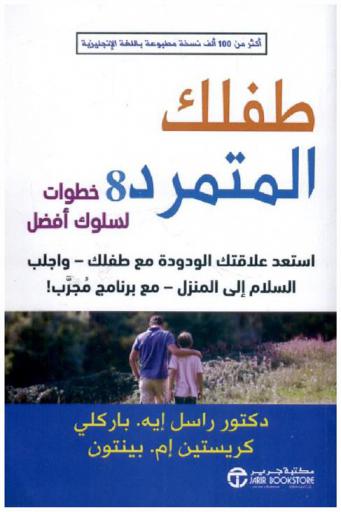
طفلك المتمرد : 8 خطوات لسلوك أفضل
يمثل هذا الكتاب نتاج خبرة أكثر من 30 عاما من الممارسة السريرية، والأبحاث التي تناولت طبيعة المشكلات التي تتعلق بالسلوك المضطرب لدى الأطفال، وأسبابها، وطرق علاجها، خاصة تلك المشكلات التي تتعلق بالتهور وفرط النشاط وعدم الانتباه والتمرد. لقد اعتمدت كذلك على آلاف الدراسات العلمية التي تم نشرها، التي تركز على هذه المشكلات السلوكية، وعلى طرق علاجها على النحو الموضح في كتب الطب النفسي وعلم النفس، والمنهج المذكور في هذا الكتاب والمتبع لتنظيم سلوك الطفل هو واحد من أكثر المناهج المستخدمة والفعالة في أمريكا الشمالية لإدارة السلوك المضطرب والمتمرد لدى الأطفال.
Book

Global patterns of mortality in young people: a systematic analysis of population health data
Pronounced changes in patterns of health take place in adolescence and young adulthood, but the effects on mortality patterns worldwide have not been reported. We analysed worldwide rates and patterns of mortality between early adolescence and young adulthood.
We obtained data from the 2004 Global Burden of Disease Study, and used all-cause mortality estimates developed for the 2006
World Health Report, with adjustments for revisions in death from HIV/AIDS and from war and natural disasters. Data for cause of death were derived from national vital registration when available; for other countries we used sample registration data, verbal autopsy, and disease surveillance data to model causes of death. Worldwide rates and patterns of mortality were investigated by WHO region, income status, and cause in age-groups of 10–14 years, 15–19 years, and 20–24 years.
2·6 million deaths occurred in people aged 10–24 years in 2004. 2·56 million (97%) of these deaths were in low-income and middle-income countries, and almost two thirds (1·67 million) were in sub-Saharan Africa and southeast Asia. Pronounced rises in mortality rates were recorded from early adolescence (10–14 years) to young adulthood (20–24 years), but reasons varied by region and sex. Maternal conditions were a leading cause of female deaths at 15%. HIV/AIDS and tuberculosis contributed to 11% of deaths. Traffic accidents were the largest cause and accounted for 14% of male and 5% of female deaths. Other prominent causes included violence (12% of male deaths) and suicide (6% of all deaths).
Present global priorities for adolescent health policy, which focus on HIV/AIDS and maternal mortality, are an important but insufficient response to prevent mortality in an age-group in which more than two in five deaths are due to intentional and unintentional injuries.
WHO and National Health and Medical Research Council.
Journal Article