
Catalogue Search | MBRL


Are you sure you want to remove the book from the shelf?

{{itemTitle}}
832
result(s) for
"Russell, Mike"
Sort by:


RNAi screen of the protein kinome identifies checkpoint kinase 1 (CHK1) as a therapeutic target in neuroblastoma
Neuroblastoma is a childhood cancer that is often fatal despite intense multimodality therapy. In an effort to identify therapeutic targets for this disease, we performed a comprehensive loss-of-function screen of the protein kinome. Thirty kinases showed significant cellular cytotoxicity when depleted, with loss of the cell cycle checkpoint kinase 1 (CHK1/CHEK1) being the most potent. CHK1 mRNA expression was higher in MYC-Neuroblastoma-related (MYCN)-amplified (P < 0.0001) and high-risk (P = 0.03) tumors. Western blotting revealed that CHK1 was constitutively phosphorylated at the ataxia telangiectasia response kinase target site Ser345 and the autophosphorylation site Ser296 in neuroblastoma cell lines. This pattern was also seen in six of eight high-risk primary tumors but not in control nonneuroblastoma cell lines or in seven of eight low-risk primary tumors. Neuroblastoma cells were sensitive to the two CHK1 inhibitors SB21807 and TCS2312, with median IC₅₀ values of 564 nM and 548 nM, respectively. In contrast, the control lines had high micromolar IC₅₀ values, indicating a strong correlation between CHK1 phosphorylation and CHK1 inhibitor sensitivity (P = 0.0004). Furthermore, cell cycle analysis revealed that CHK1 inhibition in neuroblastoma cells caused apoptosis during S-phase, consistent with its role in replication fork progression. CHK1 inhibitor sensitivity correlated with total MYC(N) protein levels, and inducing MYCN in retinal pigmented epithelial cells resulted in CHK1 phosphorylation, which caused growth inhibition when inhibited. These data show the power of a functional RNAi screen to identify tractable therapeutical targets in neuroblastoma and support CHK1 inhibition strategies in this disease.
Journal Article

Batman noir : Gotham by gaslight
\"Now presented in ... black-and-white pencils and inks, it's Batman vs. Jack the Ripper in Victorian-era London ... [in which] Bruce Wayne is operating as the bat-garbed vigilante, the Batman, who is feared by the guilty and the innocent alike\"-- Provided by publisher.
Book

The functional variant rs34330 of CDKN1B is associated with risk of neuroblastoma
The genetic aetiology of sporadic neuroblastoma is still largely unknown. We have identified diverse neuroblastoma susceptibility loci by genomewide association studies (GWASs); however, additional SNPs that likely contribute to neuroblastoma susceptibility prompted this investigation for identification of additional variants that are likely hidden among signals discarded by the multiple testing corrections used in the analysis of genomewide data. There is evidence suggesting the CDKN1B, coding for the cycle inhibitor p27Kip1, is involved in neuroblastoma. We thus assess whether genetic variants of CDKN1B are associated with neuroblastoma. We imputed all possible genotypes across CDKN1B locus on a discovery case series of 2101 neuroblastoma patients and 4202 genetically matched controls of European ancestry. The most significantly associated rs34330 was analysed in an independent Italian cohort of 311 cases and 709 controls. In vitro functional analysis was carried out in HEK293T and in neuroblastoma cell line SHEP‐2, both transfected with pGL3‐CDKN1B‐CC or pGL3‐CDKN1B‐TT constructs. We identified an association of the rs34330 T allele (‐79C/T) with the neuroblastoma risk (Pcombined = 0.002; OR = 1.17). The risk allele (T) of this single nucleotide polymorphism led to a lower transcription rate in cells transfected with a luciferase reporter driven by the polymorphic p27Kip1 promoter (P < 0.05). Three independent sets of neuroblastoma tumours carrying ‐79TT genotype showed a tendency towards lower CDKN1B mRNA levels. Our study shows that a functional variant, associated with a reduced CDKN1B gene transcription, influences neuroblastoma susceptibility.
Journal Article


Habitat loss on seasonal migratory range imperils an endangered ungulate
1. Endangered species policies and their associated recovery documents and management actions do not always sufficiently address the importance of migratory behaviour and seasonal ranges for imperilled populations. 2. Using a telemetry location dataset spanning 1981–2018, we tested for changes in prevalence of migratory tactics (resident, migrant) over time, switching between tactics, shifts in seasonal space use including migration corridors, and survival consequences of migrant and resident tactics for 237 adult female endangered woodland mountain caribou in one population in western Canada. 3. Over more than three decades, the proportion of individuals displaying annual migration to the low elevation forested winter range declined from nearly 100%–38%. Correspondingly, there was a strong switch away from being migrant to being year‐round residents at high elevation. 4. These behavioural changes corresponded to abandonment of low elevation winter ranges in association with increasing levels of anthropogenic land uses, including forestry and oil and gas developments. Furthermore, there were no identifiable migration corridors to target for migratory route protection. 5. These shifts translated to lower survival rates, particularly for caribou demonstrating resident tactics, consistent with recent declines of the caribou population. That migrants switched to residency in their largely undisturbed summer range, despite lower survival, indicates maladaptive habitat selection consistent with recent patterns of mountain caribou extirpations. 6. Globally, endangered species policies and their associated recovery plans and management actions often do not explicitly consider the challenge of protecting migratory species. Effective conservation of migratory species requires protecting critical habitats needed for the entire life history of the species, including all seasonal ranges and migratory habitat. Our work shows long‐term effects of indirect and direct habitat loss on low elevation seasonal range through roads, oil and gas development, and forestry caused declines in migratory behavior in a threatened central caribou population in Alberta and British Columbia over 30‐years. Caribou use of roads, such as illustrated here, comes with severe survival consequences through increased predation through the mechanism of apparent competition from large carnivores such as wolves.
Journal Article
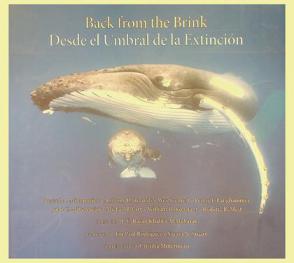
Back from the brink : 25 conservation success stories = Desde el umbral de la extinción : 25 historias de éxito en la conservación
\"Back from the Brink, written by leading international conservationists, presents species that have been saved from the \"brink of extinction\" through the resolve and collaborative initiatives of individuals, communities, organizations, and governments over the past decades.Along with awe-inspiring photographs, the book presents in-depth profiles of 25 threatened species and in all includes the stories of nearly 100 species - some formerly believed extinct but now successfully rescued. The detailed information underscores the urgent need to work together to prevent further loss of nature's diversity and beauty and to mitigate the causes of climate change. As ongoing destruction, degradation, and fragmentation of the planet's natural ecosystems increase to make way for human populations, this volume clearly demonstrates every society's obligation to ensure the right balance between urban growth and natural ecosystems.The beauty in these pages serves as an aspiration for our collective work and our shared future.\"--Book jacket.
Book

Web-Based Application for Threatened Woodland Caribou Population Modeling
Woodland caribou (Rangifer tarandus caribou) are threatened in Canada, with population and distribution declines evident in most regions of the country. Causes of declines are linked to landscape change from forest fires and human development, notably forestry oil and gas activities, which result in caribou habitat loss and affect ecosystem food webs. The Federal Species at Risk Act requires effective protection and restoration of caribou habitat, with actions to increase caribou survival. These requirements call for effective monitoring of caribou population trends to gauge success. Many woodland caribou populations are nearly impossible to count using traditional aerial survey methods, but demographic-based monitoring approaches can be used to estimate population trends based on population modeling of vital rates from marked animals. Monitoring programs have used a well-known simple population model (the Recruitment-Mortality [R/M] equation) to estimate demographic rates for woodland caribou, but have faced challenges inmanaging large data streamsand providing transparency in the demographic estimation process. We present a stand-alone statistical software application using open-source software to permit efficient, transparent, andreplicable demographic estimation for woodland caribou populations. We developed an easy-to-use, interactive web-based application for the R/M population model that uses a Bayesian estimation approach and provides the user flexibility in choice of prior distributions and other output features. We illustrate the web-application to the A la Pêche Southern Mountain (Central Group) woodland caribou population in west-central Alberta, Canada, during 1998–2017. Our estimates of population demographics are consistent with previous research on this population and highlight the utility of the application in assessing caribou population responses to species recovery actions. We provide example data, computer code, the web-based application package, and a user manual to guide installation and use. We also review underlying assumptions and challenges of population monitoring in this case study. We expect our software will contribute to efficient monitoring of woodland caribou and help in the assessment of recovery actions for this species.
Journal Article
Contrasting Aerial Moose Population Estimation Methods and Evaluating Sightability in West-Central Alberta, Canada
Population assessment is a primary component of ungulate management, but managers are continuously under pressure to reduce survey cost. Another concern in aerial surveys is accounting for undetected animals (i.e., visibility bias). Currently, a stratified random block-survey design (hereafter, block-surveys) is used to develop moose (Alces alces) population estimates in several regions of North America. In this case study, we evaluated the application of distance sampling as an alternative to block-surveys in Alberta, Canada. We conducted distance-sampling surveys in 2010 and 2012 and compared density estimates, precision (coeff. of variation) and flight effort (hr/100 km2of survey area) to block-surveys flown in 2002, 2007, 2009, and 2012. To assess sightability bias and subsequently correct for moose missed on the transect line, we developed a predictive sightability model using 41 sightability trials with 21 radiocollared moose in 2009 and 2010. Without correcting for visibility bias on the transect line, distance sampling was more efficient in terms of flight-hours than block-surveys, while providing population estimates with similar or higher precision. Estimated sightability on the transect line was 67% in 2010 and 46% in 2012, which was used to re-scale the detection functions. Considering that population estimates from block-surveys as applied in Alberta are based on observable moose, distance sampling with a sightability correction likely provided more accurate estimates. Our results support the application of distance sampling as an alternative to block-surveys, but we suggest further investigation of methods for correcting visibility bias on the transect line.
Journal Article

Low Migratory Connectivity and Use of Multiple Non-Breeding Sites in American Golden-Plovers Breeding Across the Nearctic Tundra
Aim Many populations of migratory birds are currently declining. Understanding space use throughout the entire annual cycle, as well as migratory connectivity (i.e., geographic linkage of individuals and populations across different stages of the annual cycle), can improve our ability to identify factors driving population declines and influencing extinction risk. The main objectives of our study were to (i) document the space use and phenology of migration during the non‐breeding period and (ii) quantify the degree of migratory connectivity across the range of the American Golden‐Plover (Pluvialis dominica) breeding across the North American Arctic. Location American Golden‐Plovers that breed across their entire breeding range (northern North America) and migrate up to their main wintering site located in South America. Methods We used archival light‐level geolocators to track the migration. We quantified migratory connectivity based on the non‐breeding range spread of all individuals and the breeding population spread. We used Mantel tests to evaluate whether the relative spatial configuration of the sampled breeding area was preserved on the non‐breeding ground. Results We identified 13 and 7 stopover sites used during the fall (post‐breeding, southbound) and spring (pre‐breeding, northbound) migrations, respectively, and one main site used during the wintering period. We highlight stopover sites that were previously unknown and show the transatlantic and transpacific routes used by plovers during migration. We found that individuals breeding in proximity tended to be closer to each other during brief and highly limited portions of the non‐breeding period. Broadly, individuals from different breeding populations were well mixed during the wintering period and throughout most of the spring and fall migrations. Main Conclusions Overall, the migratory connectivity of American Golden‐Plovers is relatively low for most of the non‐breeding period, suggesting that breeding populations separated by large distances should be similarly affected by disturbances and changes encountered at some migratory stopovers and in the wintering area.
Journal Article